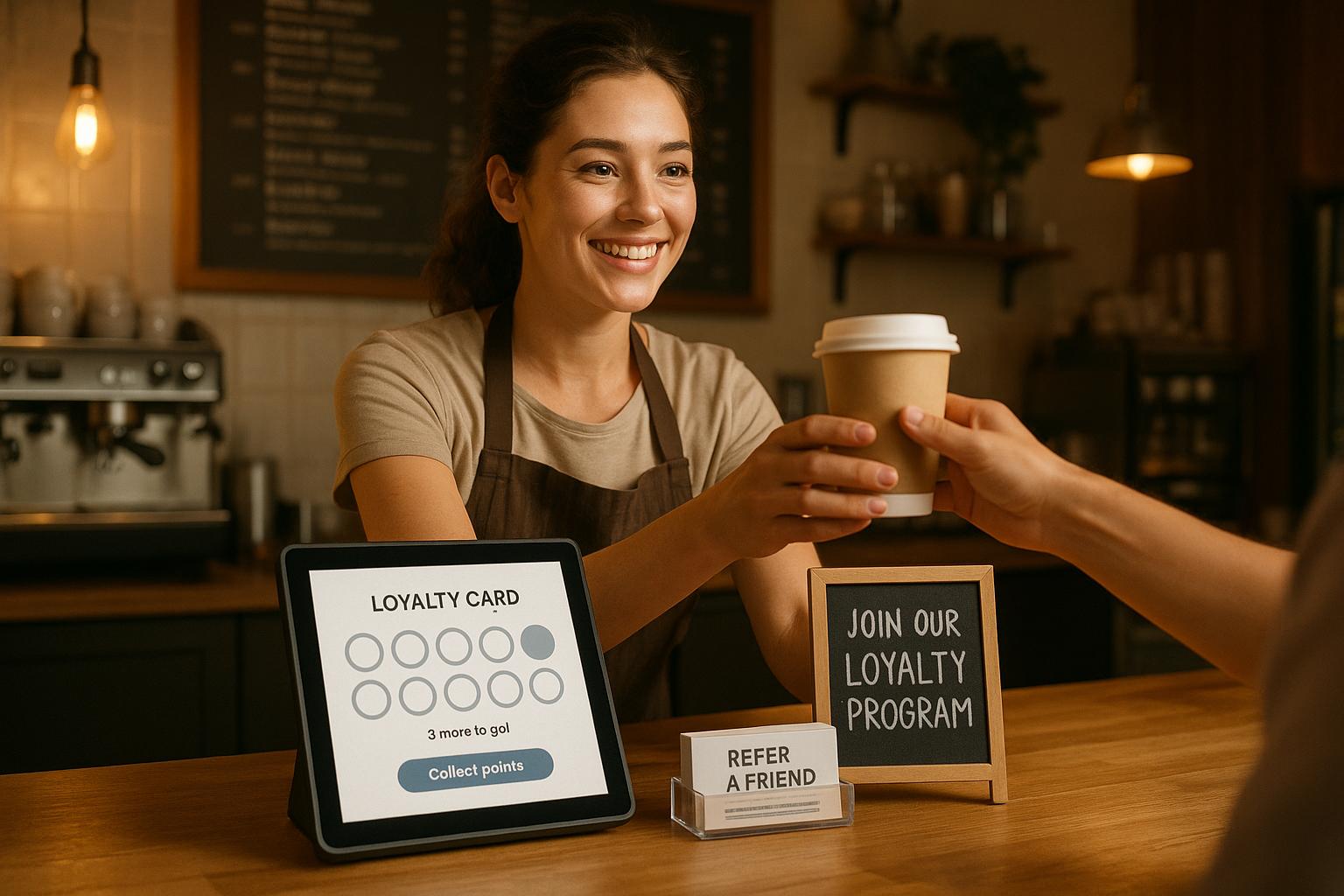
Want to keep customers coming back? Loyalty programs can help increase repeat visits, boost spending, and build stronger customer relationships. Here are five easy-to-implement ideas for local businesses:
- Digital Punch Cards: Replace old-school paper cards with mobile-friendly options like QR codes and wallet integration. Customers track progress digitally, and rewards are always within reach.
- Multi-Level Rewards: Offer tiered perks (e.g., discounts, VIP access) to motivate customers to spend more and stay engaged over time.
- Referral Programs: Encourage word-of-mouth marketing by rewarding both existing customers and their referrals with points, discounts, or freebies.
- Holiday/Special Event Rewards: Create seasonal promotions like early access to sales, gamified rewards, or charitable giving options to drive engagement during peak times.
- Local Business Network Rewards: Partner with nearby businesses to create a shared rewards system, offering customers more ways to earn and redeem points.
Why it works: Loyal customers spend 67% more than new ones, and 70% engage more after joining a rewards program. Start with simple tools like digital punch cards and scale up to multi-location networks.
Retain more customers, grow revenue, and strengthen community ties with these proven loyalty strategies.
How To Create A Low-cost Customer Loyalty Program? – BusinessGuide360.com
1. Digital Punch Cards
Digital punch cards bring a modern twist to traditional loyalty programs, helping businesses grow revenue 2.5 times faster.
How to Set Up and Get Started
Start by defining your goals – whether it’s increasing how often customers visit or boosting the average amount they spend. Once you know what you want to achieve, platforms like Meed make it easy to roll out digital stamp cards. These programs work seamlessly with Apple and Google Wallet, offering a smooth experience for both your team and your customers. A great example is Flour Bakery + Cafe, which introduced a simple QR code system for visits. This small change led to a noticeable uptick in repeat customers.
Making Rewards Work for Customers
The key to a successful program is striking the right balance between achievable rewards and meaningful incentives. Take Domino’s Pizza, for example: customers earn 10 points per order, and after 60 points (roughly six orders), they get a free pizza. This approach aligns with research showing that 88% of customers typically need at least three purchases to feel loyal to a brand.
Tapping Into Digital Convenience
Integrating with mobile wallets like Apple Wallet and Google Wallet ensures that your loyalty program is always within reach. Considering that 9 out of 10 millennials own a smartphone, digital punch cards meet their expectations for convenience and accessibility.
"The electronic punch card is not just a loyalty tool; it’s a bridge that connects businesses with their customers in a dynamic and meaningful way."
- Maja Volarević, Project Manager | Digital Content Strategist | B2B SaaS content writer
Here are some standout features to consider:
| Feature | Benefit | Impact |
|---|---|---|
| Mobile Wallet Integration | Always available on smartphones | Higher participation rates |
| Real-time Updates | Instant notifications for rewards | Keeps customers engaged |
| Progress Tracking | Clear view of reward goals | Builds stronger customer loyalty |
| QR Code Scanning | Fast and hassle-free transactions | Speeds up service |
2. Multi-Level Local Rewards
After digital punch cards, multi-level rewards take customer engagement to the next level by offering progressively better perks as customers interact more with your business. These tiered systems deliver about 1.8x higher ROI compared to programs without tiers, making them a smart way to reward loyalty while reducing churn. By segmenting customers into different levels, you can offer more personalized benefits that keep them coming back.
Setup and Implementation Steps
To get started, create 3–5 tiers with clear goals that customers can realistically achieve. Using a digital platform like Meed simplifies the process by tracking customer progress and delivering rewards straight to their mobile wallets. For example:
- Entry Tier: Small discounts and birthday rewards.
- Mid-Tier: Free shipping and early access to sales.
- VIP Tier: Priority service and invites to exclusive events.
Brands like ALDO and Sephora have successfully used similar tiered programs to encourage deeper customer engagement.
Customer Usage and Rewards
Each tier should offer distinct perks that motivate customers to climb to the next level. Design your rewards and thresholds to align with your business goals, ensuring that the benefits at each stage feel worthwhile. The key is to create a sense of progression that keeps customers engaged and excited.
Managing Growth Across Multiple Locations
For businesses with multiple locations, maintaining a unified program is essential. Take inspiration from programs like World of Hyatt, which features tiers such as Member, Discoverist, Explorist, and Globalist. Customers can earn and use rewards at any location, ensuring a seamless experience. To make this work:
- Keep branding and messaging consistent across all locations.
- Train staff thoroughly to ensure they understand the program.
- Track performance metrics for each location to identify trends.
- Allow for some location-specific rewards to cater to local preferences.
This approach not only strengthens customer loyalty but also lays a solid foundation for expanding your rewards program across multiple locations.
3. Local Customer Referral Rewards
For local businesses looking to grow, word-of-mouth marketing remains a powerful tool. A referral program can transform happy customers into enthusiastic advocates, bringing in new, high-quality clients.
How to Set Up a Referral Program
To create an effective referral program, follow these steps:
- Provide rewards for both parties: Encourage participation by offering benefits to both the referrer and the new customer. For example, Bleubird gives referrers 500 points and offers new customers 15% off their first purchase.
- Establish clear guidelines: Define the rules upfront, such as minimum purchase amounts, how and when rewards are delivered, and expiration dates. Nature’s Bakery keeps it simple by awarding 75 points for each successful referral purchase, with clear redemption terms.
These steps create a straightforward and engaging referral process that motivates customers to participate.
Making Referrals Easy for Customers
The easier it is for customers to refer others, the more likely they are to do so. Streamline the process with tools like:
- Unique referral codes
- Instant reward delivery
- Progress tracking
Rothy’s takes this approach effectively, offering new customers $20 off purchases of $50 or more, making the program appealing and easy to use.
Using Digital Tools to Enhance Referrals
Digital platforms can make tracking and rewarding referrals seamless. By incorporating technology, businesses can simplify the entire system. For example, Meed’s platform offers features like:
- QR codes for quick and easy tracking
- Automatic reward delivery to digital wallets
- Real-time performance monitoring
- Integration with POS systems
Bandier’s referral program highlights the success of digital integration, rewarding referrers with $25 in points and providing new customers $25 off a $100 purchase.
sbb-itb-94e1183
4. Holiday and Special Event Rewards
Holiday rewards are a powerful way to boost engagement and drive sales during peak seasons. They create a sense of excitement and encourage customers to return, benefiting local businesses. Here’s how you can set up and make the most of holiday rewards to keep customers coming back.
Setup and Implementation Steps
Start by reviewing past holiday data to understand patterns and design rewards that align with seasonal shopping behaviors. Consider these strategies:
- Early Access Perks: Let loyalty members get first dibs on holiday sales or exclusive items. For example, Sephora’s Sephorathon campaign offered early access to their Beauty Insider members, significantly boosting December sales.
- Tiered Holiday Bonuses: Reward customers with bonuses based on their purchases. Sweet Delights bakery implemented this by offering a free holiday item after a specific number of purchases, resulting in a 30% increase in repeat customers and a 25% jump in holiday sales.
- Gamification: Add fun, interactive elements to your holiday campaigns. SPAR Switzerland’s advent calendar, featuring games like Memory and Spin the Wheel, engaged customers with prizes from partner brands.
Customer Usage and Rewards
Create memorable and meaningful experiences during the holidays with unique rewards. Experiential perks, such as exclusive events, or giving customers the option to donate their rewards to charity, can leave a lasting impression. For instance:
- Harvey Nichols transformed their store’s fifth floor into a magical holiday getaway.
- The Body Shop allowed loyalty members to either redeem points for products or donate them to charitable causes.
These approaches not only enhance the holiday spirit but also strengthen customer loyalty.
Digital Platform Connections
To amplify the effectiveness of holiday rewards, integrate them into your digital platforms. Use tools like meed to send push notifications, manage digital wallet redemptions, automate holiday emails, and track campaign performance in real time. Businesses that adopt digital marketing strategies often see a 35% increase in holiday sales compared to traditional methods.
A great example is JD Williams’ 12 Days of Christmas campaign, which featured a digital rewards carousel offering product samples, beauty tips, and rotating coupons. Personalization plays a key role here – 80% of consumers are more likely to shop with brands that provide tailored experiences.
5. Local Business Network Rewards
Setup and Implementation Steps
Local network rewards programs allow customers to earn and use points across multiple businesses, creating a more engaging and valuable experience. The first step in building such a program is identifying businesses with overlapping customer bases and shared goals. For instance, a coffee shop could team up with a nearby bookstore, bakery, and art gallery to form a "cultural district" rewards program that feels interconnected and appealing.
Here’s how to get started:
- Define clear objectives: Decide what you want to achieve, whether it’s increasing foot traffic, boosting sales, or strengthening community ties.
- Set standard point values and rules: Ensure points are easy to earn and redeem across all participating businesses.
- Use a unified tracking system: A shared platform ensures seamless management of transactions and rewards.
Customer Usage and Rewards
Network rewards programs are incredibly effective, often delivering up to 10 times more value than single-business loyalty programs. By offering diverse ways to earn and redeem points, you can encourage customers to explore all participating businesses.
Take Atlas Coffee Club as an example. Their rewards program engages customers with creative options like earning points for referrals and "coffee country visits." These points can then be redeemed for perks such as shipping discounts or savings on orders. This kind of variety keeps customers coming back for more.
Digital Platform Connections
A solid digital system is essential for managing rewards across multiple businesses. Tools like meed’s digital wallet integration and multi-location support make it easy for customers to track and redeem points wherever they shop within the network.
"When done well, a coalition programme offers the benefits of flexibility, affordability and visibility for merchants, and for customers, they offer speed and speed to earn rewards faster. Post-Covid, consumers will continue to crave simplicity as before – but also a renewed sense of community and connection. A well run coalition loyalty programme can do exactly this." – Paula Thomas, Show Host of Let’s Talk Loyalty
Programs like Wesfarmers OnePass in Australia highlight the potential of these efforts. Members of this program shop twice as often as non-members and spend an average of $1,000 annually across participating retailers. The right digital tools not only simplify rewards management but also make it easier to scale partnerships and grow the network.
Growth Options for Multiple Locations
Expanding a network rewards program across multiple locations doesn’t mean losing the local touch. Here’s how you can scale while staying connected to the community:
- Offer extra rewards for customers who engage with multiple businesses.
- Launch joint seasonal promotions to drive traffic during key times of the year.
- Use shared customer insights to create targeted offers that resonate.
Repeat customers are vital for small businesses, accounting for about 61% of their revenue. By weaving network rewards into your strategy, you can build on the loyalty foundation discussed earlier, fostering deeper community ties and driving consistent growth.
Conclusion
Tailored loyalty strategies can make a big difference in driving local business growth. Research reveals that increasing customer retention by just 5% can boost profits by up to 95%, and loyal customers tend to spend 67% more than new ones.
Digital punch cards offer a straightforward way to get started. Take Kaldi’s Coffee in St. Louis, for example – they proved that even a simple punch card system can do more than reward purchases; it can also help build genuine personal connections.
Multi-level rewards tap into the human desire for achievement. In fact, 73% of shoppers actively look for opportunities to redeem rewards, which can lead to up to 25% more annual spending.
Referral programs are another powerful tool for growth. Dropbox’s approach is a great example – they offered extra storage space to both the referrer and the new user, creating a win-win situation that drove sustainable growth.
Holiday and special event rewards align perfectly with natural shopping habits, while local business network rewards strengthen community ties. With 52% of consumers choosing brands based on their loyalty programs, these network-driven initiatives can deliver up to 10 times more value than programs run by a single business.
Digital platforms, like meed, simplify the process of rolling out these programs. Their features let businesses start small with digital stamp cards and scale up to more advanced, multi-location loyalty networks with wallet integration.
"Your loyalty program should be woven into the customer journey, from browsing to buying, online and in-store. It’s not a side initiative; it’s the lens through which customers experience your brand." – Chris Barnett, Kobie Marketing
Together, these strategies strengthen customer relationships and support long-term growth. With 66% of consumers admitting that rewards influence their spending, a well-thought-out loyalty program can give your business a lasting competitive edge in the local market.
FAQs
What are the best ways for local businesses to track the success of their loyalty programs?
Local businesses can measure how well their loyalty programs are working by keeping an eye on key metrics that highlight customer engagement and program effectiveness. For starters, the enrollment rate tells you how many customers are signing up, while the redemption rate reveals how often rewards are being claimed. Together, these numbers provide a snapshot of initial interest and ongoing participation.
For a deeper dive into long-term success, focus on metrics like repeat purchase rates and customer lifetime value (CLV). These indicators show how the program impacts customer loyalty and spending habits over time. Additionally, tracking customer retention rates and Net Promoter Score (NPS) can shed light on customer satisfaction and how likely they are to stick around.
By regularly analyzing these metrics, businesses can spot opportunities for improvement and make informed adjustments to get the most out of their loyalty programs.
What are the best ways to use digital tools in a loyalty program to boost customer engagement?
Using digital tools for your loyalty program can make it much simpler for customers to engage with your business. Start by providing a mobile-friendly platform that allows users to check their rewards, redeem points, and receive personalized offers tailored to their preferences or purchase history. This kind of convenience and customization encourages repeat visits.
You can also boost participation through gamification. Add fun elements like challenges or rewards for actions such as sharing on social media or making repeat purchases. On top of that, make sure your loyalty program integrates seamlessly with your existing systems. Use multiple communication channels – like email and social media – to keep customers informed and excited about their benefits. These strategies can create a more engaging and satisfying experience for your audience.
What can local businesses do to keep their multi-level rewards program exciting and effective over time?
To keep a multi-level rewards program both exciting and effective, local businesses should emphasize clarity, personalization, and variety. Make it easy for customers to understand the program by clearly outlining how they can earn points, progress through tiers, and access exclusive benefits at each level. When customers see the value upfront, they’re more likely to engage.
Tailoring rewards to match customer preferences can go a long way in building loyalty and satisfaction. On top of that, updating the program with fresh rewards, limited-time offers, or seasonal promotions keeps things interesting and encourages customers to stick around. Adding time-sensitive incentives can also create a sense of urgency, inspiring more participation.
By keeping the program dynamic and customer-centric, businesses can ensure their loyalty initiatives stay attractive and effective at driving long-term engagement.