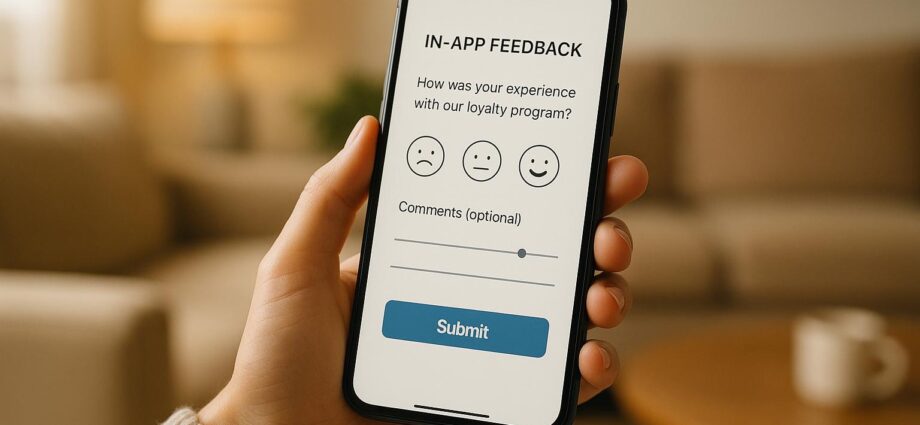
In-app feedback is a powerful way to improve loyalty programs by collecting real-time customer insights. Unlike outdated methods like email surveys, in-app feedback captures customer opinions while they’re actively engaging with your app, making it more accurate and actionable. This approach helps identify pain points early, like confusing reward processes, and enables you to fix issues quickly to keep customers satisfied and loyal.
Here’s how you can make the most of in-app feedback:
- Use the right tools: Options like pop-up surveys, feedback buttons, or rating widgets let customers share their thoughts without disrupting their experience.
- Ask at the right time: Gather feedback after key moments, such as reward redemptions or tier upgrades, to ensure relevance.
- Keep it simple: Short, clear questions with easy response options encourage participation.
- Act on feedback: Spot trends, make improvements (e.g., simplifying processes or adding rewards), and inform customers about the changes you’ve made.
- Combine feedback with other data: Link feedback to customer behavior for deeper insights and personalized solutions.
Platforms like meed simplify this process, helping you collect feedback, track results, and make impactful updates. By listening to your customers and acting on their input, you can build a loyalty program that keeps them engaged and coming back.
What Is In-App Feedback and Why It Matters
What Is In-App Feedback?
In-app feedback is a way to gather customer opinions directly within your app or website, capturing their thoughts while they’re actively engaging with your features. Unlike traditional methods like email or phone surveys, which often come long after the experience, in-app feedback happens in the moment. This makes it both timely and relevant.
You’ll typically see in-app feedback in the form of pop-up surveys, embedded widgets, or quick polls. These tools are designed to capture feedback that’s specific to what the user is doing at that very moment. For example, a short survey might appear right after a user completes a transaction or interacts with a specific feature. This immediate timing ensures the feedback is fresh and more accurate than input collected days or weeks later.
In-app feedback tools are versatile, offering a range of question types. Whether it’s a simple thumbs up or down, a multiple-choice question, or a short text box for open-ended responses, these tools make it easy to gather actionable insights.
Understanding how in-app feedback works is the first step to appreciating the difference it can make for loyalty programs.
Why In-App Feedback Matters for Loyalty Programs
In-app feedback is a game-changer for loyalty programs because it provides real-time insights into customer sentiment as they interact with your app. This is critical since satisfaction and engagement directly impact whether customers stick around and continue spending.
Unlike email surveys, which often suffer from delays and memory gaps, in-app feedback captures impressions right when they happen. This immediacy allows you to spot and address potential issues early. For instance, if users repeatedly express confusion about how points expire, you can address the problem before it becomes a larger frustration.
Because in-app feedback is integrated into the user experience, it tends to have higher participation rates. This means you get richer insights into what your customers really care about. For example, you might discover that users value exclusive experiences more than discounts or that navigating the app to check their point balance feels cumbersome. These insights go beyond what transaction data alone can reveal, helping you create a loyalty program that truly resonates.
Platforms like meed make in-app feedback even more effective by combining it with loyalty program management. This integration lets you connect feedback to specific behaviors, preferences, and engagement patterns. As a result, you gain a deeper understanding of what drives your customers’ loyalty. Whether it’s fine-tuning rewards or improving app usability, these insights help you make meaningful changes that enhance the overall customer experience.
Automatically give reward points for feedback
How to Add In-App Feedback to Your Loyalty Program
If you want to improve your loyalty program, integrating in-app feedback is a smart way to start. Here’s how you can seamlessly include feedback tools that align with your goals and enhance the customer experience.
Pick the Right Feedback Tools
The right tool depends on how your customers interact with your app. Each type of feedback tool serves a different purpose, so choose based on user behavior.
- Pop-up surveys: These are great for gathering detailed insights during key moments, like after a customer redeems a reward or reaches a new tier. Use them sparingly, though – they can feel intrusive if overused.
- Feedback buttons: A more subtle option, these buttons stay visible within the app, allowing customers to share their thoughts whenever they’re ready. They’re ideal for ongoing feedback from engaged users.
- In-app chat features: Perfect for real-time conversations, these tools let customers ask questions or share suggestions. They’re especially useful for loyalty programs where users might need clarification on benefits.
- Rating widgets: Quick and easy, these widgets collect immediate feedback, like star ratings or thumbs up/down responses, right after an interaction.
When choosing a tool, consider your customers’ habits. For instance, users who spend only a short time in the app may prefer quick options like rating widgets, while more engaged customers might be willing to complete detailed surveys. Tailoring tools to match user behavior ensures better engagement.
When to Ask for Feedback
Timing matters. Requesting feedback at the right moment can make all the difference.
- After reward redemptions: Once customers redeem a reward, they can provide valuable insights about the process and their satisfaction with the reward itself.
- Following tier upgrades or milestones: Customers who achieve a new level in your program often have clear opinions about their journey and the value they’ve received.
- After customer service interactions: This is a great opportunity to learn about both the program and the quality of your support.
Be careful not to overdo it. Asking for feedback too often can lead to survey fatigue, which reduces response rates. Instead, analyze your existing data to identify the best moments to gather meaningful insights.
Keep Feedback Simple and Quick
Your customers’ time is limited, so make feedback requests short and straightforward.
- Ask only the most important questions.
- Use clear and specific language. For example, instead of asking, "How satisfied are you with our loyalty program?" try something more focused, like, "How easy was it to redeem your reward today?" or "How valuable was the reward you received?"
- Provide multiple-choice options with a range of sentiments, such as a 5-point scale, to make responses quick and intuitive.
- Include an optional open-ended question for customers who want to share more details, but keep it brief.
- Test the process to ensure feedback forms can be completed in less than 60 seconds.
Streamlined feedback requests make it easier for customers to respond and for you to take action. Platforms like meed simplify this process by integrating feedback collection with loyalty program management. This allows you to trigger feedback requests based on specific customer actions, ensuring that feedback aligns with meaningful interactions while keeping it quick and easy for users.
How to Use Feedback to Improve Your Program
Feedback is only valuable if you act on it. To keep your loyalty program aligned with customer needs, use feedback as a tool for continuous improvement. This process hinges on reviewing, making changes, and communicating effectively with your audience.
Review Feedback and Spot Patterns
The first step is to sift through the feedback and identify recurring themes. Organizing feedback into categories like reward options, ease of use, customer service, and overall satisfaction can help you pinpoint the areas that require the most attention.
For instance, if multiple customers complain about delays in reward processing, that’s a clear operational issue to address. Similarly, if you notice repeated comments about missing reward options, it signals unmet customer demand.
Pay attention to how often specific issues come up. If many users mention difficulty navigating the rewards section, it’s likely a broader user experience problem. Timing patterns can also reveal insights – issues might spike during peak hours or differ between new and long-time users.
Don’t ignore the tone of the feedback. A customer might rate your program highly but still express frustration with a particular feature. These mixed signals often point to opportunities for targeted improvements. Tools like spreadsheets can help you track recurring keywords and prioritize changes based on the most pressing issues.
Turn Feedback Into Actionable Changes
Once you’ve identified the patterns, it’s time to translate them into specific improvements that align with your goals.
- Tackle quick fixes first. For example, if customers want clearer information about how many points are needed for rewards, update your app to display this more prominently.
- Simplify redemption processes. If users find the checkout process confusing, streamline it or add progress indicators to guide them step-by-step.
- Expand reward options. Regular requests for digital gift cards, unique experiences, or other rewards should prompt you to diversify your offerings.
- Fill communication gaps. If customers don’t understand how tier benefits work, add clearer explanations or tutorials within your program interface.
Before rolling out major changes, test them with a small group of users. This allows you to confirm that the updates address the issues effectively without causing unintended problems. Platforms like meed can help integrate feedback into program management, making it easier to adjust reward structures, refine rules, or tweak the user interface without extensive development time.
Keep Customers in the Loop
Letting customers know about the changes you’ve made is just as important as making those changes. When users see their feedback being taken seriously, it builds trust and encourages continued engagement.
- Send targeted updates. Use in-app notifications or messages to inform customers about specific improvements. For example, a message like, “You asked for more reward options, and we’ve added digital gift cards!” shows you’re listening.
- Explain the changes. Instead of vague updates like, “We’ve updated our rewards catalog,” provide context. For example: “Based on your feedback, we’ve added new restaurant options and made browsing easier.”
- Highlight measurable improvements. If you’ve reduced reward processing times, share the numbers to show the tangible impact of your updates.
- Follow up with more feedback requests. After major updates, ask customers if the changes resolved their concerns. This keeps the improvement cycle going and reassures them that their input truly matters.
Not every suggestion will lead to a change – and that’s okay. When you can’t act on feedback, be transparent about why. Acknowledging customer input, even when it doesn’t lead to immediate action, helps maintain trust and shows that their voices are still valued.
sbb-itb-94e1183
Connect Feedback with Other Customer Data
In-app feedback becomes far more impactful when paired with the wealth of customer data you already have. Instead of treating feedback as a standalone metric, linking it with details like purchase history, demographics, and loyalty program activity provides a richer understanding of customer behavior. This combination deepens the insights you gain and turns raw feedback into actionable strategies.
Why Combining Feedback and Customer Data Matters
When you merge feedback with transactional and engagement data, you uncover patterns that would otherwise go unnoticed. For example, a customer who rates your program highly but rarely redeems rewards might not be dissatisfied but could be facing accessibility challenges. On the other hand, a complaint from a top-spending customer carries a different level of urgency compared to feedback from an infrequent user.
Blending customer sentiment with behavior allows you to craft personalized experiences. Let’s say feedback indicates a demand for more dining options, and your transaction data shows customers frequently shop at restaurants. This insight can guide you to expand your rewards catalog with dining-related perks, increasing the likelihood of driving engagement.
You can also segment feedback based on factors like customer lifecycle. New members might point out onboarding hiccups, while long-term users could be asking for more variety in rewards. By analyzing feedback through lenses like spending habits or location, you can create targeted solutions that address specific issues for each group.
Another powerful benefit of this integration is predictive insights. For instance, if customers complain about slow reward processing, you might notice a drop in their engagement over the following months. Spotting these trends early gives you the chance to intervene and retain valuable members.
Finally, combining feedback with behavioral data allows you to measure the impact of your changes. If you address a common complaint – say, by speeding up the reward redemption process – you can track whether those customers become more engaged, spend more, or refer others. This creates a direct link between customer satisfaction and business growth.
Simplifying Integration with Platforms Like meed
Managing this level of data integration can be overwhelming, but platforms like meed make it manageable. These tools streamline the process by centralizing feedback collection and loyalty program management, giving you a clear view of how customer sentiments align with their actions.
With meed’s analytics dashboard, you can see how feedback themes influence program performance. This consolidated view helps you pinpoint which changes have the greatest impact on customer engagement and satisfaction.
For businesses operating across multiple locations, meed’s multi-location support is especially helpful. Feedback often varies by region due to differences in customer preferences, staff training, or local operations. This feature ensures you can address location-specific issues effectively.
The platform also integrates with digital wallets like Apple and Google, linking in-app feedback with reward usage. For example, if customers mention convenience as a priority, you can track how often they use digital passes compared to traditional methods. This insight helps you refine features to match customer expectations.
Features like QR code rewards and digital stamp cards add another layer of data. If feedback suggests simplifying the redemption process, you can monitor whether QR code adoption increases after implementing changes. This closed-loop system ensures your updates directly address customer concerns.
For businesses leveraging meed’s ecosystem partner tools, feedback integration becomes even more valuable. You can analyze how customers respond to partner offers and refine collaborations based on their feedback. This data-driven approach ensures partnerships add real value to the customer experience.
One of meed’s standout advantages is its ability to support rapid adjustments. When feedback highlights an issue, you can make program changes within the same system, cutting down the time between identifying a problem and rolling out a solution. This agility keeps customers engaged and shows them you’re actively listening to their needs.
Track Results and Keep Improving
Once you’ve made changes to your loyalty program, measuring their impact becomes essential. Adjusting based on feedback is just the starting point. The real value lies in tracking the results of those changes and using the insights to fine-tune your program over time. Without proper tracking, it’s impossible to know if your efforts are resonating with customers or falling flat.
Key Metrics to Monitor
To assess the success of your feedback-driven updates, focus on metrics that directly reflect customer engagement and satisfaction. Customer retention rate is one of the most telling indicators. When feedback issues are addressed effectively, you’ll notice members sticking around longer. Monitoring this monthly can help you spot trends and take action quickly.
Other important metrics include:
- Program participation rates: Keep an eye on reward redemptions, app usage frequency, and participation in promotions. For example, if feedback suggested simplifying the redemption process, an uptick in these metrics within 30-60 days indicates you’re on the right track.
- Net Promoter Score (NPS): This metric captures customer sentiment. Conduct surveys quarterly to see if your adjustments are boosting satisfaction. A score above 50 is strong, while anything under 30 signals problems that need immediate attention.
- Average order value and purchase frequency: When customers feel heard, they tend to shop more often and spend more. Compare these numbers before and after implementing major changes to measure the financial impact of your efforts.
- Feedback response rates: If fewer customers are sharing feedback over time, it might mean they feel their input isn’t valued. Healthy programs typically see 15-25% of active members responding when prompted.
- Time to resolution: This measures how quickly you act on feedback. Addressing critical issues within two weeks and updating customers on progress within 48 hours can foster trust and loyalty.
Establish Regular Feedback Reviews
Consistency is key to staying on top of feedback. Create a schedule for reviewing feedback to ensure no issue goes unnoticed. Urgent concerns can be reviewed weekly, trends analyzed monthly, and strategic adjustments planned quarterly.
Set up automated alerts to flag critical feedback immediately. For instance, if satisfaction scores drop below a certain level or specific keywords appear frequently in comments, you’ll want to address these issues right away instead of waiting for the next scheduled review.
Use real-time dashboards to visualize trends, satisfaction scores, and progress. These tools allow teams to make quick, data-driven decisions. Ensure the dashboards are accessible to everyone involved in managing the program.
Finally, document your review process to maintain consistency, especially as your team grows. Include templates for categorizing feedback, escalation protocols for urgent issues, and timelines for implementing improvements. This documentation will also make onboarding new team members much smoother.
Leverage Data for Continuous Improvements
Data analysis is the backbone of a loyalty program that evolves with customer needs. Successful programs treat feedback as an ongoing opportunity to improve. For example:
- Trend analysis helps identify emerging issues before they escalate. Keep an eye on gradual shifts in satisfaction scores or new complaint patterns.
- Cohort analysis uncovers how different customer groups respond to changes. Long-term members might react differently to updates compared to new customers, so tailoring your approach for each group can make a big difference.
- A/B testing allows you to experiment with multiple solutions before rolling out changes program-wide. This minimizes the risk of implementing ineffective updates.
- Seasonal adjustments ensure your program stays relevant throughout the year. For instance, if customers request specific rewards during the holidays, incorporate those insights into your planning.
- Competitive benchmarking can provide valuable context. Pay attention when customers compare your program to others in their feedback – it’s a window into what they expect based on their experiences elsewhere.
Collaboration across teams can amplify the impact of these insights. Share feedback trends with departments like product development, customer service, and marketing. Their expertise can help uncover root causes of recurring issues and lead to more effective solutions.
The secret to long-term success is treating feedback as a tool for growth rather than just a way to fix problems. Each piece of feedback is an opportunity to strengthen customer relationships and make your program stand out. By consistently tracking results and refining your approach, you’ll create a loyalty program that keeps pace with your customers’ evolving needs.
Conclusion: Build Better Loyalty Programs With In-App Feedback
In-app feedback transforms traditional reward systems into dynamic, customer-centered programs tailored to meet real needs. By using the right tools, requesting feedback at the right moments, and acting on customer insights, businesses can create loyalty programs that truly resonate.
Here’s why this matters: Acquiring a new customer costs five times more than keeping an existing one, and loyal customers can be worth up to 10 times their initial purchase. On the flip side, 57% of customers will leave after just one bad experience. These numbers highlight the importance of keeping customers happy and engaged.
When customers see their feedback put into action – whether it’s smoother reward redemptions, fresh reward options, or a more user-friendly app – they feel valued. This sense of appreciation builds trust and loyalty, turning satisfied customers into enthusiastic advocates for your brand. The result? A cycle of engagement that drives long-term growth.
"Creating deeper, more meaningful connections with customers is the cornerstone of any organisation’s success and growth in today’s bustling market." – Trust Payments
The numbers back it up: 80% of customers prefer personalized experiences, and 70% expect consistency across channels. In-app feedback provides the insights needed to deliver on these expectations. Companies that use analytics to refine their customer experience have reported a 68% increase in retention.
Platforms like meed make it easier to integrate feedback with loyalty management. With features like digital stamp cards, QR code rewards, and wallet integrations, meed simplifies the entire process. Its analytics dashboard tracks key metrics, while its unified approach allows customers to manage all their loyalty memberships in one place.
Successful businesses see feedback as more than just data – they see it as a tool for growth. By listening to customers, acting on their suggestions, and continuously refining your approach, you can build a loyalty program that not only meets today’s expectations but stays ahead of tomorrow’s demands. Start with small changes, measure the impact, and use those insights to strengthen customer relationships and boost revenue.
FAQs
How can I make sure in-app feedback reflects the experiences of all users?
To gather feedback that reflects the experiences of all your users, it’s important to use a mix of methods. These can include surveys, open-ended feedback forms, and quick rating tools like NPS (Net Promoter Score) or CSAT (Customer Satisfaction Score). Strategically place these tools at key points in the user journey to hear from a diverse range of users.
Make it easy for people to share their thoughts by offering flexible options, such as brief surveys or optional comment boxes. This approach encourages more participation and honest responses. Timing also matters – ask for feedback at moments that won’t disrupt the user experience. And don’t overlook design; keep prompts visually appealing and simple to interact with. By blending these techniques, you’ll gain well-rounded insights to refine your loyalty programs and boost customer satisfaction.
How can I use in-app feedback with customer data to improve loyalty programs?
To take your loyalty program to the next level, consider integrating in-app feedback with the customer data you already have. This combination allows you to gain a clearer picture of your customers’ preferences and behaviors. With these insights, you can craft rewards and experiences that feel personal and meaningful, encouraging repeat visits and deeper engagement.
For instance, tools like digital stamp cards or QR code rewards not only make participation more interactive and convenient but also provide you with valuable data. By using this feedback to fine-tune your loyalty offerings, you can create stronger connections with your customers, boosting their loyalty and helping your business grow.
How can I request customer feedback without causing survey fatigue?
To prevent survey fatigue while still collecting useful feedback, it’s crucial to prioritize quality over quantity. Instead of bombarding customers with frequent requests, aim to space them out – once every 30 days works well for loyal customers. Keep your surveys concise, focused, and directly tied to the customer’s most recent interactions.
Mix things up by incorporating different methods like quick polls, in-app prompts, or even gamified feedback options to make the process more enjoyable. Show customers that their input matters by sharing how their feedback has been used to improve their experience. By balancing timing, relevance, and engagement, you can gather meaningful insights without overwhelming your audience.