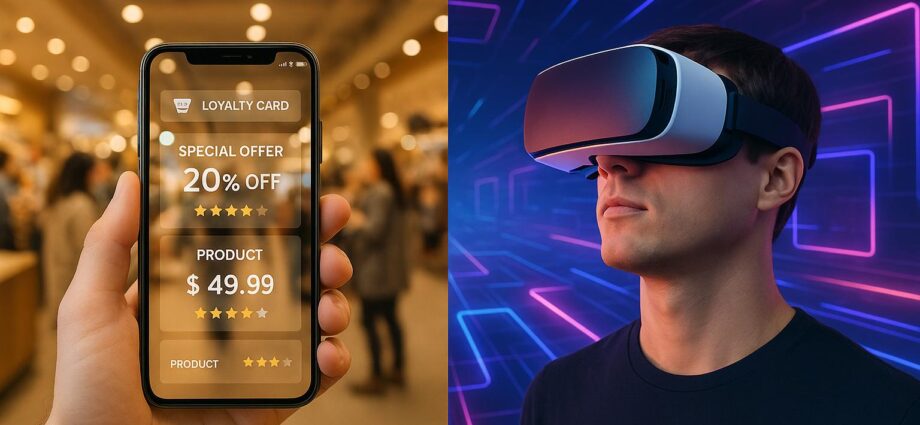
AR (Augmented Reality) and VR (Virtual Reality) bring different strengths to loyalty programs. AR overlays digital elements onto the real world using devices like smartphones, making it accessible and practical for everyday use. VR, meanwhile, fully immerses users in virtual environments, creating memorable, high-impact experiences but requiring specialized hardware like headsets.
Key Points:
- AR is ideal for broad audiences and frequent interactions. It works with devices customers already own, making it simple to integrate into shopping experiences like virtual try-ons or gamified promotions.
- VR excels in exclusive, immersive experiences for premium customers. It’s best for events, virtual showrooms, or high-value rewards that require undivided attention.
- Stats to Know: 61% of consumers prefer retailers with AR, and 71% would shop more often if AR were available. Meanwhile, VR’s emotional impact can strengthen connections with top-tier loyalty members.
Quick Comparison:
| Factor | AR | VR |
|---|---|---|
| Equipment Needed | Smartphones, tablets | VR headsets (e.g., Meta Quest 3) |
| Accessibility | Broad; works on existing devices | Limited; requires specialized gear |
| Immersion Level | Partial; enhances real-world settings | Full; replaces real-world environment |
| Best Use Cases | Virtual try-ons, gamified interactions | Exclusive events, virtual showrooms |
| Cost | Lower setup costs | Higher due to hardware requirements |
Takeaway: Use AR for daily engagement and VR for exclusive moments. Combining both creates a balanced loyalty strategy that appeals to a wide range of customers.
AR & WebXR Are Rewriting the Rules of eCommerce
AR and VR: Core Differences
AR and VR may both integrate digital content into our lives, but they operate in fundamentally different ways. AR overlays digital elements onto the real world, seamlessly blending virtual objects with your surroundings. For instance, with AR, you can still see your living room, a store aisle, or the street in front of you – just enhanced with digital overlays like images or animations.
VR, on the other hand, takes you entirely out of the physical world and immerses you in a digital one. When you put on a VR headset, your surroundings disappear, replaced by a fully virtual environment. Everything you see, hear, and interact with is computer-generated. Think of it like this: AR adds a virtual couch to your actual living room, while VR places you in a completely virtual showroom where nothing exists outside the headset.
How AR Works in Retail and Loyalty
AR makes use of everyday devices like smartphones and tablets to add digital content to the real world. This could include interactive games, virtual try-ons, or even detailed product information, all appearing as though they’re part of your physical space.
One of AR’s biggest advantages is its accessibility. Thanks to popular apps like Pokémon Go and Snapchat, many people are already familiar with AR technology, so they don’t need special equipment or training to use it.
In retail, AR bridges the gap between online and in-store shopping, creating engaging experiences. Take Sephora‘s Virtual Artist App, for example. It allows customers to virtually try on makeup, replicating the kind of advice you’d get at a store’s makeup counter. Even better, users can purchase products directly through the app, showing how AR can integrate seamlessly into shopping platforms.
Gucci also made waves with its AR Lens on Snapchat, which let users try on shoes virtually. The results were impressive: over 18 million interactions, a 188% increase in product page views, and a 25% boost in purchase intent among users.
For loyalty programs, AR opens up creative opportunities to keep customers engaged. One supermarket chain launched a "Dinosaurs: The Era of 3D" program, where scanning collectible cards brought dinosaurs to life in 3D animations. Another program, "JOYKIS", allowed kids to color characters on cards and watch them come to life in AR. These cards could even be traded for Lego sets.
AR thrives because it integrates naturally into what customers are already doing. Whether they’re shopping in-store, exploring products at home, or interacting with promotional materials, AR enhances these everyday activities, making it an effective tool for omnichannel loyalty programs.
How VR Works in Retail and Loyalty
VR takes a different approach by replacing the real world with a fully digital one. Using headsets like the Apple Vision Pro, Meta Quest 3, or HTC Vive, users are transported to virtual environments where everything they see and interact with is computer-generated. These headsets often include motion sensors and controllers, allowing users to navigate the virtual space as if they were physically there.
The need for specialized equipment makes VR less accessible for casual use but offers something AR can’t: complete immersion. By blocking out the real world, VR ensures undivided attention, creating experiences that leave a lasting impression.
In retail, VR shines when it comes to transporting customers to places they wouldn’t otherwise visit. Real estate agents can offer virtual property tours, travel agencies can let clients "visit" a resort before booking, and car brands can provide virtual test drives in different settings. Companies like P&G, Mitsubishi, and Calvin Klein have embraced VR for virtual store concepts, allowing customers to explore, customize, and engage with products in a highly interactive way – all from the comfort of their homes.
For loyalty programs, VR offers exclusive, high-impact experiences. One example is the "Fairy tale at ATB" program, which used VR to create an immersive brand experience. These aren’t everyday interactions like scanning receipts or checking points; they’re premium moments designed to build emotional connections and strengthen brand loyalty.
The trade-off is clear: while VR requires more effort – both in terms of time and equipment – it delivers unforgettable experiences. This makes it ideal for flagship loyalty events, high-value rewards, or special campaigns, rather than frequent, casual interactions.
Both AR and VR have carved out unique roles in omnichannel loyalty strategies. AR integrates seamlessly into customers’ daily routines, while VR creates powerful, immersive moments that leave a lasting emotional impact. Together, they offer brands a diverse toolkit to engage and connect with their audience.
Benefits of AR for Omnichannel Loyalty
Augmented Reality (AR) offers a range of practical advantages for omnichannel loyalty programs, largely because it works seamlessly on devices customers already own, making participation straightforward and immediate.
Accessibility and Wide Reach
One of AR’s biggest strengths is how easy it is for people to access. Customers don’t need to invest in expensive headsets or learn complex new tech – they can simply use their smartphones or tablets. This eliminates one of the biggest hurdles to loyalty program engagement: the need for extra equipment.
This ease of access directly impacts participation. When customers can use devices they already have, loyalty programs aren’t limited to tech enthusiasts. In fact, 71% of shoppers say they’d shop more often if AR was part of the experience. This statistic highlights how AR’s accessibility can boost engagement and frequency of use.
Apps like Pokémon Go and Snapchat have already introduced millions to AR, so most customers are familiar with pointing their phones at objects, scanning codes, and interacting with digital overlays. This familiarity means loyalty programs don’t need to spend time teaching users how to interact with AR – they’re ready to jump in immediately.
For brands targeting younger audiences, AR’s accessibility becomes even more important. 75% of Gen Z shoppers prefer online shopping, but 65% still want to touch and feel items before buying. AR bridges this gap by letting users virtually “try before they buy” without needing to visit a physical store or invest in VR hardware. This makes AR-based loyalty programs particularly effective for engaging digital-savvy consumers who expect seamless interactions across channels.
AR also excels at blending online and in-store experiences, creating a unified shopping journey.
Cross-Channel Integration
AR doesn’t just make loyalty programs more accessible – it also connects different shopping channels into one cohesive experience. Since AR operates through smartphone apps, customers can use it whether they’re browsing at home or standing in a store. This consistency ensures that loyalty program interactions follow customers wherever they shop.
Take Sephora’s Virtual Artist app as an example. It allows users to try on eyeshadows, lip colors, and lashes using their smartphone camera. Customers can experiment with looks at home, compare results with in-store consultations, and then complete their purchase through the Sephora app. This creates a seamless journey where AR enhances every step – from discovery to decision to checkout.
AR also bridges the gap between physical products and digital rewards. Customers can scan packaging, receipts, or in-store displays to earn loyalty points, unlock exclusive content, or redeem rewards via QR codes. These interactions generate invaluable data about customer preferences, which retailers can use to personalize future offers and recommendations.
The ability to collect and analyze engagement data across channels is another major advantage. Every AR interaction – whether it’s virtually trying on clothes, scanning a product for details, or completing a gamified challenge – provides insights into customer behavior. This data feeds directly into loyalty platforms, creating unified customer profiles that track engagement across all touchpoints.
AR Use Cases in Loyalty Programs
Real-world examples show how AR can transform traditional loyalty programs into interactive, memorable experiences. For instance, one supermarket launched a program called "Dinosaurs: The Era of 3D", where customers received collectible cards that came to life through 3D animations when scanned. Another program, "JOYKIS Heroes", allowed kids to color hero cards and then bring them to life in AR, with the characters appearing exactly as they had been colored.
Gamified AR experiences like these deliver tangible results. 75% of shoppers who used AR or VR reported greater satisfaction with their shopping experience. AR’s engaging nature encourages customers to spend more time interacting with products. For example, users might spend several minutes trying on different looks in AR apps – far longer than they would on a standard product page.
AR loyalty programs often include a social sharing element to expand their reach. In one example, a collectible card program featured virtual insects that could be overlaid on customers’ faces using AR filters. Customers could take selfies with these virtual creatures and share them on social media. This turns loyal customers into brand ambassadors, spreading the program’s visibility and generating authentic user-generated content.
On the operational side, AR loyalty programs can integrate seamlessly with backend systems. For instance, game points earned through purchases can be automatically credited to user accounts, and additional rewards can be unlocked by completing in-app challenges. This automation ensures that every AR interaction feeds directly into CRM systems, strengthening long-term customer engagement by offering instant rewards for milestones.
For furniture and home goods retailers, AR virtual showrooms allow customers to see how products would look in their actual living spaces. They can assess size, color, and style, reducing uncertainty in the buying process. This works across channels – customers can use AR online before visiting a store or use it in-store to confirm purchases. By minimizing doubts, AR features help lower return rates and improve customer satisfaction, which in turn strengthens loyalty.
AR also enhances the shopping experience by overlaying detailed product information, usage instructions, and customer reviews directly onto physical items in real time. It transforms AR from being just a visual tool into a decision-making assistant, helping customers make informed choices no matter where they shop.
Benefits of VR for Omnichannel Loyalty
Virtual Reality (VR) is carving out its own niche in the world of loyalty programs by offering fully immersive brand experiences. Unlike Augmented Reality (AR), which adds digital elements to the real world, VR creates entirely new environments where customers can interact with brands on a deeper level. This ability to transport users into a fully virtual space makes VR an exciting tool for premium loyalty initiatives.
Immersive Customer Experiences
VR has the power to create environments so immersive that users feel as if they are physically present – a phenomenon known as the "sense of presence." This level of engagement eliminates distractions, making brand interactions more memorable and impactful. For instance, luxury brands can design virtual flagship stores or host exclusive VR events for their top-tier loyalty members. These unique experiences not only strengthen customer relationships but also encourage members to share their adventures with friends and on social media.
By integrating VR into omnichannel loyalty strategies, brands can forge stronger emotional connections with their customers. These connections often lead to increased repeat purchases, word-of-mouth recommendations, and long-term loyalty. VR doesn’t just enhance the customer experience – it deepens the bond between customers and the brand across both digital and physical touchpoints.
VR Use Cases in Loyalty Programs
Several brands have already embraced VR to revolutionize loyalty programs. Companies like P&G, Mitsubishi, and Calvin Klein have introduced virtual store concepts, reporting impressive results in terms of customer engagement and brand loyalty.
A standout example is the "Fairy tale at ATB" loyalty program, created by NTI Loyalty agency for the ATB retail chain. As the first-ever VR-based loyalty initiative, it demonstrates how retailers can go beyond traditional points systems to deliver unforgettable experiences.
VR also shines in product demonstrations. Imagine a furniture retailer offering premium members access to a virtual showroom where they can explore fully furnished rooms, inspect craftsmanship, and visualize how pieces fit together before purchasing. Similarly, brands can offer behind-the-scenes virtual tours of their headquarters or manufacturing facilities, giving loyalty members an insider’s view that strengthens their connection to the brand.
Fashion brands, too, are finding innovative ways to use VR. For example, a virtual product launch could bring top-tier loyalty members together in a shared digital venue to preview new collections, chat with designers, and even place pre-orders – all without leaving their homes.
In addition to enhancing customer experiences, VR provides valuable data. By analyzing how users interact with virtual environments, brands can refine their loyalty strategies, focusing on the experiences that resonate most. However, while the opportunities are exciting, VR comes with its own set of challenges, particularly around hardware and accessibility.
Hardware and Access Limitations
Despite its potential, VR adoption faces hurdles, primarily due to the cost of specialized equipment. VR headsets range from $300 to over $1,000, making them a significant investment for many consumers. This financial barrier limits the technology’s reach compared to AR, which is more accessible through smartphones and tablets.
Given these constraints, VR is best suited as an exclusive offering for top-tier loyalty members – those who are more likely to already own or invest in VR hardware. However, creating high-quality VR experiences also requires specialized teams and infrastructure, adding to the cost.
To make VR more accessible, brands can consider offering in-store VR stations or dedicated experience centers. This approach allows customers to enjoy the benefits of VR without needing to purchase their own equipment. For omnichannel loyalty programs, VR should complement more accessible channels like mobile apps, websites, and in-store interactions, ensuring that all members can participate.
The key is to enhance loyalty programs with VR without creating barriers. By balancing exclusivity with accessibility, brands can ensure their loyalty initiatives remain inclusive while still delivering standout experiences for their most dedicated customers.
sbb-itb-94e1183
AR vs. VR: Side-by-Side Comparison
After examining the strengths of both technologies, it’s time to look at how AR and VR compare directly. Understanding their differences can guide you in choosing the right approach – or a combination of both – for your omnichannel loyalty strategy. This analysis is key to crafting programs that resonate with your audience.
AR overlays digital images or objects onto the physical world, blending virtual content with reality, while VR immerses users in completely computer-generated environments. Consumer interest in AR is strong – 61% of shoppers prefer retailers with AR features, and 71% say they’d shop more often if AR were available. This comparison highlights which technology aligns best with your program’s goals.
Comparison Table: AR vs. VR
Here’s a side-by-side look at how AR and VR stack up in the context of omnichannel loyalty programs:
| Factor | Augmented Reality (AR) | Virtual Reality (VR) |
|---|---|---|
| Equipment Needed | Smartphones, tablets, or smart mirrors – devices most customers already own | VR headsets (e.g., Apple Vision Pro, Meta Quest 3) and controllers – specialized hardware |
| Accessibility | Widely available; works on existing consumer devices | More niche; requires customers to invest in or access specialized equipment |
| Customer Reach | Appeals to broad audiences, including mainstream consumers | Targets smaller, tech-savvy, or premium customer segments |
| Integration Complexity | Easily integrates with apps, websites, and in-store systems | Requires more complex development and specialized platforms |
| Immersion Level | Partial immersion; enhances real-world settings with digital elements | Full immersion; creates entirely simulated environments |
| Omnichannel Integration | Connects seamlessly across mobile, web, and in-store channels | Typically a standalone experience, making integration more challenging |
| Real-World Context | Keeps users aware of their surroundings; ideal for real-time shopping | Isolates users from their environment, limiting real-world interaction |
| Brand Recall | Creates shareable moments that boost brand visibility on social media | Delivers high-emotion experiences that deepen customer loyalty |
| Customer Engagement | Encourages interactive exploration and experimentation | Captures undivided attention, creating impactful brand moments |
| Data Collection | Gathers detailed interaction data via CRM integration | Limited data collection due to isolated user environments |
| Cost Considerations | Lower costs; no extra hardware needed for customers | Higher costs; requires investment in development and customer hardware |
| Best Use Cases | Virtual try-ons, product visualization, gamified experiences, and in-store enhancements | Exclusive events, immersive demos, premium brand experiences, and virtual showrooms |
This comparison shows that AR is better suited for eCommerce and omnichannel programs thanks to its accessibility and ease of integration, while VR shines in creating premium, immersive experiences for niche audiences. AR’s versatility makes it an excellent choice for reaching a broad customer base, whereas VR is perfect for delivering unforgettable moments to your most loyal members.
Many successful loyalty programs combine both technologies. AR often serves as the foundation for widespread engagement, while VR is reserved for exclusive, high-value experiences tailored to top-tier members. This hybrid approach balances reach with the unique appeal of VR.
When deciding between AR, VR, or a mix of both, consider your program’s goals, audience preferences, and budget. Up next, we’ll dive into practical considerations to help you pinpoint the right technology for your brand.
Choosing Between AR and VR for Your Loyalty Program
Picking the right technology for your loyalty program means aligning its features with your business goals, audience preferences, and budget. Many successful programs use AR as their primary tool, reserving VR for exclusive, high-impact moments that leave lasting impressions.
When deciding, consider your audience. AR is ideal for reaching broader groups, while VR caters to tech-savvy, high-value customers. Research shows 61% of consumers favor retailers offering AR experiences, and 71% would shop more often if AR were available. This highlights AR’s ability to engage customers where they spend most of their time – on their smartphones.
Budget is another critical factor. AR leverages the widespread use of smartphones, requiring minimal investment in infrastructure. On the other hand, VR demands specialized headsets, which range from $300 to over $3,000, creating potential barriers for customer adoption. These financial considerations often guide whether AR or VR is a better fit for your program.
When to Choose AR
If you’re looking for broad reach and easy integration across multiple platforms, AR is the way to go. Retailers targeting families, for instance, can benefit from AR’s accessibility. Features like interactive card collections that come to life through mobile apps encourage repeat visits to stores.
AR works seamlessly across various shopping environments. Customers can scan products at home, earn points during in-store visits, and redeem rewards online – all through a single app on their existing smartphone. This makes AR a powerful tool for omnichannel loyalty programs.
One of AR’s standout benefits is its ability to reduce purchase hesitation and return rates. For example, customers can visualize furniture in their homes or try on makeup virtually before buying, leading to more confident purchases. This practical utility directly boosts sales and satisfaction.
AR is also a smart choice for price-sensitive audiences who are unlikely to invest in VR equipment. Launching an AR-based loyalty program is straightforward – create 3D models and animations and integrate them with your current systems. For example, some programs automatically credit points through CRM systems when customers engage with AR games.
A great example of AR’s potential is Sephora’s Virtual Artist app, which allows users to try on makeup virtually and purchase products directly through the app. Customers liken the experience to getting advice at an in-store makeup counter, blending digital convenience with personal interaction.
When to Choose VR
VR is better suited for premium experiences that justify the need for specialized hardware. Luxury brands and high-end retailers often find VR’s immersive qualities worth the investment. This technology is particularly effective in creating emotional connections with customers.
For high-value categories like real estate, luxury vehicles, or travel, VR excels by offering virtual showrooms that let customers explore immersive environments from anywhere. For instance, ATB retail chain’s VR loyalty program created unique environments that deepened brand loyalty by offering exclusive experiences.
VR works best for audiences who already own headsets, such as tech enthusiasts or gamers. In these cases, VR becomes a natural extension of their lifestyle rather than a hurdle.
The fully immersive nature of VR creates memorable experiences that encourage referrals and social sharing. Its 360-degree views and ability to replace real-world surroundings make it particularly effective for engaging top-tier loyalty members. These experiences are ideal for exclusive events like product launches, anniversaries, or member-only previews where emotional impact and undivided attention are key.
Using meed for Unified Loyalty Management
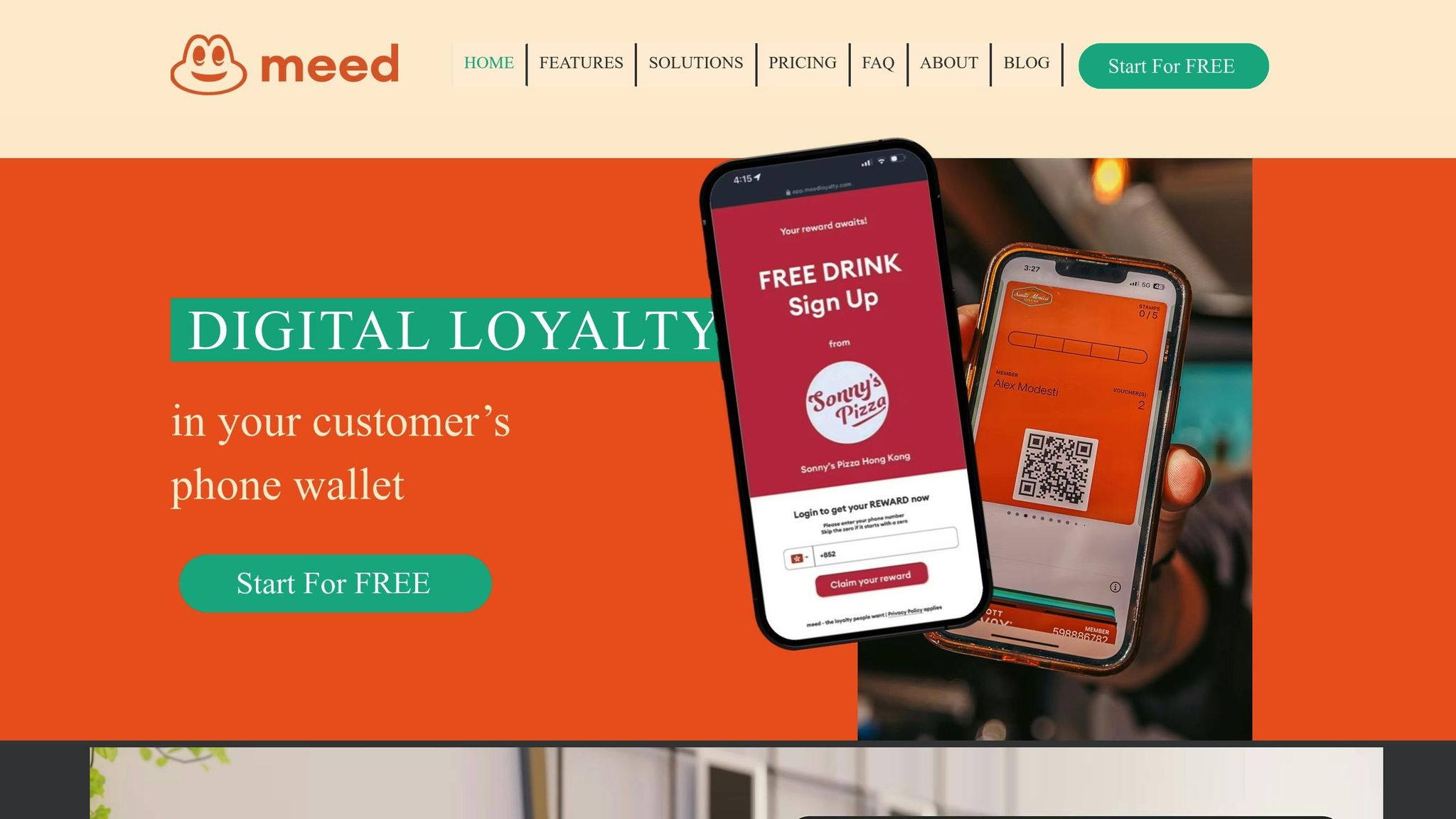
Once you’ve chosen your technology, integrating it effectively is crucial. meed provides a unified platform to manage loyalty programs across AR, VR, and traditional channels (https://meedloyalty.com).
For AR, meed’s digital stamp card feature tracks rewards earned through activities like scanning products or completing AR games. This ensures seamless tracking and eliminates the fragmented data issues common in multi-channel programs.
meed also supports both AR and VR with its QR code rewards system. AR apps can generate QR codes for exclusive rewards, while VR experiences can use QR codes as part of their exit mechanics. Integration with Apple and Google wallets ensures customers can access their loyalty status across devices, whether they’re engaging with AR on their phone or VR in a retail setting.
The platform’s membership consolidation feature simplifies loyalty management for customers, allowing them to handle all their memberships in one place. For businesses using both AR and VR, meed tracks interactions across both technologies, keeping points, rewards, and tier statuses synchronized.
meed’s analytics dashboard provides insights into engagement across all channels. It tracks AR feature adoption, VR interaction depth, and the overall impact of both technologies on program success. This data-driven approach helps businesses fine-tune their loyalty strategies based on real customer behavior, ensuring long-term success.
Conclusion
When deciding between AR and VR for your omnichannel loyalty program, it’s not about picking one over the other – it’s about finding the right fit for your business goals. AR offers easy access and smooth integration with existing channels, making it perfect for reaching larger audiences through devices people already own. On the other hand, VR delivers deeply immersive experiences that create emotional connections but requires specialized equipment, making it ideal for premium, high-impact moments.
Both technologies have unique strengths in driving engagement and loyalty. In fact, 75% of consumers who used AR or VR while shopping reported higher satisfaction, highlighting their combined ability to elevate customer experiences.
For many businesses, AR serves as the backbone of an omnichannel loyalty strategy. It works seamlessly with current systems, tracks interactions across multiple touchpoints, and lowers participation barriers. Meanwhile, VR acts as a powerful complement by offering exclusive, immersive experiences for top-tier customers or special occasions – think virtual product launches, interactive showrooms, or premium rewards that justify the investment in hardware.
Your budget and audience preferences should guide your choice of technology. If your target audience includes families, price-conscious shoppers, or a broad demographic, AR’s smartphone-based approach is a natural fit. However, if your focus is on luxury buyers, tech enthusiasts, or high-value segments willing to invest in specialized equipment, VR becomes a more compelling option.
Regardless of the technology you choose, integrating your loyalty platforms is essential. Tools like meed simplify this process by managing loyalty programs across AR, VR, and traditional channels. With features like digital stamp cards, QR code rewards, and wallet integration, meed ensures consistent engagement across all touchpoints. Its analytics dashboard also provides actionable insights by tracking customer interactions across technologies, helping you fine-tune your strategy based on real data.
Ultimately, a hybrid approach – using AR for everyday interactions and VR for premium, standout experiences – offers the best of both worlds. This combination allows you to engage customers daily while creating unforgettable moments that set your brand apart and keep them coming back for more.
FAQs
How can businesses decide between AR and VR for their loyalty programs?
When deciding between augmented reality (AR) and virtual reality (VR) for a loyalty program, it all comes down to what you want to achieve and what your audience prefers.
AR works best when you want to enhance real-world experiences. Think about adding digital elements to in-store interactions or creating fun, gamified ways for customers to explore your products. It’s a great way to blend the physical and digital worlds seamlessly.
VR, on the other hand, takes users into fully immersive environments. This makes it perfect for delivering standout, unforgettable brand experiences that demand a higher level of engagement.
To make the right choice, weigh a few key factors: your budget, how easily your audience can access the technology, and how well it matches your program’s goals. For instance, AR tends to be more budget-friendly since it often only requires a smartphone, making it accessible to a wider audience. VR, however, usually involves specialized equipment, making it better suited for more exclusive, high-impact experiences.
What are some real-world examples of AR and VR being used in retail loyalty programs?
Augmented reality (AR) and virtual reality (VR) are changing the game for businesses looking to enhance customer engagement in loyalty programs. Take AR-powered apps, for example – some retailers let customers scan products in-store to reveal exclusive rewards or discounts, seamlessly merging the physical and digital shopping experience. On the other hand, VR experiences allow customers to step into virtual stores or branded environments, creating interactive ways to earn loyalty points or explore new products in a completely fresh setting.
By incorporating these technologies, brands make loyalty programs more engaging and memorable, offering a standout experience in an increasingly competitive market.
What are the costs of using AR and VR in loyalty programs, and how can businesses manage them effectively?
The cost of integrating augmented reality (AR) and virtual reality (VR) into loyalty programs can range significantly based on the technology’s complexity, the scale of its rollout, and the features you aim to provide. AR options, like interactive in-store experiences or gamified rewards, are often more budget-friendly since they can utilize devices customers already own, like smartphones. On the other hand, VR tends to require pricier hardware, such as headsets, leading to higher upfront costs.
To keep these expenses under control, businesses can start with small-scale pilots, testing AR or VR features with a limited audience before expanding. Choosing platforms that work seamlessly with current systems can also help cut development costs. By prioritizing tools that boost engagement without adding unnecessary complexity, companies can strike a balance between managing costs and creating value for their customers.