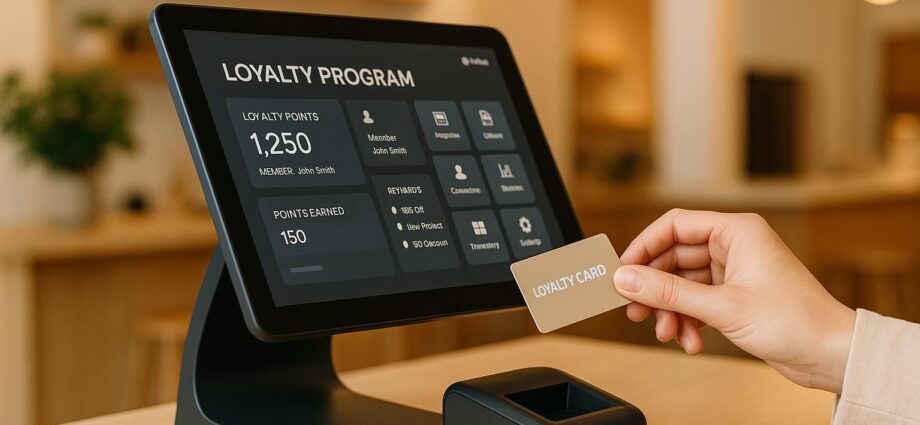
Choosing the right POS system for your loyalty program can simplify operations, improve customer retention, and boost sales. Here’s what to consider:
- Integration: Look for systems with built-in loyalty tools or seamless third-party integrations. Features like real-time point tracking and omnichannel support are key.
- Features: Prioritize systems with flexible rewards, customer databases, and personalized promotions. Examples include Square, Lightspeed, and Clover.
- Ease of Use: A user-friendly system reduces staff training time and ensures smooth operations. Options like Square and Loyverse are known for simplicity.
- Cost: Evaluate pricing models – free, freemium, or subscription-based – and ensure scalability for future growth. For example, meed offers a free Starter plan and a $490/year Pro plan.
- Scalability: If you plan to expand, choose a system that supports multi-location management and unified loyalty data.
Whether you’re a coffee shop or a retail store, the right POS system can streamline loyalty management and help build stronger customer relationships.
What to Look for When Choosing a POS System for Loyalty Programs
Selecting the right POS system for your loyalty program involves more than just going with a popular choice. It’s about finding a system that aligns with your business needs and simplifies loyalty management while enhancing the customer experience.
Integration and Compatibility
A smooth connection between your POS and loyalty platforms is essential for a successful program. Look for systems with open APIs that enable real-time connectivity with third-party platforms. For instance, Square integrates with Apple Wallet and Google Wallet, allowing customers to access loyalty passes directly on their phones – no physical cards required. Lightspeed goes a step further by embedding loyalty features into its core system, offering deeper analytics from the start.
Multi-channel synchronization is another must-have. When your POS syncs loyalty data across all touchpoints, customers can earn points in-store and redeem them online seamlessly. This creates a consistent and engaging experience.
If you’re using platforms like meed, ensure your POS system supports their integration methods. Some systems come with plug-and-play features that require minimal setup, while others might need custom development. Make sure the system you choose can handle your specific needs.
Features That Support Loyalty Programs
Integration is just the beginning – strong features are what make your loyalty program effective. Real-time point tracking and digital wallet integration can immediately boost customer engagement after a purchase.
Having flexible rewards options is another key factor. For example, Square Loyalty lets you set point levels at the product or category level, offering up to 15 customizable rewards. You can also define point expiration rules, which encourage timely redemptions and help manage liabilities.
A robust customer database is also critical. Your POS should build detailed customer profiles that include purchase history, contact information, and notes. This allows for personalized marketing and helps identify your top customers. Clover POS, used by over 125,000 businesses, provides advanced customer database tools.
Lastly, look for systems that support personalized promotions at checkout. Advanced POS systems can analyze purchase history and suggest targeted offers, helping to drive additional sales.
Ease of Use and Staff Training
A complicated POS system can derail your loyalty program. A user-friendly interface and minimal training requirements are essential for keeping operations running smoothly.
Square POS is known for its straightforward setup and transparent pricing, making it a great choice for small businesses with limited technical expertise. Lightspeed Retail offers advanced features and robust inventory management, though it may require more extensive staff training. For startups or very small businesses, Loyverse stands out with its free, mobile-friendly system. Clover POS provides a flexible and customizable solution without demanding significant technical knowledge for basic functions.
"The app is really great. It’s really helped bring a lot of sales. It’s easy to set up and use." – Alan Ho, Fred & Chloe
Staff adoption is crucial. If employees find the system difficult to use, they may not enroll customers in loyalty programs or process rewards accurately. When evaluating POS systems, ask about onboarding resources like tutorial videos or step-by-step guides. Platforms like meed emphasize quick deployment, boasting features like "QR code setup in under 5 minutes". Choose a system that integrates seamlessly into your current workflow rather than forcing a complete overhaul. Simple and efficient training ensures your loyalty program runs smoothly alongside daily operations.
Built-In vs. Third-Party Loyalty Solutions
When deciding on a POS system for your loyalty program, you’ll need to weigh two main options: using the loyalty tools already built into your POS or integrating a separate third-party platform. Both choices come with their own perks, and knowing how they differ can help you figure out what works best for your business.
Built-in loyalty features are directly integrated into your POS system. Think of it as the "easy button" – everything is in one place. Staff can quickly access customer accounts, add points for purchases, and handle redemptions without switching between systems. It’s straightforward and keeps operations simple.
On the other hand, third-party platforms like meed connect to your POS through APIs. While there’s a bit of setup involved, these platforms offer far more flexibility and customization. They’re designed to adapt to your business needs, often without requiring additional hardware or software. Plus, they’re quick to implement – meed, for example, promises integration in under five minutes.
Cost and Pricing Models
The costs for these solutions can vary. Some POS providers include loyalty features at no extra charge, while others offer them as premium add-ons. Third-party platforms often provide more flexible pricing. For instance, meed offers a free Starter plan for businesses with up to 50 members, making it easy to try before committing. If you’re ready to scale, their Pro plan costs $490 per year and supports multiple locations and active campaigns.
Feature Comparison: Basic vs. Advanced
Built-in loyalty modules tend to focus on the basics: point tracking, simple rewards, and customer databases. These are great for straightforward programs. But if you’re looking for advanced options, third-party platforms like meed shine. They offer tools like digital stamp cards, QR code rewards, integration with Apple and Google Wallet, AI-powered receipt scanning, and detailed analytics dashboards. These features let you go beyond basic point systems and create more engaging loyalty strategies.
Both built-in and third-party options sync data in real time, ensuring rewards are updated instantly. However, the way interactions are handled differs. Built-in solutions rely heavily on staff to enroll customers and apply rewards at checkout. With third-party platforms like meed, customers can take the lead. For example, they can scan a QR code on their receipt, and the system’s AI updates their rewards automatically. This not only lightens the load for your staff but also gives customers a more interactive experience.
Scalability and Omnichannel Support
Scalability is another key consideration. Built-in solutions grow alongside your POS provider’s infrastructure, which works well if you’re sticking to a single ecosystem. But if you’re planning to switch POS systems or need more advanced loyalty capabilities, third-party platforms offer the flexibility to scale independently.
For businesses operating both in-store and online, omnichannel capabilities are crucial. Many third-party solutions are designed to provide a unified loyalty experience across all channels, ensuring consistent customer engagement no matter where they shop.
Built-In vs. Third-Party: A Side-by-Side Look
| Factor | Built-In Loyalty Modules | Third-Party Loyalty Apps |
|---|---|---|
| Setup Complexity | Minimal; integrated into the POS system | Requires API setup but quick to deploy (e.g., meed: under 5 minutes) |
| Staff Training | Simple, unified interface | Customer-driven features reduce staff workload |
| Customization | Limited to POS provider options | Highly customizable to fit your needs |
| Cost Structure | Often included or a small add-on | Flexible pricing; free tiers available (e.g., meed: free for up to 50 members) |
| Feature Scope | Basic rewards and point tracking | Advanced tools like AI scanning, digital wallets, and NFC tap-to-join |
| POS Compatibility | Tied to specific POS systems | Works across multiple POS platforms |
| Scalability | Limited to POS provider’s infrastructure | Scales independently |
| Real-Time Updates | Handled within the POS system | Instant API synchronization |
| Analytics | Basic to moderate | Advanced analytics and reporting |
| Omnichannel Support | Varies by POS provider | Stronger support for unified in-store and online experiences |
Making the Right Choice
Your decision ultimately depends on your business needs. If you’re focused on simplicity, already committed to a single POS system, and only need basic loyalty features, a built-in solution might be enough. But if you’re looking for advanced customization, the ability to work across multiple systems, or features like digital wallets and AI receipt scanning, a third-party platform like meed could be the better fit.
Also, consider your technical resources. Built-in solutions are generally plug-and-play, while third-party platforms may require a bit of setup. For budget-conscious businesses, starting with free or low-cost plans – like meed’s free Starter tier – can be a smart way to test the waters before upgrading to more robust options.
sbb-itb-94e1183
Scalability and Cost for Small Businesses
When evaluating loyalty features in a POS system, it’s essential to think beyond functionality and consider both long-term expenses and scalability. For small businesses, managing costs effectively is a top priority. Understanding pricing structures and potential growth expenses can help ensure a smart investment.
Pricing Models and ROI
Loyalty-enabled POS systems are typically offered under three pricing models: free, freemium, or subscription-based. For instance, Loyverse provides both POS and loyalty features at no cost. Freemium options like Square POS include a free basic plan but charge around $45 per month per location for loyalty features. Subscription models, such as Elementary POS, bundle POS, loyalty, inventory management, and QR ordering into a single plan.
For businesses requiring more flexibility, platforms like meed offer a free Starter plan for up to 50 members. If you exceed that limit, the Pro plan, priced at $490 annually, supports up to five locations and 30 active campaigns.
To measure ROI, consider metrics like customer retention, repeat visits, and increased transaction values. For example, if a $45 monthly loyalty add-on brings in 20 repeat customers spending an average of $30 each, that’s $600 in additional monthly revenue – a solid return. Systems with built-in loyalty features, such as Clover or Loyverse, further improve ROI by removing the need for extra software purchases. For small retail or food service businesses, the payback period for these systems is typically between two and six months.
Modern POS systems simplify loyalty management by automating point tracking after purchases, eliminating the need for manual punch cards. Additionally, mobile interfaces allow customers to check rewards themselves, reducing the burden on staff.
Planning for Growth and Multiple Locations
While immediate cost savings are important, scalability should also be a key consideration. If you’re planning to expand, assess how your POS system handles growth. For example, Square charges $45 per location each month, which can add up quickly as you scale. In contrast, systems like Elementary POS include a unified customer database in a single bundled plan, and Lightspeed Retail or Revel Systems are specifically designed for multi-location businesses.
If expansion is on the horizon – say, within the next 12–24 months – opt for a scalable system early on to avoid the headaches of data migration, staff retraining, or losing customer data. Many multi-location upgrades cost only $20–$30 extra per month, making future growth more manageable.
Omnichannel capabilities are another crucial factor if you plan to add online sales. Ensure your POS system maintains unified loyalty data across both in-store and online channels, so customers can earn and redeem rewards seamlessly, no matter how they shop.
Additionally, consider systems with open API structures, which allow for easy integration and real-time synchronization of loyalty program data across locations. Cloud-based hybrid solutions are particularly effective for centralized management, making them ideal for businesses with growth ambitions.
Customer support and training costs also vary. Free systems like Loyverse often include comprehensive documentation, tutorials, and video guides to help your team get up to speed. Paid systems may offer different levels of support, so factor this into your operating costs, especially if your staff may need extra time to adapt.
Starting with a free or low-cost plan – like meed’s Starter tier – can be a practical way to test the effectiveness of a loyalty program without a big initial commitment. Match your POS system to your business’s growth plans: if expansion is uncertain or years away, simpler systems keep upfront costs low. However, if expansion is part of your immediate strategy, investing in a scalable system from the outset can save significant time and money down the road.
Conclusion
When selecting a POS system, aim for one that integrates effortlessly, includes essential loyalty features, grows with your business, and stays budget-friendly. The right system should handle your loyalty program without adding unnecessary costs or requiring advanced technical knowledge.
Prioritize features that actively boost customer engagement. Real-time synchronization ensures rewards stay consistent across all channels, while systems with open APIs and mobile wallet integration reduce friction and encourage participation.
Look for tools like automatic point tracking, digital stamp cards, and QR code rewards to cut down on manual work. Customizable rewards are another must-have, allowing you to tailor incentives to fit your business model perfectly.
As your business grows, keeping costs manageable and ensuring your POS system scales with you is crucial. Built-in loyalty features help reduce expenses by consolidating functions, making it easier to calculate your return on investment.
Scalability is equally important. If expansion to multiple locations is on your horizon within the next year or two, choose a system that supports multi-location management without requiring complex data transfers or extensive staff retraining. Cloud-based solutions with centralized customer databases simplify maintaining consistency as you grow.
Platforms like Meed simplify loyalty management with tools such as digital stamp cards, QR code rewards, and mobile integration – all designed for smooth scalability. Meed offers flexible pricing options, starting with plans for small businesses and expanding to accommodate growth. For example, their Pro plan costs $59 per month (or $590 annually) and supports two locations, with additional locations available at $39 per month.
Ultimately, choose a system that’s easy to learn, user-friendly, and adaptable to your business’s evolving needs. This will help you retain customers, encourage repeat visits, and strengthen customer relationships over time.
FAQs
What are the advantages of using a third-party loyalty platform with your POS system instead of built-in loyalty features?
Integrating a third-party loyalty platform with your POS system can bring a range of benefits that improve both your business operations and how you connect with customers.
These platforms often come packed with features you won’t find in standard built-in systems. Think digital stamp cards, QR code-based rewards, and wallet integrations like Apple Wallet and Google Wallet. These tools let you design loyalty programs that feel fresh, interactive, and tailored to your customers, making it easier to keep them coming back.
Another advantage is their scalability and adaptability. As your business grows or your needs shift, these platforms can adjust right along with you. They’re built to integrate smoothly with various systems, ensuring everything works together without a hitch. This kind of flexibility can save you a lot of time and hassle compared to working within the limits of built-in POS features.
How can a POS system with loyalty features help improve customer retention and boost sales?
A POS system equipped with loyalty features can play a key role in keeping your customers coming back. By rewarding repeat visits and creating a stronger connection with your audience, these systems help boost engagement in a meaningful way.
With loyalty programs built directly into your POS, tracking customer activity becomes a breeze. You can easily offer personalized rewards and create a smooth, hassle-free experience for both your team and your customers. The result? Less manual work for your staff, happier customers, and over time, higher sales and a more devoted customer base.
What should small businesses look for in a POS system that supports loyalty programs and future growth?
When choosing a POS system, small businesses should prioritize systems that can grow with their needs, are budget-friendly, and work seamlessly with loyalty programs. A system that adjusts as your business expands – whether that means more customers, additional locations, or new features – can save you from needing costly upgrades down the road.
Consider options that make managing loyalty programs easier. Features like digital rewards, QR code capabilities, or wallet integrations (think Apple Wallet or Google Wallet) can boost customer satisfaction while simplifying processes for your team. Focus on solutions that are easy to use, reasonably priced, and flexible enough to match your business’s growth and changes.
Comments are closed, but trackbacks and pingbacks are open.