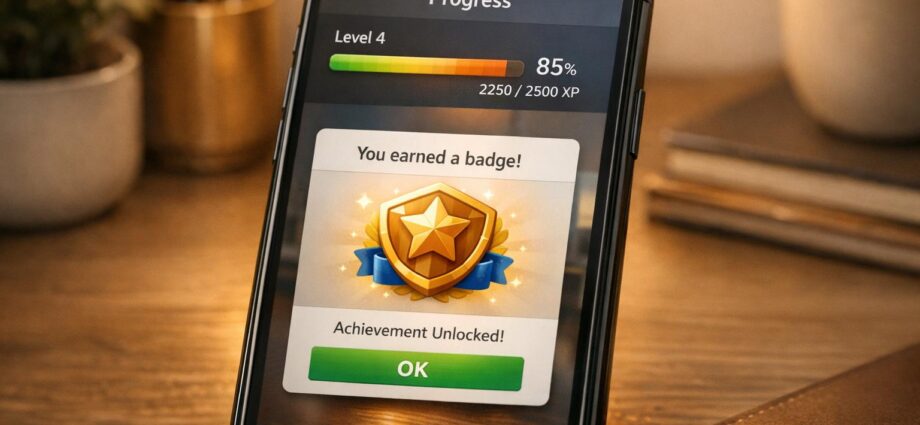
When you repeatedly check your phone for notifications, you’re engaging in a habit loop – a behavioral cycle made up of three parts: Cue (trigger), Routine (action), and Reward (satisfaction). Businesses use this model in gamified loyalty programs to encourage repeat engagement. For example, apps like Duolingo use streaks and badges to keep users motivated, while companies like Starbucks and Sephora use points and surprise rewards to make routine purchases feel rewarding.
Here’s the breakdown:
- Cue: Triggers like notifications or rewards alerts prompt action.
- Routine: Simple, quick actions like scanning a QR code or completing a task.
- Reward: Instant gratification (e.g., points, badges) or long-term incentives (e.g., VIP perks).
Gamification strengthens this cycle by making cues noticeable, actions easy, and rewards satisfying. Tools like progress bars, streaks, and variable rewards keep users engaged, while analytics ensure programs remain effective. This approach can boost engagement by up to 48% and retention by 30%, transforming casual users into loyal participants.
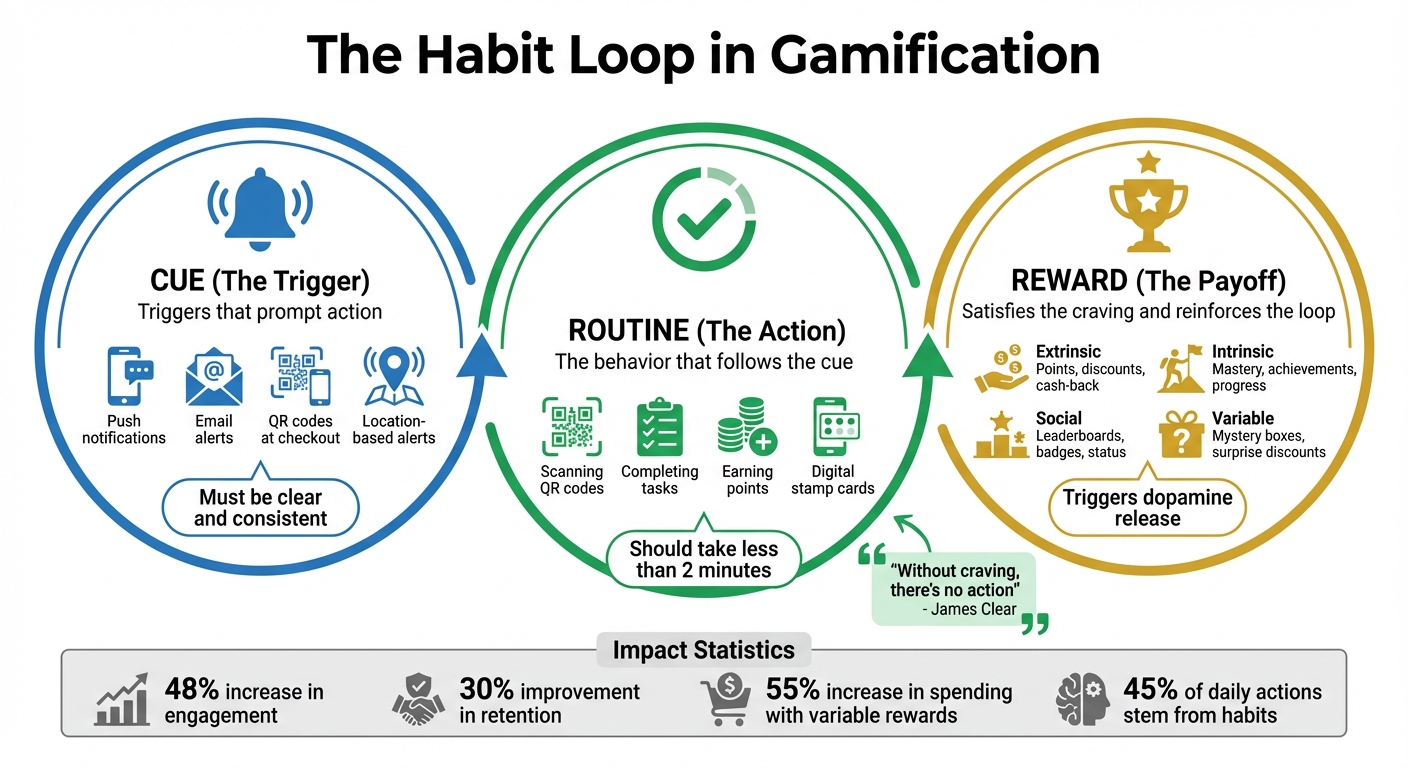
The 3-Stage Habit Loop in Gamification: Cue, Routine, and Reward
Can AI Really Engineer Better Habits? The Science Says Yes
sbb-itb-94e1183
The 3 Components of Habit Loops in Gamification
Building effective habit loops involves three key elements: cue, routine, and reward. When these components work together seamlessly, they transform occasional user interactions into ingrained behaviors, turning passive users into active participants.
Cue: The Starting Signal
A cue is what kicks off the habit loop, signaling to the brain that it’s time to take action and expect a reward. In gamified loyalty programs, cues often come in the form of external triggers like push notifications, email alerts, or even the app icon on your phone. These prompts serve as immediate calls to action. For instance, a location-based notification might offer bonus points when a customer is near your store, or a QR code at checkout might nudge them to scan for rewards. The key is to make these cues clear and consistent to strengthen the habit loop.
"Emails and notifications have been extremely effective in bringing people back." – Gina Gotthilf, VP of Growth and Marketing, Duolingo
But cues aren’t always external. Internal triggers – like boredom or a shift in mood – can also drive engagement, making the habit loop even stronger. Once the cue is established, the next step is getting users to perform the desired action.
Routine: The Action Step
The routine is the behavior that follows the cue. It’s the bridge between the trigger and the reward, and without it, the habit loop breaks down. In gamified loyalty systems, routines can range from simple actions like earning points to more involved tasks like completing digital stamp cards, hitting purchase milestones, or unlocking achievements.
Whether someone completes the routine depends on two factors: how motivated they are by the reward and how easy the action is to perform. For example, if scanning a QR code involves opening an app, navigating multiple menus, and entering a code manually, users are likely to abandon the process. On the other hand, a one-tap action through a digital wallet can significantly improve participation.
"The key insight: Without craving, there’s no action. The cue must trigger desire for you to respond." – James Clear
Routines should be designed to be quick and straightforward – ideally taking less than two minutes. This simplicity makes them hard to resist, and with repetition, the brain starts to automate the behavior, turning it into a habit.
Reward: The Payoff
The reward is what convinces the brain that the effort was worth it, satisfying the craving and reinforcing the habit loop. Rewards also stimulate the release of dopamine, a chemical linked to pleasure and motivation, which strengthens the connection between cue, routine, and reward.
Immediate rewards are particularly powerful because the brain prioritizes instant gratification. For example, a notification that says, "You earned 50 points!" delivers immediate satisfaction, compared to a vague promise of a future discount. Top loyalty programs often combine quick rewards – like points, badges, or celebratory animations – with long-term incentives such as free products or VIP perks.
| Reward Type | Examples | What Drives It |
|---|---|---|
| Extrinsic | Points, discounts, cash-back, gifts | Transactional motivation |
| Intrinsic | Mastery, achievements, progress | Competence & autonomy |
| Social | Leaderboards, badges, community status | Recognition & belonging |
| Variable | Mystery boxes, surprise discounts | Anticipation & excitement |
Variable rewards, which add an element of surprise, are especially effective in keeping users engaged. For example, Starbucks uses its "Stars" system to gamify coffee purchases, while Sephora’s "Beauty Insider" program allows customers to exchange points for exclusive products. These systems make routine purchases feel like achievements, ensuring that rewards feel both immediate and meaningful, keeping users coming back for more.
How Gamification Strengthens Habit Loops
Gamification enhances every part of the habit loop – making cues more noticeable, routines more engaging, and rewards more satisfying. This can lead to impressive results, such as boosting customer engagement by up to 48% and improving customer retention by 30%. Each gamification element strengthens the core components of the loop: cue, routine, and reward.
Visual Feedback and Progress Tracking
Ever noticed how a progress bar that’s 80% complete makes it nearly impossible to stop before finishing the last 20%? That’s the Zeigarnik Effect at work – it explains why unfinished tasks stick in our minds more than completed ones. Tools like progress bars and checklists leverage this psychological principle to pull users back into the habit loop.
Visual feedback, such as confetti animations or unlocking badges, taps directly into the brain’s reward system by triggering dopamine release. This reinforcement strengthens the behavior. For example, Starbucks saw a 20% rise in global sales and a 13% year-over-year increase in active rewards members after introducing gamified elements.
Streak counters are another powerful tool. They play on our natural aversion to loss – users don’t want to break their streak, which keeps them coming back. Over time, the routine becomes automatic, not because of the reward itself, but because users want to protect the progress they’ve already made.
The Endowed Progress Effect is another clever trick. By showing users that they’ve already made some progress – say, 10% or 20% – it increases their commitment to completing the task. Loyalty programs, LinkedIn’s profile completion percentages, and fitness apps like NikeFuel use this to great effect, turning abstract goals into visible milestones.
| Visual Mechanic | Psychological Trigger | Habit Loop Stage |
|---|---|---|
| Progress Bars | Completion Instinct / Zeigarnik Effect | Craving & Reward |
| Streaks | Loss Aversion | Routine (Repeat) |
| Badges/Levels | Status & Recognition | Reward |
| Animations/Confetti | Immediate Gratification (Dopamine) | Reward |
| Aspirational Tiers | Anchoring / Anticipation | Craving |
Variable Rewards for Increased Interest
While visual cues are essential, variable rewards take engagement to the next level by introducing an element of unpredictability. Fixed rewards lose their appeal over time, but when the outcome is uncertain, users stay curious and engaged. This is why mechanics like mystery discounts, surprise bonuses, and "spin the wheel" features work so well – they keep the brain guessing and the dopamine flowing.
For instance, unpredictable rewards can increase customer spending by as much as 55%.
"Variable or unpredictable rewards – like mystery discounts or limited-time offers – prove particularly effective at stimulating dopamine release and reinforcing behaviors." – Netguru
The key is to balance external incentives, like points or discounts, with internal motivators, such as a sense of mastery or recognition. When users feel they’re working toward something meaningful, they’re more likely to stay engaged over the long term.
Analytics for Sustained Engagement
Gamification doesn’t stop at rewards. Real-time analytics play a crucial role in keeping users engaged by tracking their behavior and refining the experience. For example, businesses can monitor how often customers scan QR codes, redeem rewards, or participate in challenges to identify what drives the most value.
"What good is knowing the behaviors that lead to success if you can’t measure (or improve) them?" – Dr. Michael Wu, PhD
Customer Data Platforms (CDPs) are especially useful here. These systems gather data from various sources – apps, websites, and in-store systems – to update user profiles instantly. This ensures that when a customer earns points or completes a challenge, the progress is reflected across all platforms in real time, reinforcing the habit loop’s reward phase.
Analytics also help businesses avoid pitfalls. For instance, if users exploit a loophole to earn excessive points, the system can flag this behavior and adjust the rules to maintain fairness. Similarly, analytics can identify "player archetypes" – like competitive users who thrive on leaderboards versus casual users who prefer personal milestones. By tailoring cues and rewards to individual preferences, businesses make the habit loop feel more natural, encouraging long-term engagement.
How to Build Habit Loops in Digital Loyalty Programs
Creating a habit loop in digital loyalty programs requires the right mix of motivation, ability, and a clear trigger. According to the Fogg Behavior Model, these three factors must align for a behavior to stick. If even one element is missing, the loop stalls before it can take hold.
Step 1: Identify Effective Cues
The first step in establishing a habit loop is identifying triggers that resonate with your audience. Begin by analyzing the customer journey to discover moments when a need naturally arises. This could be when someone passes by your store, experiences an afternoon energy dip, or completes a purchase. These moments present opportunities for timely and relevant digital nudges.
Triggers generally fall into four categories:
- Time-based: Notifications sent at specific times, like daily reminders.
- Location-based: Alerts triggered by geofencing when a customer is near your store.
- Change-based: Messages that notify users when they unlock a reward.
- Network-based: Updates based on social activity, such as a friend’s leaderboard progress.
For instance, in 2022, the meditation app Calm saw user retention triple by sending daily push notifications to remind users to meditate.
Initially, you may need external triggers, like push notifications, to prompt action. Over time, these can evolve into internal triggers, where the behavior becomes second nature. As Nir Eyal explains, "Habits are impulses to do behaviors with little to no conscious thought".
To determine the best cues, evaluate them based on frequency (how often the event occurs) and relevance (how likely it is to re-engage the user). Tools like Customer Data Platforms can analyze real-time behavioral data to help you deliver timely and relevant triggers.
Once you’ve nailed the triggers, the next step is designing routines that are easy and engaging.
Step 2: Design Simple, Engaging Routines
When a trigger fires, the next step in the habit loop is the routine. For a routine to stick, it needs to be simple and effortless. If the action requires too much effort, the loop will likely fail. To avoid this, break tasks into smaller steps, minimize decision-making, and provide immediate positive reinforcement.
A great example is the Endowed Progress Effect. This concept shows that people are more motivated to complete tasks when they feel they’ve already made progress. For instance, a digital stamp card with one or two stamps pre-filled feels easier to complete than a blank one.
Make sure routines are frictionless. Actions like scanning a QR code or collecting digital stamps should require minimal effort. The smoother the process, the more likely customers are to form a habit.
After perfecting the routine, focus on rewards that keep users coming back.
Step 3: Deliver Rewards That Keep Customers Coming Back
Rewards are the linchpin of any habit loop. While predictable rewards can lose their appeal over time, variable rewards – like mystery discounts or spin-the-wheel features – can increase customer spending by as much as 55%.
Using a layered reward system can be especially effective. For example, combining points, badges, and tiered status levels (like moving from Bronze to Gold) taps into the human desire for achievement and recognition. While discounts and other transactional rewards are great for attracting initial interest, emotional rewards – like status, community acknowledgment, and alignment with a brand’s values – are essential for long-term loyalty.
Timing is everything. Deliver rewards immediately after the desired action to reinforce the behavior. Whether it’s an engaging animation, instant points, or a digital badge, instant gratification triggers dopamine release, strengthening the habit loop. Make it easy for customers to redeem rewards by integrating them into digital wallets or using QR codes.
Platforms like meed simplify this process by offering tools such as digital stamp cards, QR code rewards, and seamless integration with Apple and Google wallets. This eliminates the hassle of juggling multiple apps or physical cards, making it easier for customers to collect and redeem rewards.
Here’s a quick breakdown of reward types and their psychological triggers:
| Reward Type | Psychological Trigger | Ideal For |
|---|---|---|
| Points/Currency | Immediate Gratification | Short-term repeat purchases |
| Badges/Achievements | Recognition & Pride | Building brand loyalty and advocacy |
| Tiered Status | Aspiration & Exclusivity | Long-term retention (LTV) |
| Leaderboards | Social Competition | High-frequency engagement |
| Streaks | Loss Aversion | Daily/Weekly habit formation |
| Spin-the-Wheel | Anticipation (Dopamine) | Surprise and delight |
Measuring and Improving Habit Loop Performance
To truly understand how your habit loops are performing, you need to track the right metrics. Without data, it’s impossible to pinpoint what’s working and what needs improvement. Metrics can reveal where your loops excel and where they break down, giving you the insights needed to make meaningful changes.
Tracking Key Metrics
Start by focusing on customer retention rates – the percentage of users who continue engaging with your program over time. Gamification, for instance, has been shown to boost retention by up to 30%. However, retention alone doesn’t tell the whole story. Monitoring Daily and Weekly Active Users (DAU/WAU) helps you gauge whether your triggers are effectively bringing users back regularly.
Another critical metric is your habitual user percentage, which reflects the portion of your audience that engages frequently and almost automatically. Ideally, at least 5% of your users should fall into this category – these are the individuals who have fully embraced the habit loop. Beyond engagement, keep an eye on reward redemption rates and average customer spending to measure the financial impact of your program. Even a modest 5% increase in engagement can lead to a 25% to 30% boost in revenue.
Here’s a quick breakdown of key metrics to track:
| Metric Category | Key Metrics to Track | Purpose |
|---|---|---|
| Retention | Customer Retention Rate, Churn Rate | Assess the long-term effectiveness of the habit loop |
| Engagement | Repeat Visits, Session Frequency, Daily Check-ins | Measure how well triggers are driving user action |
| Monetization | Reward Redemption Rate, Average Spend, LTV | Evaluate the financial outcomes of your habit loop |
| Behavioral | Task Completion Rate, Achievement Unlocks | Determine if routines are simple enough for users to complete |
Use these metrics to identify areas for improvement, then refine your strategies through controlled experiments.
A/B Testing and Refinements
Once you’ve established your metrics, use A/B testing to fine-tune each part of the habit loop. This method allows you to test and optimize the cue, routine, and reward components individually.
For cues, experiment with different types of triggers – like time-based reminders versus location-based alerts – to see which ones prompt the best response. When testing routines, focus on simplifying steps. If users aren’t completing tasks, the issue often lies in the complexity of the process rather than a lack of motivation.
Rewards are another area ripe for experimentation. Compare fixed rewards with variable ones. Adding an element of surprise or unpredictability in rewards can significantly boost dopamine release, enhancing engagement and focus. For example, one language-learning platform increased store purchases by 13% after introducing a badge system. Experiment with different reward schedules to discover what resonates most with your audience.
Keep analyzing your results to identify and eliminate friction points that may be hindering progress.
Using Analytics for Continuous Improvement
Analytics tools can provide deep insights into user behavior, helping you go beyond surface-level metrics. Look for friction points – moments where users hesitate or drop off. These are often found in routines that may be overly complex or unintuitive, creating barriers to habit formation.
Platforms like meed offer unified dashboards that consolidate customer data across channels. This makes it easier to analyze patterns and adjust your program in real time. Study the behaviors of your most engaged users, then test strategies to guide new users toward adopting similar habits. By continuously refining your cues and rewards based on data, you can strengthen the overall habit loop.
It’s also important to watch for unintended consequences, such as users exploiting the system or developing unhealthy behaviors. To prevent burnout, consider implementing daily point limits or "stop points" that encourage balanced engagement. The goal isn’t just to drive activity – it’s to create sustainable habits that benefit both your users and your business.
Conclusion
Habit loops are at the heart of gamified loyalty programs that truly work. Studies reveal that 45% of daily actions stem from habits, and gamification can increase engagement by 48%. By aligning the right cue, a straightforward routine, and an enticing reward, you can transform casual customers into devoted participants who keep coming back.
Building habits takes time and consistent effort. Research suggests it takes about 66 days for a behavior to become automatic. That means your loyalty program must consistently deliver value while keeping the process as smooth as possible. Using tools like variable rewards, visual progress tracking, and well-timed triggers can help solidify these habits and drive repeat engagement. These strategies emphasize the need for strong, dependable systems to ensure habit loops function seamlessly.
In practice, platforms like meed make it easier to integrate these habit loop elements. Features like digital stamp cards, QR code rewards, and unified analytics simplify loyalty management. Plus, integration with Apple and Google wallets keeps evolution of loyalty programs front and center, making customer engagement effortless and habitual.
Once the habit loops are in place, the real work begins. The most effective loyalty programs don’t just collect data – they act on it. By analyzing metrics like retention rates, daily active users, and reward redemptions, you can pinpoint strengths and areas for improvement. A/B testing and ongoing analytics allow you to fine-tune each habit loop component, ensuring your program continues to foster long-term engagement.
Well-designed habit loops create meaningful value for businesses and customers alike. They drive higher spending, improve retention, and build stronger community ties, creating a win-win relationship where customers actively choose to stay engaged.
FAQs
How do habit loops improve customer engagement in loyalty programs?
Habit loops consist of three key elements: a cue, a routine, and a reward. Together, they form a cycle that drives repeated behavior. Take a loyalty program, for instance. It might send a notification (cue) to remind a customer they’re close to earning a reward. The customer then takes a quick action, like scanning a QR code or tapping a digital stamp (routine), and immediately receives points, a discount, or another perk (reward). This cycle not only builds anticipation but also encourages customers to return.
Loyalty programs that incorporate gamification and habit loops can dramatically increase customer engagement and retention. By weaving these loops into their structure, businesses motivate customers to interact more frequently and develop a stronger bond with the brand. Tools like meed simplify this process by offering features such as digital stamp cards, QR code rewards, and wallet integration, making it easy to create engaging, habit-forming experiences.
How do variable rewards strengthen habit loops in gamification?
Variable rewards are a powerful tool for making habit loops more engaging and effective. By adding an element of unpredictability, they grab attention and spark a dopamine response, making the reward phase feel more thrilling and memorable. This sense of uncertainty keeps people coming back, eager for the chance at something unexpected or special.
Over time, this strengthens the cue-action-reward cycle, helping transform user interactions into regular habits. For example, in gamified loyalty programs, businesses can use variable rewards – like surprise discounts or bonus points – to keep customers excited and engaged, all while building lasting loyalty.
How can businesses measure the success of their gamified loyalty programs effectively?
To evaluate the success of a gamified loyalty program, businesses need to start with clear objectives and track key performance indicators (KPIs) that reflect customer behavior and revenue impact. Focus on metrics like activation rate (the percentage of customers who join the program), engagement rate (average sessions or challenges completed monthly), redemption rate (rewards claimed), and retention rate (typically 20–30% higher in gamified programs). Don’t forget to monitor average order value (AOV) increases and the program’s ROI to gauge its financial effectiveness.
Tools such as cohort analysis and A/B testing can connect these metrics to revenue, helping to pinpoint which game elements deliver the best outcomes. Comparing your program’s results with industry benchmarks – like participation rates (around 45%) and redemption ratios (roughly 30%) – can reveal areas needing improvement. Platforms like meed make this process easier by offering a centralized dashboard that tracks these metrics in real time, enabling businesses to refine their loyalty strategies and boost both engagement and revenue.