
Consistency across multiple locations is vital for any business aiming to build trust and retain customers. When policies, pricing, or services vary between branches, it confuses customers and damages brand reliability. Centralized systems solve this by unifying operations, loyalty programs, and communication, ensuring every location delivers the same experience.
Key Takeaways:
- Customer Trust: Consistency in service and rewards builds confidence and encourages repeat business.
- Centralized Tools: Platforms like meed simplify loyalty programs, standardize rules, and automate workflows across locations.
- Staff Alignment: Standardized training and clear documentation ensure employees deliver uniform service.
- Data-Driven Insights: Analytics identify strengths and weaknesses, helping businesses maintain high standards and scale efficiently.
The Secret to Multi Unit Consistency
What Consistent Experiences Mean for Multi-Location Businesses
In multi-location businesses, consistency isn’t just a buzzword – it’s the foundation of trust. When customers know they can count on the same quality and service no matter where they interact with your brand, it builds confidence. This confidence often translates to repeat visits, higher spending, and deeper loyalty. Centralized systems play a big role here, ensuring that every location delivers the same dependable experience at every touchpoint.
Customer Interactions and Brand Uniformity
Consistency shines in every customer interaction. Brand uniformity means that whether someone visits your downtown flagship or a suburban branch, they immediately recognize your brand – not just through logos and colors but in how they’re greeted, how issues are resolved, and how policies are applied. When service feels inconsistent across locations, customers may start questioning your brand’s reliability.
Research highlights that today’s consumers value how they’re treated just as much as what they buy. Even small inconsistencies – like a policy applied differently at one location – can chip away at trust over time. On the flip side, consistent interactions build trust and simplify operations by reducing service errors. When customers know what to expect, they’re more likely to return.
Standardizing Loyalty Program Rules
Loyalty programs can quickly become a headache if the rules differ from one location to another. To avoid confusion, it’s crucial to standardize every aspect of your program. Customers should earn the same points for purchases, follow the same redemption rules, and see the same reward tiers across all locations. Promotional calendars must also align, ensuring that bonus point events or special offers run simultaneously everywhere.
When loyalty rules are consistent, customers feel confident in the program and are more likely to engage. This consistency often leads to higher participation and encourages customers to concentrate their spending with your brand. In fact, maintaining uniform experiences can boost customer lifetime value by 25–95%.
Tools like meed simplify this process by standardizing loyalty program rules, point systems, and reward catalogs across locations. Features such as Apple & Google Wallet Passes, QR codes, and NFC tap-to-join functionality make it easy for customers to join and earn rewards no matter where they are. This seamless approach to loyalty programs also helps ensure consistent staff performance across all locations.
Aligning Staff Across Locations
Your employees are the face of your brand, and their ability to deliver consistent service is crucial. Achieving alignment starts with clear, standardized training on brand values, customer service protocols, and loyalty program rules. Centralized documentation ensures that every team member has access to the same guidelines, reducing confusion and promoting uniform decision-making. For instance, refund processes should be identical across all locations to avoid discrepancies.
A solid training framework minimizes errors and ensures all staff operate from the same knowledge base. Beyond training, two-way feedback systems, regular check-ins between team leads and location managers, and structured audits – whether on-site or virtual – help maintain these standards. Centralized platforms further empower employees, ensuring they have the tools and support needed to deliver consistent service every time.
Using Centralized Platforms for Multi-Location Management
Managing loyalty programs and operations across multiple locations without centralized tools can lead to fragmented data and inconsistent customer experiences. Centralized platforms address this challenge by bringing together customer data, program rules, communications, and analytics into one system that all locations can access. Here’s how these platforms simplify operations across multiple sites.
Key Features of Centralized Platforms
The best centralized platforms offer essential features that make managing multi-location operations seamless. A unified dashboard consolidates customer interactions and transactions from all locations, giving staff instant access to a customer’s complete history – purchases, preferences, and past interactions.
Real-time data synchronization ensures information flows smoothly across locations and integrates with existing systems like CRM tools and point-of-sale systems. For example, when a customer earns loyalty points at one branch, those points are immediately visible in their account at every other location.
Omnichannel support enables customers to connect via their preferred channels – email, chat, social media, or phone – while maintaining a consistent experience across all touchpoints.
Advanced analytics and reporting highlight performance differences between locations, helping businesses quickly identify strengths and areas needing improvement. This proactive approach minimizes the risk of learning about issues through customer complaints .
Workflow automation eliminates repetitive tasks by standardizing processes such as automated responses, escalation rules, and approvals. This ensures consistent handling of refunds, loyalty point adjustments, and promotions across all branches.
How meed Supports Multi-Location Consistency
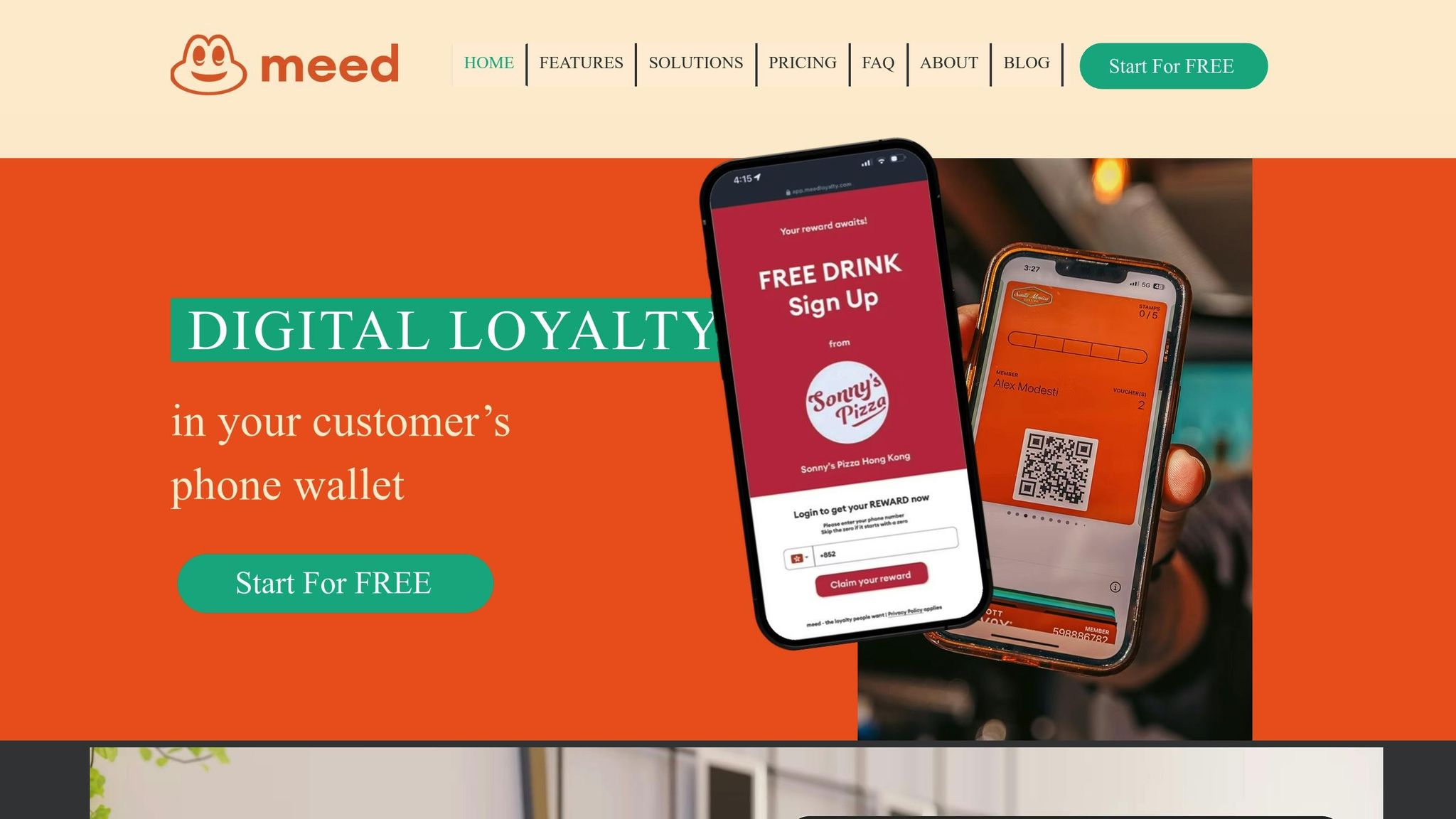
meed offers tools specifically designed to maintain consistency in customer interactions and staff performance across locations. Features like digital stamp cards, QR code rewards, and Apple/Google Wallet integration ensure customers can easily earn and redeem rewards no matter which branch they visit. The setup process is quick – taking less than five minutes – making it simple to implement uniform joining mechanisms.
With multi-location tracking, businesses can oversee member activities like sign-ups, earnings, and redemptions across all branches from a single portal. The platform also supports multiple admin and app users, allowing staff at individual locations to manage programs effectively while headquarters retains overall control.
meed’s AI-powered receipt scanning feature automates stamp updates, ensuring loyalty rules are applied consistently. By reading receipts and updating rewards automatically, the system reduces the chance of human error.
For businesses just starting out, meed’s free plan includes one loyalty program and one location. The Pro plan, priced at $490 per year, expands capabilities with two loyalty programs, support for up to five locations, 30 active campaigns, and five user seats – ideal for growing businesses.
Reducing Administrative Work with Centralized Tools
In addition to ensuring consistent customer rewards, centralized tools significantly cut down on administrative workloads. A unified system eliminates duplicate data entry, making customer information instantly accessible across all branches.
Loyalty programs can be configured once, with updates automatically applied across all locations. Managers can set rules for earning points, redemption thresholds, and promotions in the central system, streamlining updates.
Communication becomes more efficient, too. Instead of passing instructions through multiple layers, centralized platforms allow businesses to broadcast updates, policy changes, and promotional details to all locations at the same time. This ensures everyone stays on the same page.
Reporting and compliance monitoring also shift from manual reviews to automated dashboards that flag inconsistencies or non-compliance issues. Centralized marketing asset management systems store brand materials, ensuring version control and preventing outdated content from being used. Regular reviews of digital assets – like landing pages, emails, and social posts – help detect inconsistencies early, reducing the risk of larger problems down the line.
Approval workflows further enhance consistency, ensuring that changes to brand guidelines, marketing materials, or loyalty program rules are reviewed before being implemented across locations. Centralized monitoring tools also make site inspections and audits more efficient, helping to catch deviations from approved standards early.
The overall impact of these tools is transformative. Staff spend less time on administrative tasks and more time focusing on customers, while headquarters can maintain oversight without micromanaging. By working from a unified system, businesses can operate more efficiently and cohesively.
sbb-itb-94e1183
Setting Up Standardized Communication and Training
Once you’ve centralized your tools, the next step is to ensure that communication and training are standardized. This ensures every location delivers a loyalty experience that’s consistent and aligned with your centralized systems and program rules.
Unified Customer Communication Strategies
To create consistency, start by establishing a single source of truth for all campaigns. Centralized platforms allow you to coordinate email, SMS, and in-app campaigns across all locations, preventing conflicting messages from reaching customers.
Using standardized templates and brand guidelines is key. These ensure that every location uses the same tone, visual style, and structure for promotions. For example, if you’re running a double-points weekend promotion, the details, redemption rules, and messaging should be identical whether a customer visits a store downtown or in the suburbs.
A content calendar can help organize campaigns across all locations while allowing for minor, location-specific adjustments. For instance, a national chain might run the same loyalty promotion everywhere but allow individual stores to mention local events or adjust store hours in their messaging. This approach maintains consistency while adding a touch of local relevance.
Platforms like meed simplify unified communication by enabling push notifications that deliver consistent messages to customers across all locations. Additionally, Apple & Google Wallet passes can send uniform offers and updates directly to customers’ mobile wallets. By using centralized tools, you can ensure that promotional vouchers and offers are available at every branch.
Tracking the effectiveness of communication channels at each location is another crucial step. Centralized systems can reveal whether customers in certain regions respond better to SMS, email, or other methods. This insight allows you to fine-tune your delivery channels without altering the core message.
Once your communication strategies are aligned, the next priority is preparing your staff to deliver these messages effectively.
Creating Standardized Training Materials
To ensure consistent loyalty experiences, provide staff with clear and accessible training materials. Start by creating documentation that covers program mechanics, eligibility criteria, and redemption procedures. Store these resources in a centralized system so all staff, no matter their location, can access them easily.
Offer training materials in various formats to cater to different learning preferences. These could include concise video tutorials, detailed PDF guides, and quick-reference cards.
Make onboarding a priority by requiring new hires to complete loyalty program training before their first shift. Tailor the depth of training to specific roles – cashiers might only need to know how to enroll customers and redeem points, while managers should understand program rules in detail, including how to handle exceptions.
Cloud-based tools make it easy to push updates to training materials whenever new loyalty features are introduced. This ensures all staff receive the latest information simultaneously, and you can track which locations are lagging behind in completing updates.
Regular refresher training – conducted quarterly or semi-annually – can reinforce key procedures and introduce any program updates. Before rolling out new training, ensure all operational processes are clearly documented to maintain consistency across locations.
Once training is in place, it’s essential to monitor compliance and address any gaps.
Monitoring Compliance and Fixing Gaps
Even with robust training, it’s essential to verify that staff are following the standardized procedures and identify areas where additional support might be needed. Centralized dashboards can track performance metrics that highlight these gaps.
For example, monitoring enrollment rates by location can reveal branches where the loyalty program isn’t being promoted effectively. Similarly, comparing redemption rates can indicate whether staff are explaining rewards clearly and processing redemptions correctly. Metrics like customer satisfaction (CSAT) and Net Promoter Scores (NPS) can also shed light on how well loyalty experiences are being delivered.
meed’s analytics dashboard and transaction logs can identify errors such as incorrect point calculations or failed redemptions. Assigning tasks through centralized platforms helps ensure accountability and reduces the likelihood of mistakes.
Mystery shopper programs offer another way to assess how well staff are implementing the loyalty program. Trained evaluators can verify whether employees are following standardized scripts and procedures. If significant gaps are identified – such as staff at one location misunderstanding a key process – targeted retraining is often more effective than repeating general training for everyone.
Real-time reporting can also flag anomalies, such as a sudden drop in loyalty enrollments, prompting immediate investigation. Dashboards that track task completion across all locations provide valuable visibility into operational consistency.
To maintain high standards, establish feedback loops and conduct regular audits. Quarterly compliance reviews, where location managers report on training completion, customer feedback, and operational challenges, can help ensure alignment.
Finally, recognize and reward locations that consistently meet compliance standards. Mobile-enabled tools that allow managers and staff to receive instant updates and alerts can help address issues before they impact the customer experience. This real-time communication keeps everyone informed and aligned.
Tracking Performance and Scaling Consistency
Once you’ve standardized communication and training for your loyalty program, the next step is to keep a close eye on its performance. Regular monitoring not only ensures smooth operations but also serves as a guide for scaling your program effectively. This ongoing evaluation sets the stage for using data to refine and improve your loyalty initiatives.
Using Analytics to Spot Inconsistencies
Centralized analytics tools are invaluable for tracking key metrics across all your locations. They help pinpoint which branches are excelling and which may need extra attention.
Start by examining customer participation rates – the percentage of customers enrolled in your loyalty program at each location. For instance, if one store has a 65% enrollment rate while another lags at 30%, that disparity could highlight issues like inconsistent staff training, weak program promotion, or differences in customer engagement during checkout.
Another critical metric is redemption rates. If a location shows high enrollment but low redemption, it might indicate unclear reward instructions or unappealing incentives. Additionally, comparing average transaction values between loyalty members and non-members can reveal whether the program is driving higher spending or simply adding operational complexity.
Platforms like meed offer analytics dashboards that track member activity – covering sign-ups, earning patterns, and reward redemptions – across multiple locations. The Pro plan, for example, provides in-depth insights into membership trends, location-specific performance, and campaign outcomes, making it easier to identify and address problem areas.
Real-time sentiment analysis adds another layer of insight, helping you gauge customer satisfaction almost instantly. This enables you to resolve issues before they escalate. Quarterly reviews of your loyalty program’s digital presence – such as promotional materials, email campaigns, and social media posts – can also help catch inconsistencies early. Setting up alerts for performance anomalies, like a sudden 20% drop in participation, ensures you can act quickly. Lastly, customer feedback through surveys, online reviews, and post-visit emails provides direct insights into what’s working and what needs improvement at individual locations.
Adapting Loyalty Programs for Business Growth
To scale your loyalty program effectively, leverage insights from existing locations while maintaining centralized management. Avoid creating separate systems for new branches, as this can lead to data silos and disrupt standardization.
Before launching a new location, analyze data from your current branches to identify which program features drive the most engagement and revenue. For example, if your analytics show that digital stamp cards lead to 40% higher redemption rates compared to traditional point systems, it’s wise to prioritize that feature in new locations.
meed’s tiered pricing structure supports gradual growth. The free plan accommodates up to 50 members and one location, while the Pro plan (priced at $59/month or $590/year) covers unlimited members and two locations, with additional locations costing $39/month. This setup allows businesses to expand at their own pace, seamlessly integrating new branches into a centralized platform.
Multi-location tracking ensures customers can redeem rewards across all locations without hassle. The platform’s integration with Apple and Google wallets further simplifies the process, enabling consistent digital passes that can be set up in under five minutes using QR codes.
By using customer segmentation tools, you can identify the most valuable customer groups in different regions and tailor your loyalty offerings to suit their preferences. Predictive analytics can also help optimize inventory, staffing, and marketing strategies by forecasting local demand. With these scalable systems in place, continuous data analysis ensures your program evolves alongside your business.
Using Data to Refine Programs Over Time
A successful loyalty program isn’t static – it needs to grow and adapt as your business changes. Regularly review metrics like enrollment rates, participation levels, and customer lifetime value to identify areas for improvement. Incorporate customer feedback and A/B testing to refine your approach.
Key metrics to monitor include the enrollment growth rate and the active participation rate – the percentage of enrolled customers who actively make purchases. Comparing the customer lifetime value of loyalty members versus non-members can also help quantify the program’s financial impact. Additionally, tracking program-specific metrics, such as the percentage of transactions involving loyalty rewards and the average basket size for members, can reveal whether the program is encouraging higher spending.
Establish a monthly or quarterly review cycle to analyze these performance trends. Tools like meed’s analytics platform make it easy to compare metrics before and after implementing changes. Customer feedback from surveys and sentiment analysis should also guide adjustments. For instance, if analytics show that personalized reward recommendations boost redemption rates by 35%, it’s a clear signal to enhance personalization across all locations.
A/B testing is a smart way to trial changes at select locations before rolling them out company-wide. This approach minimizes risk while providing measurable results. Continuously monitoring marketing campaigns across locations can also reveal which strategies resonate most with specific audiences, enabling ongoing improvements.
Technology solutions, such as content management systems with multi-location functionality, ensure consistency in branding and layout while allowing for local customization. Predictive analytics can further support growth by identifying potential challenges based on patterns from existing locations, allowing you to address issues proactively.
Conclusion
Creating consistent experiences across all locations isn’t just good practice – it builds trust and encourages repeat business. When customers know they’ll receive the same level of service and rewards no matter where they go, they’re more likely to return. This consistency also boosts operational efficiency, making it a cornerstone of successful multi-location businesses.
The key to achieving this lies in centralization. By standardizing systems, businesses can streamline operations, cut down on overhead, and improve the experience for both customers and staff. Centralized platforms like meed are designed to make this process easier and more effective. For example, meed offers scalable pricing – $59/month ($590/year) for two locations, with additional locations at $39/month – allowing businesses to track customer activity seamlessly across multiple sites.
The results speak for themselves. Businesses that adopt centralized loyalty platforms often see noticeable improvements. Bella Lai from Fable Gourmet shared:
It’s amazing! It boosts the sales a lot.
Similarly, Alan Ho from Fred & Chloe remarked:
The app is really great. It’s really helped bring a lot of sales. It’s easy to set up and use.
These testimonials underscore how the right tools can drive growth and ensure consistency.
Looking ahead, make consistency a priority in your business strategy. Use analytics to track performance across locations, standardize your communication and training materials, and adopt centralized platforms to unify loyalty program rules. By committing to these practices, you’ll not only enhance customer satisfaction but also create efficiencies that allow your team to focus on delivering standout experiences at every location.
FAQs
How can centralized platforms like meed help maintain consistency across multiple business locations?
Centralized platforms such as meed make running loyalty programs easier and more efficient for businesses. They provide tools like digital stamp cards, QR code rewards, and integration with Apple and Google wallets, ensuring a smooth and professional experience for customers and staff alike, no matter the location.
These features do more than just simplify management – they also improve customer engagement. By offering a consistent and convenient way to participate in loyalty programs, businesses can strengthen their connections with customers and encourage repeat visits.
Why is it important to standardize loyalty program rules for businesses with multiple locations?
Standardizing the rules of your loyalty program across all locations creates a uniform experience for customers wherever they engage with your business. This clarity removes any guesswork, offering straightforward rewards and policies that help foster trust and long-term loyalty.
For businesses, having a centralized system streamlines operations, minimizes mistakes, and makes performance tracking more efficient. Using tools like meed, you can easily oversee loyalty programs across various locations, with features such as digital stamp cards and QR code rewards, all while making the process simpler and more convenient for your customers.
How can businesses ensure their staff deliver consistent customer experiences across all locations?
To provide a consistent experience for customers across multiple locations, businesses need to emphasize clear communication, standardized training, and reliable tools. Start by creating detailed guidelines that define expectations for staff behavior, service standards, and how to handle customer interactions. This helps ensure everyone across locations is on the same page when it comes to representing the brand’s values and goals.
Leveraging centralized tools, such as a universal loyalty platform, can streamline operations significantly. For instance, platforms that manage loyalty programs, rewards, and customer engagement across all locations not only simplify processes but also ensure consistency. On top of that, gathering regular feedback from both customers and employees can pinpoint areas that need attention and help maintain a uniform standard of service everywhere.