
Privacy policies can make or break customer trust. When companies listen to feedback, they create policies that are easier to understand and more user-friendly. This goes beyond legal compliance – it’s about building confidence in how data is handled.
Here’s what works across industries:
- Retail: Use surveys, social media, and chat logs to simplify policies and improve clarity. Provide clear contact options and use plain language.
- Hospitality: Loyalty programs and user testing help address privacy concerns. Transparent updates and just-in-time notices ensure customers stay informed.
- Fintech: Interviews, surveys, and streamlined notices keep policies clear and compliant with strict regulations.
- SaaS: Draft policies are tested with users. Layered notices and easy consent options ensure smooth experiences.
The takeaway? Clear communication, timely updates, and user input are essential for maintaining trust and staying compliant.
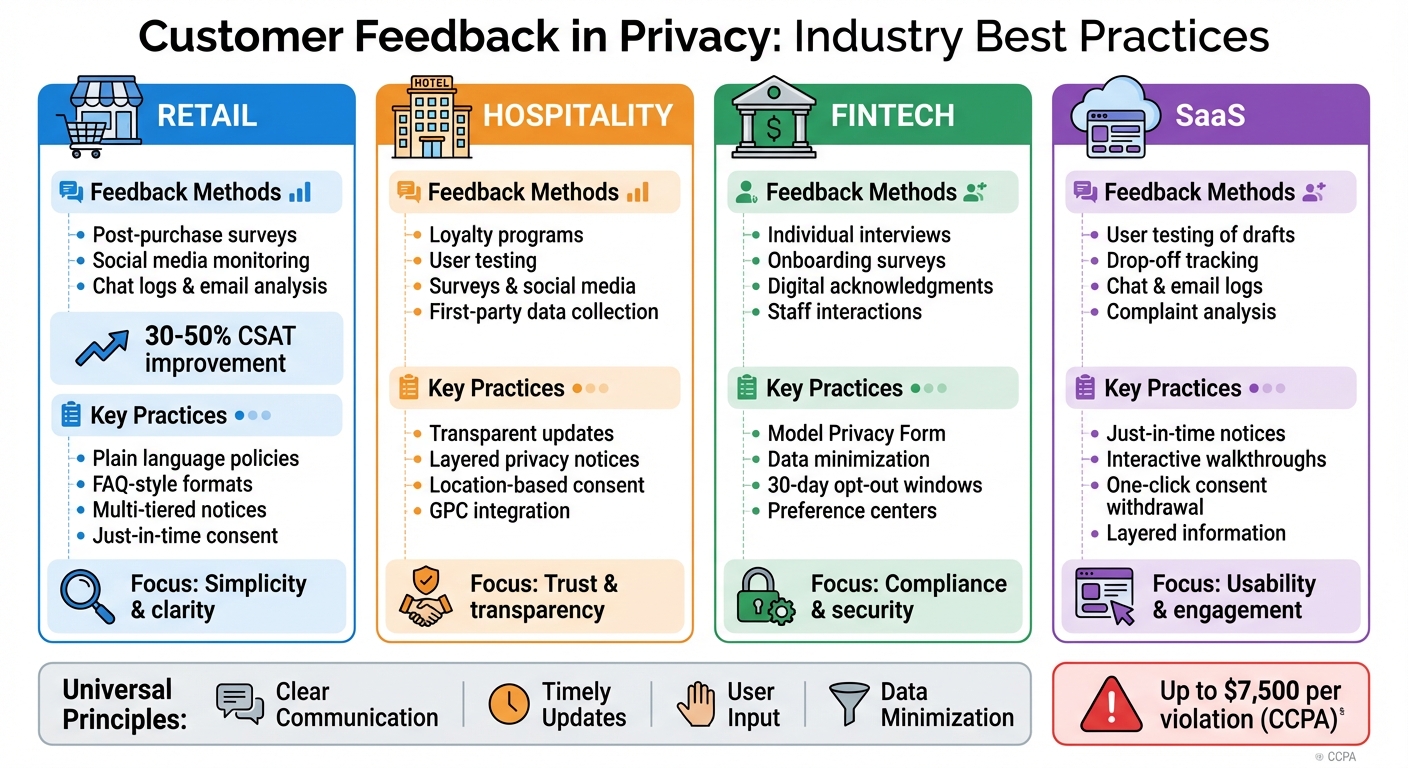
Customer Feedback Best Practices for Privacy Policies Across Industries
1. Retail Industry
Feedback Collection Methods
Retailers are improving their privacy policies by analyzing both structured feedback, like post-purchase surveys, and unstructured feedback, such as call transcripts, social media comments, and online reviews. This approach has been shown to boost customer satisfaction (CSAT) scores by 30–50%.
Timing plays a key role in gathering feedback. For instance, short CSAT or NPS surveys sent immediately after a digital interaction – like completing a purchase or signing up for an account – capture customers’ immediate impressions about privacy and consent. Platforms like X (formerly Twitter) are also valuable for spotting unfiltered feedback, helping retailers identify emerging privacy concerns as they happen. Additionally, reviewing chat logs and email correspondence provides a deeper understanding of customer expectations.
Privacy Policy Updates
Customer feedback directly shapes updates to privacy policies. For example, if customers frequently ask questions about confusing legal terms, retailers simplify those sections by using plain language and FAQ-style formats. Experts suggest organizing privacy policies around common customer questions, such as "How do we use your information?" or "How can I update my data?".
Retailers also encourage feedback by providing clear contact options, such as an email address, phone number, and a dedicated Data Subject Access Request (DSAR) form. This feedback helps refine policies related to data access and deletion. When updates are necessary, trust is maintained by notifying customers through email and marking the "Last Updated" date prominently on the policy.
Transparency and Consent Practices
To avoid overwhelming customers with dense text, retailers use multi-tiered notices. These provide a quick summary of key points upfront, with detailed information available for those who want to dive deeper. Similarly, just-in-time notices explain data collection at the exact moment it happens. For instance, if a birth date is needed, the notice clarifies why it’s required at the point of entry.
According to the Office of the Privacy Commissioner of Canada:
To receive meaningful consent, organizations must allow individuals to quickly review key elements impacting their privacy decisions right up front as they are considering using the service or product on offer.
Retailers must secure explicit consent for sensitive data, such as financial or biometric details, and clearly distinguish between mandatory data collection and optional data that requires a separate choice. Limiting data collection to only what is absolutely necessary also reduces risks in the event of a data breach.
sbb-itb-94e1183
2. Hospitality Sector
Feedback Collection Methods
Hospitality businesses often use loyalty programs to gather first-party customer data. These programs collect details like names, locations, and purchase history in exchange for perks such as discounts or early access to services. A notable example is Pizza Hut’s "Hut Rewards" program, launched in 2017. This opt-in system required participants to share data like payment card information, location details, and even address book contacts.
In addition to loyalty programs, hospitality brands rely on surveys and social media to gather qualitative feedback, particularly on privacy concerns. User testing ensures that consent mechanisms are straightforward, giving customers clear control over their data. This transparency not only builds trust but also helps businesses align with regulatory requirements from the outset. The feedback collected through these channels plays a key role in shaping privacy policies that address customer needs effectively.
Privacy Policy Updates
Customer feedback often drives updates to privacy practices in the hospitality industry. For instance, in June 2022, the Office of the Privacy Commissioner of Canada investigated Tim Hortons after discovering that its mobile app tracked users’ location data over 2,700 times within five months – even when the app wasn’t in use. Following the investigation, Tim Hortons committed to deleting the data and implementing a new privacy management program.
When making significant changes to privacy policies – like introducing new data usage purposes or sharing information with additional third parties – hospitality companies must communicate these updates clearly before they take effect. Testing new policy language through focus groups or pilot programs ensures customers understand their rights, including how to withdraw consent or opt out.
Transparency and Consent Practices
In January 2026, Marriott International updated its U.S. Consumer Privacy Statement, adding a detailed "California Notice of Financial Incentive" for its Marriott Bonvoy program. The notice explained how member data, such as stay details and zip codes, is used to operate the program and award points. Marriott even disclosed the estimated value of this data – $0.48 per consumer – and reassured members that exercising privacy rights like data deletion would not affect their membership status.
Between January 1 and December 31, 2024, Marriott received 54,671 requests from California residents to opt out of the sale of personal data and 58,674 requests to opt out of data sharing. The company also processed automated opt-out preferences via tools like the Global Privacy Control (GPC), which allows guests to set privacy settings directly through their browser or device. For verified "Request to Know/Access" inquiries, Marriott’s median response time was an impressive 16 days. These efforts highlight a broader push across industries to use customer feedback to improve transparency in privacy practices.
To further enhance clarity, hospitality companies often provide layered privacy notices. These include a quick summary of key points upfront, with the option to dive deeper into more detailed information. Just-in-time notices are another effective tool, appearing at critical moments – like when a guest first enables a location-based feature in an app – rather than only during the initial sign-up process. This approach ensures customers can make informed decisions without feeling overwhelmed.
3. Fintech Applications
Feedback Collection Methods
Fintech companies take a hands-on approach to understanding user concerns, especially around privacy. For example, in 2024, the fintech startup Arc conducted individual interviews with thousands of founders to pinpoint issues within the B2B finance stack. These discussions highlighted a major pain point: the outdated, manual fundraising processes many businesses faced. In response, Arc launched a vertically integrated platform that combines financing and cash management, enabling startups to secure non-dilutive capital and streamline treasury operations.
The early stages of a product launch are particularly valuable for gathering insights. User feedback during this phase often shapes new features. A great example is Persona’s "Instant Pay", which was introduced to provide immediate access to funds based on user input.
Fintech companies don’t stop at interviews. They also use tools like surveys, digital acknowledgments during onboarding, and interactions with trained staff to better understand and address consumer privacy concerns. These methods help refine privacy policies and ensure they remain responsive to user needs.
Privacy Policy Updates
User feedback plays a big role in how fintech firms update their privacy policies, ensuring they stay compliant with stringent regulations. For instance, under Regulation P, financial institutions must issue clear and accessible notices before sharing nonpublic personal information with new third-party categories. These notices are designed to be easily retained by customers for future reference.
Customer input often leads to practices like data minimization – collecting only the information that’s absolutely necessary. When policies are updated, companies typically send revised notices and provide users with a 30-day window to opt out of new terms.
Transparency and Consent Practices
Transparency is a cornerstone of fintech operations, especially when handling sensitive financial data. Many companies use the Model Privacy Form, a standardized template that breaks down data-sharing practices into straightforward sections like "Why?, What?, How?" This format not only ensures compliance but also makes privacy policies easier for customers to understand.
To further simplify things, many platforms now include layered privacy notices. These begin with a "Summary of Key Points", giving users a quick overview of data practices before diving into the full policy. Additionally, preference centers are becoming more common, allowing users to customize settings for email preferences, cookie usage, and data collection.
Regulations like the CCPA require fintech platforms to go even further, offering tools like a "Notice at Collection" table. This table clearly maps out what types of personal information are collected, why it’s collected, and whether it’s shared or sold. The Federal Trade Commission underscores this approach, stating:
Consumers care about the privacy of their personal information and savvy businesses understand the importance of being clear about what you do with their data.
For electronic transactions, fintech platforms often require users to acknowledge receipt of privacy notices. This ensures that consumers are informed without disrupting the overall user experience.
4. SaaS Platforms like meed
Feedback Collection Methods
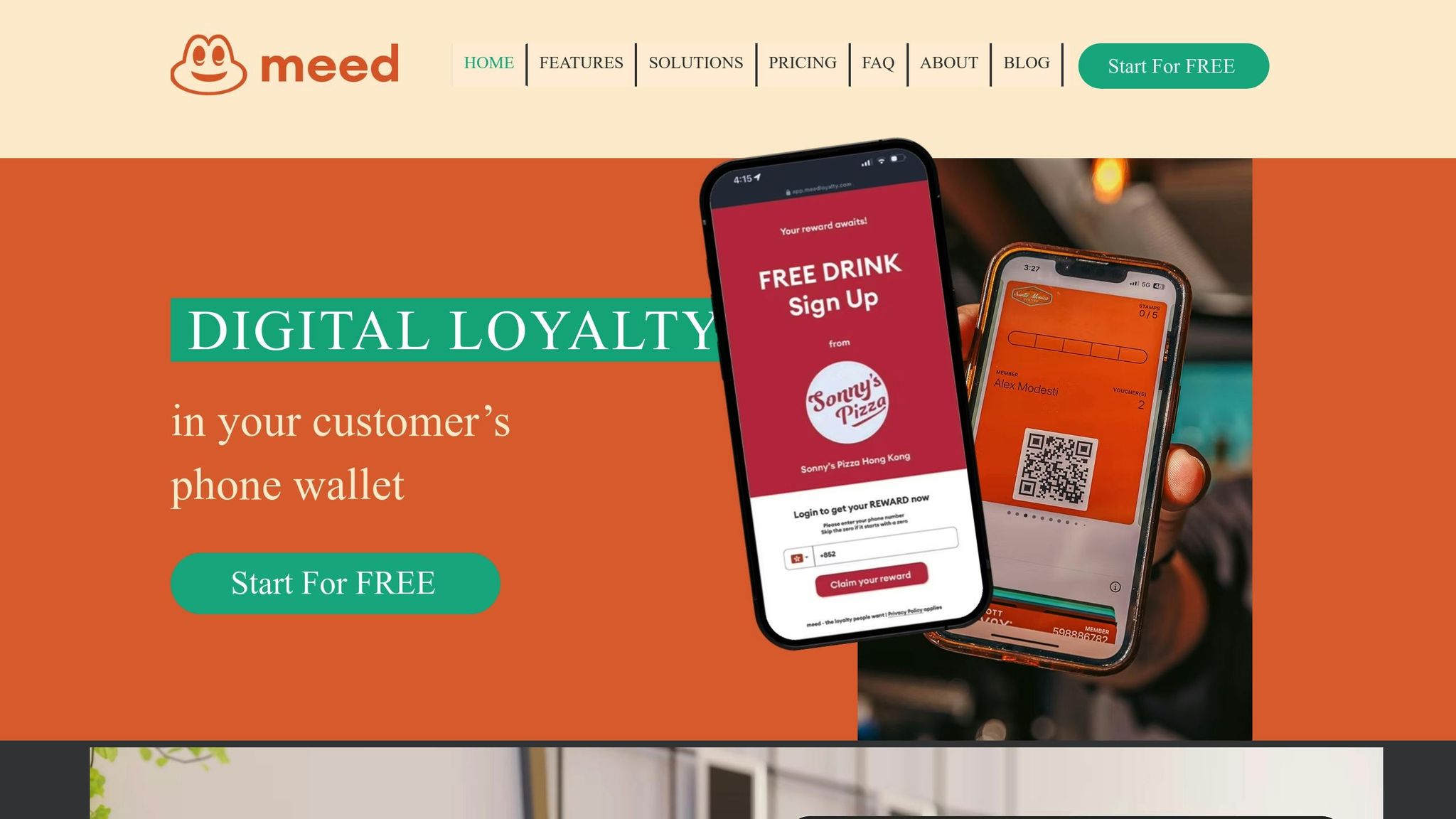
SaaS platforms, especially those managing digital loyalty programs for small businesses like meed, use targeted strategies to gather feedback and improve their privacy policies. By leveraging surveys, chat and email logs, and social media interactions, these platforms can identify recurring concerns about privacy. This approach has been shown to increase customer satisfaction by 30–50%.
One particularly effective strategy is user testing of draft policies. By sharing these drafts with select customers, platforms can uncover issues related to clarity and accessibility. The Information Commissioner’s Office emphasizes the value of this practice:
You are likely to come up with a far more useful and engaging approach if you consider feedback from the people it is aimed at.
Tracking where users drop off during consent flows is another way to pinpoint friction points. For a platform like meed, which integrates with Apple and Google Wallet, analyzing these drop-offs ensures a smooth consent process. Additionally, reviewing customer complaints about data usage helps identify areas where privacy explanations might be unclear. Together, these insights drive timely updates to privacy policies.
Privacy Policy Updates
When feedback highlights the need for changes, privacy policies should be updated either annually or alongside major platform updates. This process requires coordination across IT, legal, marketing, and database teams.
Proactive communication is key. Users must be informed about privacy policy changes before any new data processing activities begin. Updates should be displayed prominently on the platform’s website, and users should receive alerts well in advance of modifications taking effect. Considering that over 90% of consumers are concerned about data misuse, and more than 70% would stop using a company that shares sensitive information without consent, clear and transparent communication is essential for maintaining trust and loyalty. This approach mirrors strategies widely used in both retail and fintech industries.
Transparency and Consent Practices
To simplify complex legal language, SaaS platforms often use layered notices. These provide concise summaries with options to dive deeper into the details. Just-in-time notifications – delivered precisely when data is being requested – help prevent information overload while maintaining transparency.
For platforms offering features like meed’s stamp cards and QR code rewards, it’s critical to clearly outline what data is collected, how it’s shared, its purpose, and any associated risks. As privacy lawyer Tara Swaminatha explains:
Transparency goes a long way in proving the organization complies with data privacy laws and respects consumer rights.
Withdrawing consent should be as simple as granting it, ideally through the same method – such as a single click or slider. Interactive tools like walkthroughs, videos, or chatbots can further demystify data flows and provide real-time explanations. Given regulations like the CCPA in the U.S., which can impose fines of up to $7,500 for intentional violations, having clear and accessible consent practices isn’t just a good idea – it’s a legal necessity.
Pros and Cons
Different industries encounter unique challenges when incorporating customer feedback into their privacy policies. As one regulator pointed out, overly complex policies often fail to provide meaningful value to users. Let’s explore how these challenges play out in Retail, Hospitality, Fintech, and SaaS sectors.
In Retail, businesses aim to build trust by clearly explaining tracking methods, like cookies and server logs. However, the sheer volume of customer interactions can sometimes overwhelm users. Striking the right balance is critical as retailers refine their consent mechanisms and simplify policy language to ensure clarity without sacrificing detail.
In Hospitality, companies focus on reassuring customers about data security while ensuring privacy policies remain easily accessible across various devices. These dual objectives shape efforts to improve transparency and deliver policies effectively through multiple channels.
In Fintech, strict regulatory frameworks like the GLBA set a high bar for protecting consumer data. Handling sensitive financial information requires explicit consent and clear risk disclosures, as compliance missteps can lead to fines of up to 4% of annual revenue. These demands push fintech companies to continuously evolve their policies based on user feedback to avoid costly errors and maintain trust.
In SaaS, platforms like meed rely on interactive features such as just-in-time notices and onboarding walkthroughs. These tools help simplify privacy information, delivering it at the exact moment users need it. SaaS providers must also adapt their consent processes to keep pace with rapidly changing features. For instance, in California, businesses risk fines of $2,500 every time a non-compliant mobile app is downloaded by a state resident. This fast-moving landscape requires constant updates to privacy policies, often guided by customer insights.
The FTC emphasizes the importance of clear and transparent data practices, highlighting the ongoing challenge of balancing usability and transparency across all industries.
Conclusion
In industries like retail, hospitality, fintech, and SaaS, customer feedback plays a pivotal role in turning privacy policies into tools for building trust. This goes beyond simply meeting compliance standards – it’s about fostering transparency that customers can rely on. As the Federal Trade Commission explains:
Savvy businesses understand the importance of being clear about what you do with their data
. When customers feel informed about how their data is handled, they are more likely to engage with confidence. But trust isn’t built on words alone – it requires actionable, customer-centered practices.
Start with clarity. Privacy policies should avoid overwhelming legal jargon. Instead, use plain language and organize information with FAQ-style headings. Place links to your policy where customers naturally interact, like sign-up forms or checkout pages. This ensures customers have access to key information exactly when they need it.
Another important strategy is data minimization. Only collect what’s absolutely necessary. This not only aligns with regulatory requirements but also reassures customers who prefer to share less personal information. As privacy expert Masha Komnenic points out:
If you minimize the amount of data you request, you have less liability for exposing sensitive information in cases of a data breach
. It’s a win-win: reduced risk for your business and greater peace of mind for your customers.
Treat your privacy policy as an evolving document. Regularly update it based on customer feedback and changes in regulations. Offer easy ways for customers to ask questions or make requests – like a dedicated email address or a data subject request form. Staying proactive not only builds trust but also helps avoid costly fines for non-compliance.
For platforms like meed, using just-in-time notices ensures privacy information is presented when it matters most. Whether you’re in retail or SaaS, the principle is the same: meaningful consent comes from understanding, not just checking a box. Clear communication and timely updates don’t just meet legal requirements – they empower customers and deepen their loyalty.
FAQs
How can businesses use customer feedback to improve their privacy policies?
Businesses can improve their privacy policies by treating them as living documents that adapt based on customer feedback. A great starting point is to test your privacy notice with a diverse group of users. This helps ensure the language is straightforward, key details are easy to locate, and any confusing parts are identified and addressed. Collecting feedback can be done through surveys, in-app prompts, or dedicated feedback channels. Additionally, tools like click-through rate analytics on privacy links can highlight where users might be struggling.
After gathering feedback, use it to make regular updates to the privacy policy. Focus on using plain language, clear headings, and concise bullet points to make the document easier to understand. Address specific user concerns, such as explaining how data is shared or simplifying consent options. It’s also a good idea to test these updates with users to confirm that the changes improve clarity and allow them to manage their privacy settings more easily. By integrating customer feedback into this process, businesses can boost transparency, strengthen trust, and stay aligned with U.S. privacy standards.
How can businesses ensure transparency and obtain meaningful consent in their privacy policies?
To create privacy policies that are transparent and easy to understand, use simple, direct language to explain what personal data you collect, why you need it, and how it will be used or shared. Steer clear of complicated or vague wording – break down each type of data and its purpose in plain terms. Make a clear distinction between essential uses (like order processing) and optional ones (such as marketing or analytics). If third parties are involved, provide straightforward examples to show how user information is shared.
Consent should always be freely given, specific, informed, and unambiguous. Use clear, concise prompts that allow users to opt in or out for each purpose individually, particularly for things like personalized ads. Always offer an easy way for users to withdraw their consent, and stop processing any data tied to that consent as soon as it’s revoked. Regularly test your consent process with real users to ensure it’s both clear and compliant.
Make your privacy policy accessible and regularly updated – linking it in your website footer is a good practice. You might also consider providing a brief summary version for quick reference. Actively seek feedback from users to pinpoint and fix any confusing areas. This not only helps maintain compliance but also fosters trust with your audience.
Why is collecting only necessary data important for customer trust?
Collecting only the data you truly need – referred to as data minimization – plays a crucial role in earning customer trust. By focusing solely on gathering essential information and retaining it only for as long as necessary, businesses demonstrate respect for privacy. This approach not only reduces the chances of data breaches but also makes it easier to comply with privacy regulations like the CCPA and FTC guidelines, showcasing a commitment to ethical data practices.
When companies prioritize protecting personal information and avoid collecting unnecessary details, customers are more likely to feel secure sharing what’s required. This sense of trust can lead to stronger relationships and long-term loyalty. Plus, it simplifies processes like correcting or deleting customer data, ensuring businesses can efficiently meet their customers’ needs.