
Running a loyalty program in California? You need to comply with the CCPA. The California Consumer Privacy Act (CCPA) regulates how businesses collect and use customer data, especially in loyalty programs where personal information is exchanged for rewards. Non-compliance can lead to fines of up to $7,500 per violation. Here’s what you need to know:
- Who it applies to: Businesses with over $25M in revenue, data on 100,000+ California residents, or earning 50%+ revenue from selling data.
- Consumer rights: Access, deletion, opt-out, correction, and use limitation of personal data.
- Loyalty program rules: Programs must provide clear disclosures, obtain explicit opt-in consent, and allow easy opt-outs.
- Financial incentives: Rewards must reflect the value of the data collected and cannot pressure consumers into forfeiting their privacy rights.
- Enforcement: Violations are actively monitored, with penalties for failing to meet CCPA standards.
To stay compliant, businesses should conduct data audits, update privacy notices annually, and train staff on proper data handling. Tools like meed can simplify compliance by automating consent tracking and managing disclosures. Beyond legal requirements, transparent practices build trust, with 94% of consumers more likely to stay loyal to brands that prioritize data privacy.
CCPA Enforcement Trends | 4/26/2022
Financial Incentives Under CCPA
Loyalty programs thrive on the exchange of data – a process tightly regulated by the California Consumer Privacy Act (CCPA). Under the CCPA, financial incentives tied to loyalty programs are defined as any program, benefit, or offering that involves collecting, retaining, or sharing personal information. This definition also extends to price or service differences. Common features like discounts, free shipping, and exclusive sales fall squarely under these rules.
If your loyalty program offers rewards or benefits in exchange for personal data, you’re operating a financial incentive program under CCPA guidelines. These rules aim to ensure that such exchanges are transparent and fair, bridging the gap between marketing efforts and regulated data practices.
Legal Requirements for Incentives
While the CCPA has a broad definition of financial incentives, it doesn’t outright ban them. The law requires that these incentives reflect the value a business derives from consumer data. To comply, businesses must follow specific steps:
- Provide a clear notice of financial incentive before consumers enroll.
- Obtain explicit opt-in consent from participants.
- Offer an easy way for consumers to opt out at any time.
Additionally, financial incentives cannot be overly one-sided. This means businesses can’t pressure consumers into giving up their privacy rights or create terms that disproportionately favor the company.
The California Attorney General’s Office has been actively enforcing these regulations. For example, in January 2022, enforcement letters were sent to companies in industries like retail, home improvement, travel, and food services for operating loyalty programs that failed to meet CCPA standards.
"Under the CCPA, businesses that offer financial incentives, such as discounts, free items, or other rewards, in exchange for personal information must provide consumers with a notice of financial incentive." – California Attorney General Rob Bonta
These rules ensure that consumers know exactly what they’re agreeing to when joining loyalty programs. By requiring transparency and secure data practices, the CCPA helps maintain a balance between consumer rights and business interests.
CCPA Compliance Requirements for Loyalty Programs
To meet the requirements of the California Consumer Privacy Act (CCPA), loyalty programs need to adopt specific practices that safeguard customer data and ensure transparency. Successfully running a CCPA-compliant loyalty program means balancing consumer privacy with the benefits offered through rewards.
Getting Clear Opt-In Consent
Obtaining explicit consent is a cornerstone of CCPA compliance. Businesses must secure a consumer’s opt-in agreement to the key terms of any financial incentive program before enrollment. According to the law, this consent must be "freely given, specific, informed, and unambiguous". Importantly, passive actions – like closing a pop-up or hovering over content – don’t qualify as valid consent under the California Privacy Rights Act (CPRA).
To comply, businesses should implement clear "I Agree" checkboxes that require an active click. These opt-in forms should use plain, straightforward language, avoiding technical or legal jargon, and must also include accessible opt-out mechanisms for all consumers, including those with disabilities. This approach ensures transparency in data practices, supported by the disclosures outlined in the next section.
Clear Consumer Disclosures
Transparency is key when it comes to handling customer data. Businesses need to clearly communicate what personal information is collected through loyalty programs, how it’s used, and what benefits consumers receive in return. Disclosures should specify the types of data collected – such as purchase history, contact information, or behavioral insights – and explain how this data is used for tasks like tailoring offers, managing the program, or marketing.
Additionally, businesses must inform consumers about their opt-in and opt-out rights in simple, accessible language. These disclosures can also explain how consumer data is valued in relation to the rewards provided, helping users make informed choices.
Creating a Notice of Financial Incentive
Alongside clear disclosures, businesses must include a detailed notice of financial incentive. This notice, typically part of the privacy policy, should be easy to understand, prominently displayed, and clearly outline the terms of the loyalty program. Many companies achieve this by explicitly stating why data is collected and how it benefits the customer.
"The purpose of the notice of financial incentive is to explain to the consumer the material terms of a financial incentive or price or service difference the business is offering so that the consumer may make an informed decision about whether to participate." – CCPA
By providing this notice, businesses ensure that consumers understand the trade-offs involved and can make informed decisions about participating.
Honoring Consumer Rights
Under CCPA, consumers have specific rights that businesses must respect throughout the lifecycle of their loyalty programs. These include the right to access personal data, request its deletion, and opt out of data sales or sharing. Importantly, consumers cannot be penalized for exercising these rights, thanks to non-discrimination protections. Businesses must establish systems to process these requests promptly and efficiently.
Recent enforcement actions highlight the importance of honoring these rights. For example, in January 2022, the California Attorney General’s Office conducted an investigative sweep, issuing violation notices to businesses running loyalty programs without proper financial incentive notices.
"We may not always realize it, but these brick-and-mortar stores are collecting our data – and they’re finding new ways to profit from it." – California Attorney General Rob Bonta
This serves as a reminder that compliance is not just a legal formality; it’s actively monitored and enforced.
How to Implement CCPA-Compliant Loyalty Programs
Creating a loyalty program that aligns with the California Consumer Privacy Act (CCPA) involves auditing your data practices, updating policies, and training your team. These steps are essential for meeting legal obligations while maintaining customer trust.
Conducting a Data Inventory and Privacy Audit
The first step toward CCPA compliance is understanding the data your loyalty program collects and how it moves through your organization. Conducting a detailed data inventory helps you pinpoint where personal information is collected, how it’s used, who it’s shared with, and how long it’s stored.
Start by defining clear audit objectives to identify compliance gaps and map out your data flows. Document all data sources, including mobile apps, in-store transactions, online purchases, customer service interactions, and third-party tools like social media integrations. For each touchpoint, record the types of personal information collected, such as names, email addresses, or purchase histories. Additionally, track how data is shared, who has access to it, and how long it’s retained.
Address any inconsistencies, errors, or duplicates in your data, and review your security measures to ensure they meet CCPA’s standards for “reasonable security procedures”. Regular audits are key – companies that conduct quarterly audits report 35% fewer compliance issues. Summarize your findings in a clear audit report that includes data maps, quality checks, and security recommendations.
Once your data inventory is complete, use it to update your privacy framework to reflect your current practices.
Updating Privacy Notices and Terms
Use the results of your audit to ensure that your privacy notices align with your actual data practices. Under CCPA, privacy policies must be updated at least once a year. Before making any updates, reassess the types of personal information your program collects, processes, sells, or shares. Consider whether new data types – like biometric data, geolocation from store visits, or video footage from security cameras – have been added since your last update.
If your program uses new technologies or partners, such as AI for personalized offers or new third-party vendors, review how these changes affect your data handling practices. Reflect any updates in your privacy notices, including information about profiling, segmentation, or automated decision-making.
Write your privacy policy in clear, simple language that’s easy for all users to understand. If your program serves a multilingual audience, provide translations to ensure accessibility. Additionally, make it straightforward for customers to exercise their CCPA rights, such as requesting data access, opting out of data sales, or requesting data deletion. Implement strong identity verification processes to prevent unauthorized changes to customer data.
Staff Training and Compliance Monitoring
Compliance isn’t just about policies – it’s also about people. Well-trained staff are critical to reducing risks and ensuring transparency. Since human error is a common cause of data breaches, invest in targeted training for teams like marketing, IT, and customer service. Tailor training to each department’s role in handling customer data, and use interactive workshops or real-world scenarios to make the lessons stick.
Set up ongoing monitoring to ensure your loyalty program stays compliant as privacy laws evolve. Use tracking systems to monitor key data points and quickly address any issues. Be prepared for potential data incidents by having a response plan in place, complete with detection systems, containment strategies, and notification protocols for relevant authorities.
sbb-itb-94e1183
Penalties, Enforcement, and Best Practices for 2025
If your business runs loyalty programs in California, understanding the financial and legal stakes of non-compliance is non-negotiable. Penalties can reach up to $2,500 per violation or $7,988 for intentional breaches, and there’s no 30-day cure period to fix issues before enforcement kicks in.
Consequences of Non-Compliance
Without any grace period, enforcement by the California Attorney General and the California Privacy Protection Agency can have immediate effects. Additionally, consumers have limited rights to sue in cases of data breaches.
Take the Sephora case as an example. In 2022, Sephora paid $1.2 million to settle with the California Attorney General over violations that included failing to disclose the sale of personal data and ignoring global opt-out requests. Despite being given a 30-day cure period, Sephora didn’t address the issues, making it the first company penalized under the CCPA . California Attorney General Rob Bonta remarked:
"We may not always realize it, but these brick-and-mortar stores are collecting our data – and they’re finding new ways to profit from it."
This case highlights the importance of staying ahead with compliance measures to avoid costly penalties.
Best Practices for Compliance and Risk Management
To steer clear of these penalties, consider these key practices:
- Conduct regular data audits. Businesses that perform quarterly audits report 35% fewer compliance issues. These audits help identify and address gaps in how data is collected, stored, and shared.
- Adopt transparent data practices. Designing privacy into your loyalty program from the ground up ensures compliance is baked in. Limit data collection to only what’s necessary for the program to function.
- Train your staff. Equip your marketing, IT, and customer service teams with tailored training to minimize mistakes. Human errors are often the weak link in compliance.
- Strengthen data security. Implement measures such as regular system testing, detailed audit trails, and multi-factor authentication. Clear incident response plans – covering detection, containment, and notification – further protect your business.
- Ensure clear consent processes. Use transparent opt-in and opt-out mechanisms, as failing to secure proper consent can lead to damages of $100 to $750 per consumer per incident.
Making CCPA Compliance Easier with meed
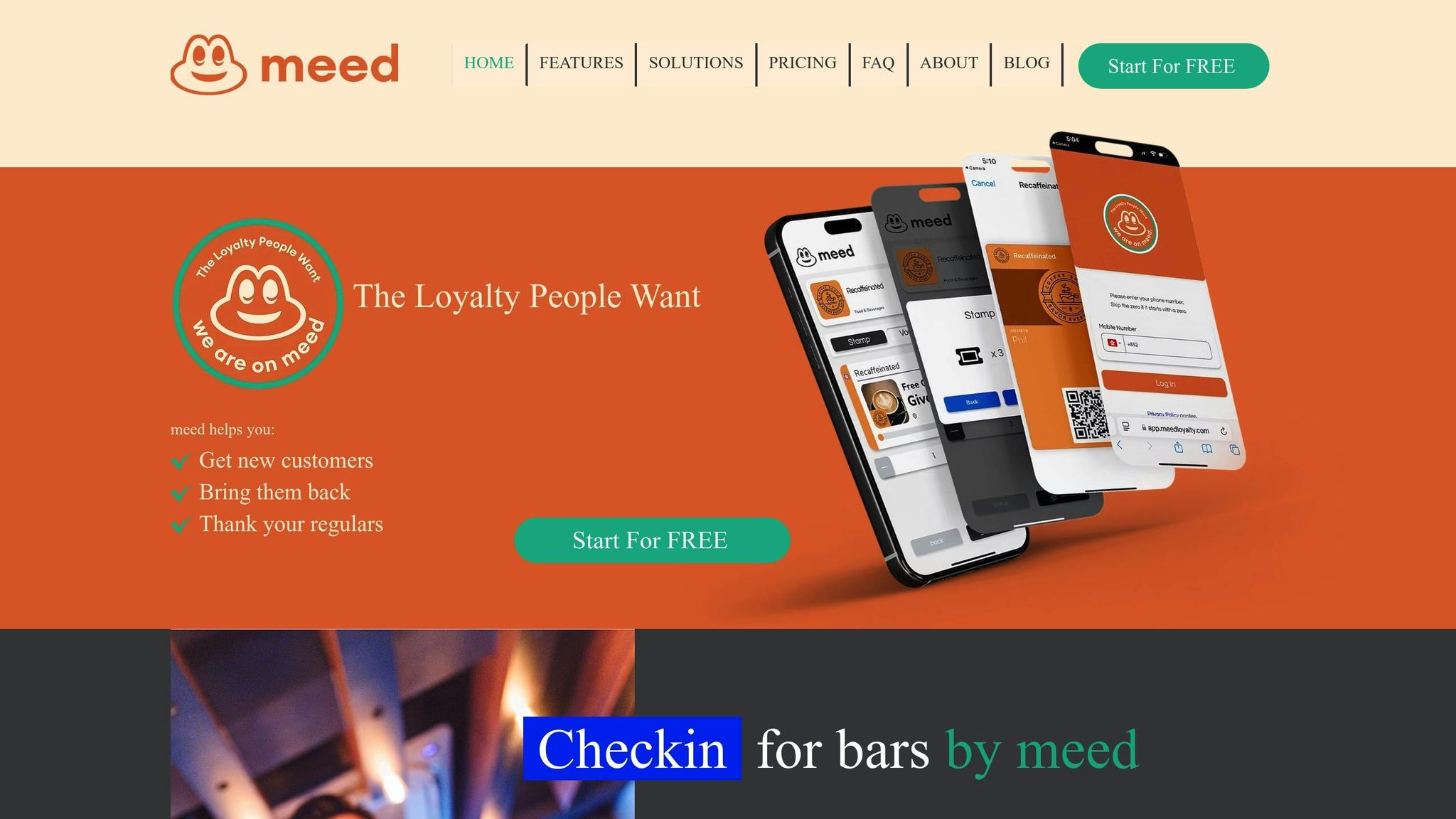
Simplify your compliance efforts with meed, a universal loyalty platform designed to handle the complexities of CCPA requirements. Meed’s features make it easier to stay compliant:
- Customizable disclosure tools: Quickly generate clear, compliant notices about data collection and financial incentives, avoiding the headache of legal jargon.
- Automated consent tracking: Keep detailed records of consent status, ready for any regulatory review.
- Real-time data dashboards: Monitor data collection, usage, and sharing practices, supporting the regular audits that significantly reduce compliance risks.
- Digital wallet integration: Ensure loyalty cards meet compliance standards on platforms like Apple and Google Wallet.
- Multi-location support: Maintain consistent compliance across all business locations.
Conclusion
Complying with the CCPA isn’t just about avoiding fines – it’s about building stronger, trust-based relationships with your customers. When you commit to transparency and give consumers control over their data, you create trust that directly impacts your bottom line. Consider this: 94% of consumers are more likely to stay loyal to brands that are completely transparent, and 71% are more inclined to purchase from companies they see as responsible with data usage.
Of course, the financial stakes are high, with steep penalties making compliance non-negotiable. But beyond avoiding fines, transparent data practices can significantly boost profits. For instance, increasing customer retention by just 5% can lead to a 25% jump in profits, and repeat customers tend to spend 67% more than new ones.
Meeting key CCPA requirements – like obtaining clear opt-in consent, providing transparent financial disclosures, and managing consumer rights – doesn’t have to be overwhelming. By focusing on simple, plain-language disclosures, limiting data collection to what’s absolutely necessary, and implementing user-friendly consent management systems, businesses can streamline compliance efforts.
This is where tools like meed come in. It takes the complexity out of compliance, offering features like automated consent tracking, customizable disclosure templates, and real-time compliance dashboards. With additional perks like digital wallet integration and support for multi-location operations, meed ensures your loyalty programs not only meet regulatory standards but also provide the seamless, convenient experiences your customers expect.
FAQs
What steps should businesses take to make sure their loyalty programs comply with the CCPA?
How to Ensure Your Loyalty Program Aligns with the CCPA
If you’re running a loyalty program in California, staying compliant with the California Consumer Privacy Act (CCPA) is a must. Here are some practical steps to help you meet the requirements:
- Be Transparent About Privacy: Clearly outline how your program collects, uses, and shares customer data. Make sure participants understand what happens with their information.
- Support Consumer Rights: Provide simple tools or methods for customers to access their data, request deletion, or opt out of data sales.
- Minimize Data Collection: Regularly review your data practices to ensure you’re only gathering what’s essential for the program.
- Boost Data Security: Put strong safeguards in place to protect customer information from breaches or unauthorized access.
- Train Your Team: Educate employees on CCPA rules so they can uphold compliance at every customer interaction.
By addressing these areas, you can run a loyalty program that respects privacy, upholds consumer rights, and earns customer trust.
How can businesses calculate the value of consumer data to offer fair incentives under CCPA rules?
When figuring out the worth of consumer data under the CCPA, businesses need to assess how that data drives revenue. This could involve looking at its influence on sales, customer retention, or improving insights about customers. To do this, companies might analyze historical performance data, conduct market research, and evaluate how consumer data factors into their decision-making processes.
By clearly understanding the financial role of this data, businesses can create incentives that align with its value. This approach not only meets CCPA requirements but also helps maintain the trust of their customers.
What happens if a business’s loyalty program doesn’t comply with CCPA, and how can these issues be avoided?
Failing to meet the requirements of the California Consumer Privacy Act (CCPA) can lead to hefty penalties. Businesses risk fines of up to $2,500 for each violation, which can jump to $7,500 for intentional breaches. Beyond financial penalties, companies may face civil lawsuits and other enforcement actions. Once notified of a violation, businesses typically have a 30-day window to address the issue – ignoring this can escalate the situation further.
To steer clear of these risks, it’s crucial to make sure your loyalty programs align with CCPA standards. This means offering clear, easy-to-understand privacy notices, securing proper consent from customers before collecting their data, and resolving any compliance issues promptly. Taking these steps not only helps you avoid penalties but also reinforces your customers’ confidence in your business.