Real-time personalization and traditional loyalty tools serve the same goal – customer retention – but take vastly different paths. Real-time personalization uses AI to analyze customer data instantly, offering tailored rewards and recommendations in seconds. Traditional loyalty tools, like punch cards or points systems, follow fixed rules and offer generic rewards based on repeated actions.
Key Differences:
- Real-time personalization: Instant, tailored offers across multiple channels based on behavior, location, and preferences.
- Traditional tools: Fixed rewards, simple to implement, but lack flexibility and personalization.
Quick Takeaway:
Real-time systems deliver dynamic, personalized experiences but require advanced tech and investment. Traditional tools are easy, cost-effective, and ideal for small businesses or older demographics.
Here’s how these two compare:
| Factor | Real-Time Personalization | Traditional Loyalty Tools |
|---|---|---|
| Response Time | Instant | Fixed schedules |
| Data Usage | Advanced, real-time insights | Basic purchase tracking |
| Customer Experience | Tailored, multi-channel | Generic, single-channel |
| Cost | Higher setup and maintenance | Low initial cost |
| Scalability | Automated for growth | Manual and challenging |
Choose based on your business size, customer base, and resources. For small businesses, traditional tools work well. For brands aiming to stand out, real-time personalization can offer a competitive edge.
Locking in Loyalty: How to Build Lasting Customer Relationships
What Is Real-Time Personalization
Real-time personalization is all about creating tailored customer experiences in the moment. Using artificial intelligence and machine learning, this approach analyzes customer data as it happens, allowing businesses to deliver personalized offers or recommendations within seconds.
For instance, instead of sending out a standard 10% discount, this technology might notice you routinely grab coffee on Tuesday mornings. As you approach the counter, it could offer you 20% off your favorite drink right then and there.
This system works by gathering and analyzing data instantly from various sources, such as your past purchases, browsing habits, location, time of day, and even external factors like weather or local events. Advanced algorithms then combine this data with your current behavior and preferences to craft offers that feel uniquely tailored to you.
What makes this technology stand out is its speed and precision. Traditional systems might take days to adjust their strategies, but real-time personalization reacts in milliseconds. The result? Customers get offers that are relevant and timely, exactly when they’re most likely to act.
Main Features of Real-Time Personalization
At its core, real-time personalization thrives on several key features that set it apart from traditional approaches:
- Dynamic offer generation: The system creates offers on the fly, responding to customer actions in real time. For example, if you spend extra time browsing a specific product category, you might receive a discount for those items almost immediately. These offers aren’t pre-scheduled – they’re shaped by your behavior in the moment.
- Behavioral triggers: The technology responds instantly to key customer actions, like abandoning a cart or showing signs of disengagement. For instance, if you leave items in your cart, you might get an exclusive discount or bonus points to encourage you to complete the purchase.
- Multi-channel synchronization: Whether you’re shopping online, using a mobile app, or visiting a store, the system keeps your preferences consistent. If you browse products online, you could receive a personalized in-store offer when you walk by the physical location.
- Contextual awareness: This goes beyond just tracking purchases. The system factors in location, time of day, weather, and seasonal trends. For example, a coffee shop might offer hot drinks during a chilly morning and switch to iced beverages when it’s warm – all while considering your personal preferences.
- Predictive modeling: By analyzing patterns in customer behavior, machine learning predicts what you might need before you even ask. It can anticipate when you’re ready to buy, if you might stop engaging, or if you’d be interested in trying something new. This lets businesses stay one step ahead with proactive, relevant offers.
Benefits for Businesses and Customers
These features don’t just improve customer interactions – they also bring big advantages for businesses.
For companies, real-time personalization boosts engagement by delivering offers that align perfectly with what customers want at that moment. This approach reduces wasted marketing efforts and increases the effectiveness of loyalty program spending, leading to a better return on investment.
Customer retention also gets a major lift. When people feel seen and valued through personalized offers and messages, they’re more likely to stick with a brand. This emotional connection goes beyond transactions, making customers less likely to switch to competitors, even when faced with generic promotions.
On top of that, businesses gain instant insights into customer behavior. Unlike traditional loyalty programs that rely on older data, real-time systems provide immediate feedback, helping companies adjust strategies quickly and make smarter decisions.
From the customer’s perspective, the benefits are just as compelling. Personalization means no more irrelevant emails or promotions for products they’ll never buy. Instead, they receive offers that genuinely enhance their shopping experience.
Convenience is another big win. Customers don’t need to hunt for deals or remember loyalty cards – the system brings the right offers to them at the perfect time, making the whole experience seamless.
And finally, personalized savings feel more impactful. Discounts are tailored to what customers actually want, rather than pushing random products with generic markdowns. This makes the savings not just more noticeable, but also more meaningful.
How Traditional Loyalty Tools Work
Traditional loyalty tools operate on fixed processes that often miss the chance to engage customers in real-time. Think of the classic coffee shop punch card – buy nine drinks, and your tenth one is free – or the points program at your local grocery store, where every dollar spent earns a point. These systems are simple but rigid, rewarding repeat visits through pre-set rules without considering individual preferences or timing.
These programs rely heavily on manual processes, like stamping cards, which makes them easy to use but also limits their flexibility. There’s no room for personalization; every customer follows the same formula: complete a certain number of actions to earn a pre-determined reward. While this approach is consistent, it doesn’t adapt to unique shopping habits or preferences.
Another drawback is the reliance on physical cards. Customers must carry and keep track of these cards, and losing one often means losing their progress. This inconvenience can frustrate customers and reduce the program’s effectiveness.
On the business side, data collection is minimal. Traditional programs typically track basic metrics like visit counts but fail to capture deeper insights, such as what customers buy, when they shop, or how their habits evolve. This lack of information limits a business’s ability to make informed decisions or improve the customer experience.
Main Characteristics
Traditional loyalty programs share several key traits that make them straightforward but also limit their potential:
- Fixed reward structures: Every customer is treated the same. For example, someone spending $50 per visit gets the same rewards as someone spending $10, as long as they hit the required number of visits or points.
- Manual processes: While simple, these systems depend on physical cards and stamps, making them vulnerable to issues like lost or damaged cards.
- Limited data capture: These programs only track basic purchase activity, missing critical insights into customer preferences or behaviors.
- Single-channel focus: Most traditional programs are tied to in-store purchases, leaving online transactions out of the equation. This can be frustrating for customers in today’s multi-channel shopping world.
- Delayed gratification: Customers must accumulate rewards over multiple visits, requiring patience compared to modern systems that often offer instant benefits.
Pros and Cons
Despite their limitations, traditional loyalty tools remain popular, especially with small businesses, because of their simplicity and low cost.
Advantages:
- Simplicity: Programs like "buy nine coffees, get the tenth free" are easy for customers to understand without explanation. This accessibility appeals to people of all ages and technical skill levels.
- Low setup costs: Printing stamp cards is far cheaper than implementing a digital loyalty system with subscription fees, making it a practical choice for businesses with tight budgets.
- Fast implementation: These programs can be launched almost immediately – no software setup, no complex training, and no need for integration with other systems.
- Reliability: Traditional tools work without relying on internet connections, electricity, or software, which is especially useful in areas with unreliable technology.
Disadvantages:
- Limited data capture: Businesses miss out on valuable insights into customer behavior, making it harder to make informed decisions about inventory, marketing, or strategy.
- Fraud risks: Customers can share cards, forge stamps, or photocopy cards, undermining the program’s fairness and profitability.
- Scaling difficulties: Managing stamp cards across multiple locations becomes challenging as a business grows, requiring more effort and resources.
- Lack of real-time adaptability: Traditional programs can’t respond to immediate opportunities, such as promoting alternative products when inventory is low or offering timely incentives to retain a customer.
The simplicity of these tools is both their strength and their weakness. While they’re easy to implement and understand, their lack of flexibility and data-driven insights limits their effectiveness in today’s customer-centric market.
| Aspect | Advantages | Disadvantages |
|---|---|---|
| Customer Understanding | Simple, easy-to-follow rules | No personalization or individual recognition |
| Implementation | Low cost, quick setup, minimal training | Difficult to scale as the business grows |
| Operations | Works without reliance on technology | Prone to errors, fraud, and manual inefficiencies |
| Data & Insights | No complex systems required | Fails to collect meaningful customer data |
| Flexibility | Offers consistent and predictable rewards | Inability to adapt to immediate opportunities |
Real-Time Personalization vs Traditional Loyalty Tools
Let’s dive into how real-time personalization stacks up against traditional loyalty tools. These two approaches differ in their timing, the way they use data, and the kind of customer experience they deliver. While traditional loyalty programs rely on fixed, uniform systems, real-time personalization uses dynamic technologies to adapt to customer behavior in the moment. Here’s a closer look at how they compare.
One key difference is timing and responsiveness. Traditional loyalty tools operate on fixed schedules – think monthly rewards or routine promotions. On the other hand, real-time personalization reacts instantly to customer actions. Whether it’s a shopper browsing a specific category, abandoning their cart, or visiting during a slow period, this approach adjusts to meet their needs right away.
Another distinction lies in data usage. Traditional programs collect basic information, like purchase history or visit frequency. Real-time systems go further, analyzing a wide range of data points in real time. This includes browsing habits, seasonal trends, responses to past offers, and even external factors like weather or local events that might influence buying decisions.
When it comes to the customer experience, the contrast is stark. Traditional programs often deliver generic offers – think blanket discounts or standard point systems. Real-time personalization, however, creates tailored experiences. For instance, a loyal customer might get early access to new products, while a budget-conscious shopper could receive discounts on items they’ve previously shown interest in.
Implementation complexity is another factor to consider. Traditional programs are relatively simple to set up and run, requiring minimal technical expertise. Real-time personalization, however, demands advanced infrastructure, ongoing maintenance, and a skilled team to manage it.
Side-by-Side Comparison
Here’s a breakdown of the key differences between these two approaches:
| Factor | Real-Time Personalization | Traditional Loyalty Tools |
|---|---|---|
| Response Time | Adapts instantly to customer behavior | Operates on fixed schedules |
| Data Processing | Analyzes multiple variables in real time | Tracks basic purchase history |
| Personalization Depth | Offers individual-level customization | Delivers generic rewards |
| Channel Integration | Works seamlessly across online, mobile, and in-store | Often limited to one channel |
| Setup Complexity | Requires advanced technical infrastructure | Simple and quick to implement |
| Ongoing Costs | Higher due to tech and data needs | Lower after initial setup |
| Fraud Prevention | Digital tracking reduces risks | Prone to card sharing or forgery |
| Customer Insights | Provides deep behavioral analytics | Limited to basic summaries |
| Scalability | Automates growth efficiently | Difficult to manage manually |
| Flexibility | Adjusts quickly to market changes | Needs manual updates |
| Customer Retention | Builds emotional connections | Relies on routine habits |
| ROI Measurement | Offers detailed performance analytics | Tracks basic program costs |
Another major difference lies in the cost structure. Traditional programs are inexpensive to launch but struggle to scale effectively, while real-time personalization requires a higher upfront investment. However, the latter often yields better long-term returns, improving customer lifetime value and retention.
Customer expectations also influence which approach works best. Younger consumers, particularly those aged 25-40, often expect personalized experiences and may find traditional programs outdated. Meanwhile, older demographics tend to appreciate the simplicity of stamp cards or point systems.
Finally, the competitive advantage each method offers depends on the market. In highly competitive industries where acquiring new customers is expensive, real-time personalization can set a business apart. In contrast, traditional loyalty tools may work just fine in stable markets with an established customer base. By understanding these differences, businesses can choose the approach that best suits their goals and audience.
sbb-itb-94e1183
Which Approach to Choose
Deciding between real-time personalization and traditional loyalty tools depends on factors like budget, technical resources, customer demographics, and your specific business goals. Knowing when to use each approach can save resources and strengthen customer connections.
When Real-Time Personalization Works Best
Real-time personalization shines in situations where quick customer engagement is essential. It’s especially effective in competitive industries, where retaining customers is far more cost-effective than constantly acquiring new ones.
E-commerce businesses with a wide range of products benefit greatly from real-time personalization. These systems can instantly adapt to customer behavior, making them particularly valuable during high-demand periods like holidays or sales events.
Millennials and Gen Z customers, who expect smooth and intuitive digital interactions, often respond positively to real-time personalization. They appreciate businesses that remember their preferences and anticipate their needs.
Companies with multiple touchpoints, such as websites, mobile apps, physical stores, and social media, gain the most from real-time personalization. Delivering consistent, tailored experiences across these platforms helps foster loyalty and boosts customer lifetime value.
High-frequency transaction businesses, like coffee shops, grocery stores, and subscription services, are another great fit. Real-time data allows these businesses to optimize product recommendations, promotions, and timing based on individual habits.
However, adopting real-time personalization requires robust infrastructure and a skilled team. Data analysts, marketing technologists, and customer experience experts are essential to keep these systems running effectively.
When Traditional Tools Make Sense
Traditional loyalty tools remain a solid choice for many businesses, especially small to medium-sized companies with limited technical resources. These tools are perfect when simplicity and ease of use are key priorities.
Local businesses with strong community connections often thrive with traditional loyalty programs. Think neighborhood cafes, family-owned shops, or independent bookstores. Physical punch cards or straightforward point systems offer a personal touch that resonates with local customers.
Budget-conscious businesses, especially startups or those navigating uncertain economic conditions, may find traditional methods more practical. Similarly, older customer groups, typically over 50, often prefer these simpler, more familiar systems.
For businesses with straightforward services or products, like dry cleaners, hair salons, or auto repair shops, traditional loyalty programs – such as a "buy 10, get 1 free" model – can meet customer needs without unnecessary complexity.
Seasonal or occasional-purchase businesses also benefit from traditional tools. Tax preparation services, holiday decoration stores, or wedding planners might find simple loyalty programs more effective for their less frequent customer interactions. These programs allow them to gauge interest in customer loyalty before committing to more advanced systems.
Ultimately, the right choice depends on aligning your capabilities with what your customers expect. Consider your technical resources, budget, audience, and long-term goals to determine the best approach. Next, we’ll look at how meed combines both strategies to create efficient loyalty programs.
How meed Connects Both Approaches
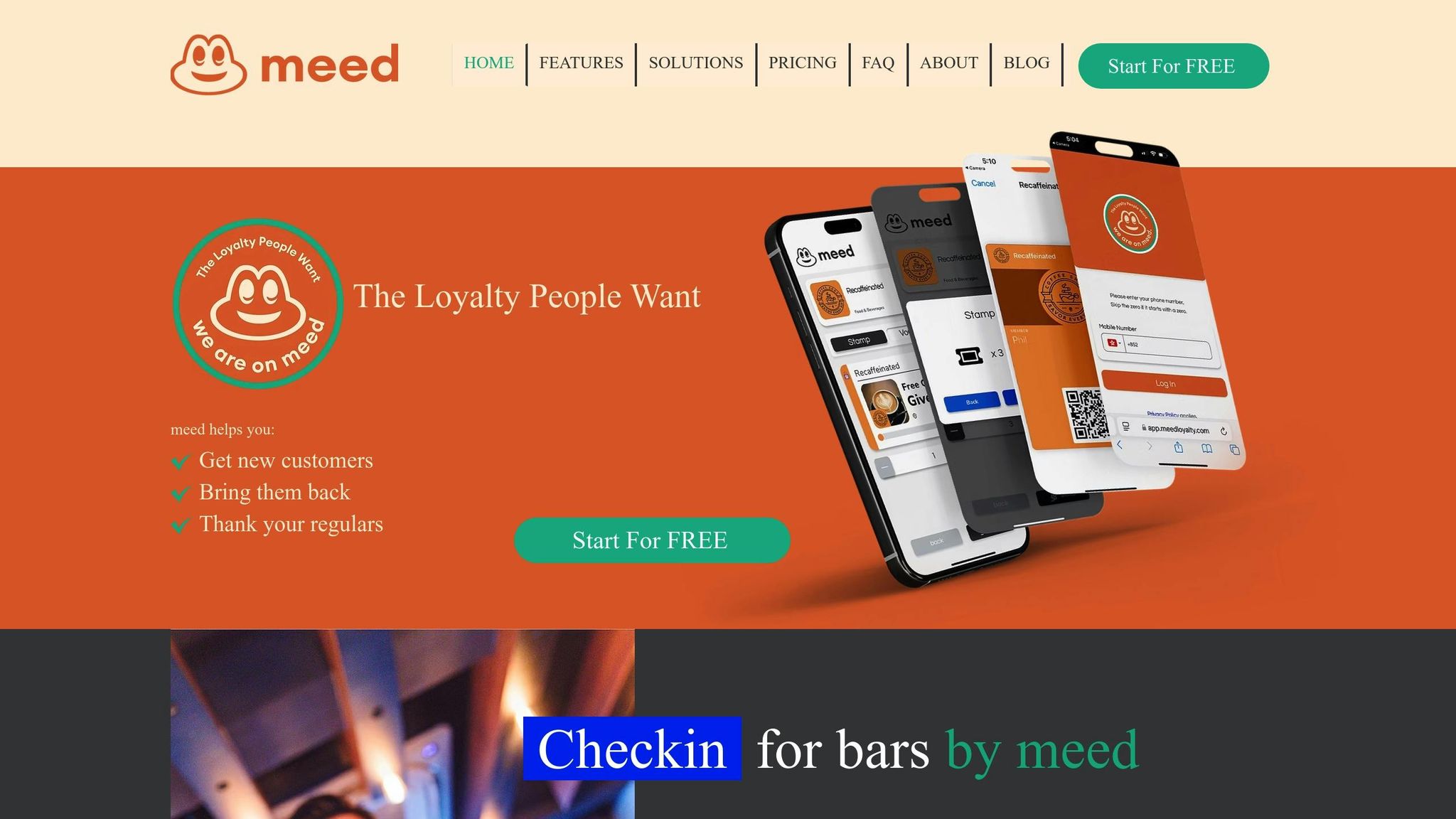
Rather than forcing businesses to pick between traditional loyalty tools and real-time personalization, meed combines the best of both worlds. It offers a unified platform that simplifies loyalty program management while incorporating advanced personalization features. By blending these approaches, businesses can stick with familiar methods while gradually exploring more advanced options.
meed Platform Features
meed takes loyalty programs into the digital age, transforming basic punch cards into versatile digital tools that work seamlessly across various channels. Here’s a closer look at what the platform offers:
- Digital Stamp Cards: Say goodbye to lost physical cards and manual tracking. meed’s digital stamp cards make loyalty programs easier to manage and more convenient for customers.
- QR Code Rewards: Customers can simply scan a QR code to earn rewards, whether they’re grabbing a coffee or making a larger purchase at a retail store. This system streamlines transactions and enhances the user experience.
- Apple and Google Wallet Integration: Customers can store their loyalty cards directly in their smartphone wallets. This solves the common issue of forgetting physical cards at home, making it effortless to participate in loyalty programs.
- Analytics Dashboard: With real-time insights, businesses can make informed decisions about promotions, inventory, and customer outreach – no technical expertise required.
- Multi-Location Support: For businesses with multiple locations, meed ensures a consistent loyalty experience. Customers can earn and redeem rewards across any participating store, reinforcing brand consistency.
- AI-Guided Receipt Scanning: This feature simplifies transaction processing, reduces errors, and provides immediate insights, making the checkout process faster and more efficient.
Business Advantages
meed removes the hassle of managing physical loyalty cards, manually tracking customer progress, and calculating rewards. This allows business owners to focus on what matters most: delivering excellent customer service.
One standout benefit is cost-effectiveness. The Starter plan is completely free, offering essential features like a single loyalty program, analytics dashboard, and customer management tools – perfect for small businesses testing the waters. For growing businesses, the Pro plan is available at $490 per year, supporting up to five locations and 30 active campaigns.
As businesses expand, meed’s tools grow with them. Companies can start with simple digital stamp cards and gradually incorporate advanced features like targeted email campaigns, detailed analytics, and multi-location management. This seamless progression eliminates the need to switch platforms as the business scales.
The unified customer experience is another game-changer. Customers can manage all their meed-powered loyalty memberships in one place, cutting down on wallet clutter and boosting engagement. This convenience often translates to better customer retention and higher participation in loyalty programs.
For businesses ready to integrate more advanced strategies, meed’s ecosystem partner tools make it easy to connect with existing point-of-sale systems and marketing platforms. This flexibility ensures businesses can adopt modern loyalty features without overhauling their entire operation.
Additionally, transitioning from traditional to digital loyalty programs with meed is straightforward. The platform’s interface is intuitive, mirroring familiar concepts while adding digital convenience. This makes it easy for both employees and customers to adapt with minimal training.
Key Points to Remember
If your business thrives on immediacy and tailored experiences, real-time personalization is the way to go. On the other hand, traditional loyalty tools work well when simple, preset rewards are enough to meet customer expectations.
The difference in performance between these two approaches is striking. Companies using real-time personalization see 15–20% higher retention rates and as much as 35% higher redemption rates compared to traditional segmentation methods. Why? Real-time systems adapt rewards, timing, and messaging on the fly, unlike the rigid rules of stamp card programs.
What truly sets real-time personalization apart is its data agility. It reacts instantly to customer behavior, cutting out the delays associated with periodic updates in traditional systems.
That said, traditional loyalty tools still hold value. They are ideal for single-location businesses or customers who prefer straightforward rewards without needing an app. These tools shine in areas with limited connectivity and come with lower data privacy and compliance demands.
Consumer preferences have evolved significantly. Around 60% of consumers now respond better to personalized messages. Static, one-size-fits-all loyalty programs are losing their edge as more people expect instant and tailored engagement. Businesses that fail to adapt risk falling behind.
For those ready to embrace change, the secret lies in unified customer data. Predictive AI depends on accurate and consolidated customer profiles to work effectively. Without this strong foundation, even the most advanced personalization tools might fall short.
Interestingly, a hybrid approach often works best. Starting with digital stamp cards and gradually introducing real-time triggers can help build trust while making your programs more relevant over time.
Another advantage of real-time systems is their flexibility. They allow you to tweak promotions and reward tiers immediately if they underperform. In contrast, traditional programs often take months to update. This adaptability is crucial in fast-paced retail environments where customer preferences shift quickly.
Ultimately, your choice should align with your business model. If you manage multi-channel engagement, have a high transaction volume, and access to unified data, real-time personalization is a smart move. For early-stage businesses or those prioritizing simplicity, traditional tools remain a solid option. The key is to consistently deliver value that matches your customers’ expectations and your operational strengths.
FAQs
What are the advantages of real-time personalization compared to traditional loyalty tools like stamp cards?
Real-time personalization allows businesses to immediately customize rewards and experiences based on an individual customer’s behavior and preferences. This approach leads to interactions that feel more relevant and engaging, fostering deeper connections and encouraging long-term loyalty.
Traditional tools, like physical stamp cards, often provide static, one-size-fits-all incentives. In contrast, real-time personalization adjusts dynamically, offering deals and rewards that are timely and tailored to the customer. It also improves data collection and analysis, helping businesses fine-tune their strategies and better target their audience. The result? Higher customer retention rates and increased lifetime value.
Should small businesses opt for real-time personalization or stick with traditional loyalty tools?
The decision between real-time personalization and traditional loyalty tools comes down to what your business can handle and what it hopes to achieve. If you’re equipped to work with live customer data and can offer rewards tailored to individual preferences, real-time personalization can deliver an engaging and unforgettable experience. This approach is particularly effective for fostering stronger connections and encouraging customer loyalty.
However, if you’re looking for something simpler and more budget-friendly, traditional tools like physical stamp cards or straightforward digital options can still help retain customers. While these methods might not offer the dynamic interaction of real-time personalization, they’re easy to set up and maintain, making them a smart option for smaller businesses or those just getting started.
What challenges do businesses face with real-time personalization, and how can they address them?
Implementing real-time personalization isn’t always smooth sailing for businesses. Common challenges include juggling customer data across various channels, scaling personalized experiences effectively, and ensuring teams are aligned on personalization objectives. These difficulties often arise from fragmented data systems, outdated tech, or a shortage of skilled professionals.
To tackle these issues, businesses should prioritize building unified customer profiles, investing in modern and adaptable technologies, and encouraging teamwork across departments. By simplifying data management and using scalable tools, companies can craft personalized experiences that boost customer engagement and foster loyalty.