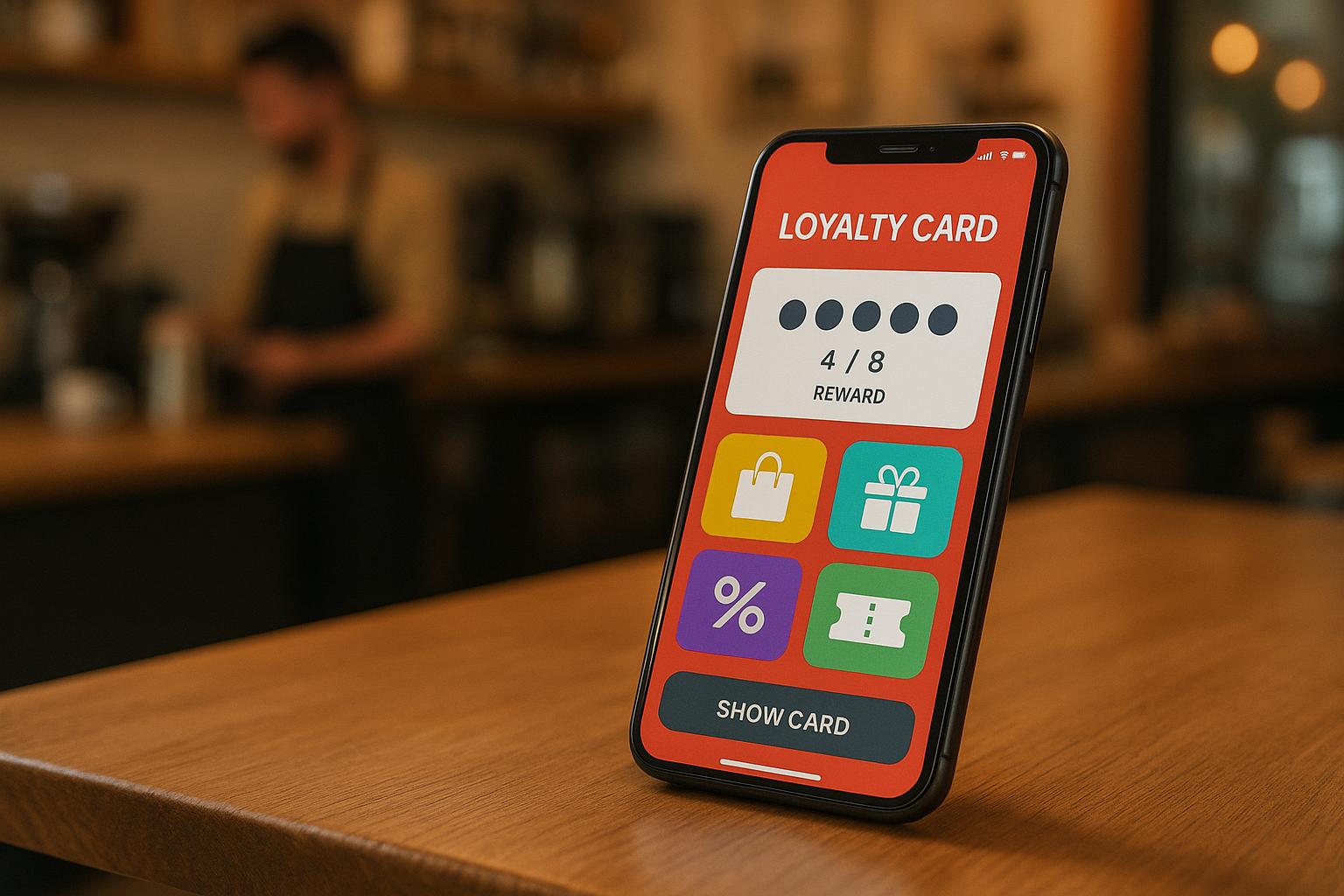
Switching from paper punch cards to digital loyalty programs can help your business improve customer retention, increase revenue, and reduce waste. Here’s why and how to make the switch:
- Why Go Digital?
- Convenience: 79% of people prefer digital loyalty programs over physical cards.
- Increased Revenue: Businesses report a 15–25% annual revenue boost with digital loyalty programs.
- Customer Retention: Loyal customers spend 67% more than new ones and are 5x more likely to make repeat purchases.
- Eco-Friendly: Eliminates paper waste.
- Steps to Transition:
- Review Your Current Program: Identify weaknesses like lost cards, manual tracking, and limited data collection.
- Set Goals: Focus on retention, revenue growth, and customer engagement.
- Choose a Platform: Look for features like QR code scanning, wallet integration, and real-time analytics.
- Design Digital Cards: Match your brand and add interactive features like gamification or dynamic content.
- Prepare Staff and Customers: Train employees and communicate changes to customers with clear benefits.
- Track Results: Measure success with metrics like customer retention, reward redemption rates, and average spend per customer.
Switching to digital loyalty cards not only simplifies your operations but also helps build stronger relationships with your customers. Start small, track your progress, and refine your program based on customer feedback.
How To Create Digital Loyalty Cards With Passkit

Review Your Current Loyalty Program
Take a closer look at your paper-based loyalty program to pinpoint its strengths and weaknesses. This will guide you in creating a more efficient digital alternative.
Common Problems with Paper Cards
| Challenge | Impact | Notes |
|---|---|---|
| Lost Cards | Customer frustration and program dropout | Customers often lose cards, leading to dissatisfaction and reduced participation. |
| Limited Data Collection | Inability to gather detailed customer insights | Paper systems can’t track purchase history or customer preferences. |
| Manual Tracking | Time-consuming processes for staff | Staff spend more time on labor-intensive tracking, increasing costs and errors. |
| Environmental Impact | Excessive paper use depletes resources | Paper waste adds to resource strain and harms the environment. |
| Fraud Risk | Vulnerability to counterfeiting | Physical cards are easier to counterfeit, increasing fraud risks. |
These challenges underscore the importance of setting clear objectives when moving to a digital loyalty program.
"Paper and plastic punch cards are cumbersome, outdated, and inefficient. They lack real-time tracking and reporting capabilities and don’t help your business thrive."
– Maja Volarević, Loopy Loyalty
Switching to digital tracking opens up opportunities for collecting valuable customer data, which can be used to personalize offers and drive engagement. With 43.2% of U.S. smartphone owners already using mobile payments, paper cards are quickly becoming a thing of the past.
Set Measurable Goals
When transitioning to a digital loyalty system, establish specific, measurable goals to enhance customer retention, revenue, and engagement.
- Customer Retention Goals
Even a modest 5% increase in customer retention can lead to profit growth of up to 95%. Aim to reduce customer churn by 15% within the first year. - Revenue Objectives
Focus on boosting average order values (e.g., by $30 more per purchase), increasing purchase frequency (e.g., three extra visits annually), and raising customer lifetime value to $350+. - Engagement Metrics
Track key indicators such as:- Higher email click-through rates (loyalty emails often outperform others by 20%).
- Reward redemption rates.
- Active participation among loyalty members.
"Digitalization is transforming customer loyalty programs, replacing physical card-based, points-per-purchase models with more app-based programs that integrate with e-commerce and digital payments. This enhances customer convenience and experience, while providing richer customer data for companies."
– Arjun Vir Singh, Arthur D. Little
Keep an eye on your progress and refine your approach using data and customer feedback.
Select a Digital Loyalty Platform
Once you’ve set your goals, the next step is to pick a digital loyalty platform that makes the transition smooth and effective. According to recent data, 53% of customers prefer loyalty programs that are simple to use.
Must-Have Platform Features
When evaluating digital loyalty platforms, focus on features that improve customer experience and simplify your operations. Here’s a breakdown of key capabilities to look for:
| Feature Category | Key Capabilities | Business Impact |
|---|---|---|
| Digital Stamps | QR code scanning and receipt validation | Minimizes fraud and speeds up transactions |
| Wallet Integration | Works with Apple and Google Wallets | Enhances accessibility and reduces friction |
| Analytics Dashboard | Real-time tracking and customer insights | Supports data-driven decision-making |
| Multi-Location Support | Centralized management with location-specific campaigns | Simplifies program management |
| Customer Engagement | Push notifications and automated rewards | Encourages repeat visits and loyalty |
Make sure the platform you choose aligns with your business needs and is equipped to handle your operations seamlessly.
Easy Setup Requirements
Switching to a digital loyalty platform eliminates the hassles of traditional paper cards while offering valuable customer insights. To ensure a smooth setup, focus on these key requirements:
Integration Capabilities
- Compatibility with digital wallets like Apple and Google Wallet for instant accessibility.
- QR code generation for quick and hassle-free reward validation.
- Receipt scanning to streamline the process of earning rewards.
Customization Options
- Add your brand logo and visuals to personalize the experience.
- Create flexible reward structures tailored to your business.
- Design custom digital passes for a professional touch.
Implementation Timeline
- Quick setup, typically completed in 24-48 hours.
- Training materials for staff to get them up to speed.
- Onboarding resources to introduce customers to the program.
- Reliable technical support to address any issues during the transition.
For instance, platforms like meed offer features such as digital stamp cards, QR code rewards, wallet integration, and robust analytics, making the switch effortless. A dependable platform not only simplifies the initial setup but also sets the stage for sustained growth.
Create Your Digital Loyalty Cards
Designing digital loyalty cards that resonate with customers takes more than just aesthetics – it’s about creating a functional and engaging experience. Research shows that 77% of consumers are more likely to stay loyal to brands with well-designed loyalty programs.
Match Your Brand Design
Your digital loyalty card should be a direct reflection of your brand. From colors to typography, every detail matters when it comes to maintaining consistency and appealing to your audience. Here’s how you can align your card design with your brand:
| Design Element | Best Practice | Impact |
|---|---|---|
| Brand Colors | Stick to your primary and secondary color palette | Boosts brand recognition |
| Logo Placement | Position it prominently but tastefully | Strengthens visual identity |
| Typography | Use fonts that align with your brand guidelines | Enhances readability |
| Imagery | Include high-quality visuals that align with your values | Adds visual appeal |
Take Nordstrom‘s The Nordy Club as an example. Their loyalty program seamlessly integrates consistent branding across all touchpoints. The card design mirrors their premium image, while their tiered system – from Member to Ambassador – reinforces a sense of progression and exclusivity.
"A well-designed loyalty card goes beyond being a mere piece of plastic or paper. It’s a potent tool that communicates your brand’s values and the perks you provide to your customers." – Maja Volarević
Once your digital loyalty card reflects your brand identity, you can take it a step further by adding interactive features that enhance the customer experience.
Add Interactive Elements
To make your digital loyalty cards more engaging, consider incorporating interactive features that encourage customers to interact with your program regularly. These features can transform your cards from static tools into dynamic brand touchpoints.
Interactive Features to Explore:
- Gamification
Adding game-like elements can significantly boost customer engagement – brands that use gamification report a 47% increase in interaction. Try including:- Points-based challenges
- Achievement badges
- Progress bars
- Virtual rewards for milestones
- Dynamic Content
Keep your loyalty program fresh with:- Limited-time offers
- Seasonal promotions
- Birthday rewards
- Surprise perks
- Smart Triggers
Use automated notifications to keep customers engaged, such as:- Location-based updates
- Alerts for purchase milestones
- Reward expiration reminders
- Invitations to special events
Starbucks Rewards is a great example. They use QR codes to link customers to mobile landing pages packed with personalized product recommendations and exclusive deals.
Platforms like meed make it easy to implement these features. Their customizable tools include QR code integration and wallet compatibility, ensuring a smooth and engaging experience for your customers. With these enhancements ready, you’ll be set to train your team and introduce customers to the benefits of your digital loyalty program.
sbb-itb-94e1183
Prepare Staff and Customers
Switching to digital loyalty cards requires careful preparation for both employees and customers. Considering that 72% of people see rewards as a key part of their relationship with a brand, ensuring a smooth transition is essential to keep customers happy.
Train Employees on Digital Tools
Your team plays a big role in the success of this shift. Well-prepared employees can lead to a 10% improvement in customer satisfaction metrics and a 20% boost in sales. Here’s how to get your staff ready:
| Training Component | Purpose | Implementation Tips |
|---|---|---|
| Initial Onboarding | Build understanding of the system | Hands-on practice with digital tools |
| Scenario Training | Prepare for customer interactions | Role-play common situations |
| Technical Skills | Master the digital platform | Provide step-by-step workflow guides |
| Ongoing Support | Reinforce knowledge | Host regular updates and refresher sessions |
Encourage employees to use the program themselves so they can better explain its perks and handle potential issues. This hands-on familiarity not only builds confidence but also enhances performance, as shown by improved customer service metrics.
Once your team is ready, it’s time to focus on your customers.
Announce Changes to Customers
Clear and transparent communication is key to maintaining customer trust and encouraging them to embrace the new system. Take inspiration from Subway, which successfully updated its program by emphasizing customer benefits and ensuring a smooth transfer of existing rewards.
Key Communication Strategies:
- Advance Notice
Share a timeline of the upcoming changes well ahead of time. Include specific dates and milestones to help customers adjust. - Multi-Channel Messaging
Use a combination of email, in-store signage, social media, and your website to make sure customers hear about the changes wherever they engage with your brand. Keep the message consistent across all platforms. - Highlight Benefits
Focus on the advantages of the digital system, such as:- Easier reward tracking
- No more lost paper cards
- Instant notifications about rewards
- Positive environmental impact
To encourage early adoption, consider offering special incentives. For instance, when Starbucks rolled out new program features, they rewarded early adopters with exclusive perks, successfully driving engagement.
Preparing both your staff and customers is essential to creating a smooth transition and ensuring the success of your digital loyalty program.
Track and Improve Results
Switching to digital loyalty cards is just the beginning. To make the most of your loyalty program, it’s essential to keep a close eye on its performance and make adjustments as needed. Did you know that 84% of consumers are more likely to stay loyal to a brand with a loyalty program? That’s a huge opportunity to build long-term relationships with your customers. But it all starts with tracking the right metrics.
Measure Success Metrics
Here are some key performance indicators to monitor:
| Metric | Description | Target Range |
|---|---|---|
| Customer Retention | Percentage of returning customers | A 5% increase can lead to 25–95% higher profits |
| Average Spend | Average purchase value per member | Loyalty members spend up to 18% more than others |
| Redemption Rate | Frequency of rewards being claimed | A 20–25% boost with points-plus-cash options |
| Program Enrollment | Weekly new member sign-ups | Track trends to gauge program growth |
| Customer Lifetime Value | Total value a customer brings over time | Active members see a 15–25% annual increase |
"Loyalty programs are an often overlooked area for performance improvement that can help offset the ongoing willingness among consumers to try new brands and retailers." – McKinsey
Numbers tell part of the story, but customer feedback provides the real-world insights you need to refine your program.
Use Customer Feedback
Listening to your customers is critical for making improvements that matter. In fact, 77% of customers feel more positive about a brand when their feedback is not only collected but acted upon. Here’s how you can gather and use that feedback effectively:
- Create Multiple Feedback Channels
Make it easy for customers to share their thoughts. Options include:- Post-transaction surveys
- Social media interactions
- One-on-one interviews
- In-app feedback tools
- Act on Customer Input
Respond to feedback promptly and transparently. For example:- Resolve reported issues quickly
- Communicate program updates clearly
- Test and implement features based on customer suggestions
- Measure changes in satisfaction over time
- Monitor Engagement Patterns
Pay attention to how customers interact with your program. Did you know that 66% of consumers adjust their spending to maximize loyalty benefits? Keep track of:- Popular reward options
- Peak times for redemption
- Common earning behaviors
- How frequently features are used
With 75% of consumers more likely to buy when loyalty programs offer rewards they find relevant, personalization is key. Use these insights to design seasonal offers and limited-time promotions that truly resonate with your audience.
Conclusion
Shifting from paper to digital loyalty cards is a game-changer for how businesses engage with their customers and reward their loyalty. With over 75% of consumers now relying on smartphones to interact with loyalty programs, going digital isn’t just a matter of convenience – it’s becoming critical for staying ahead in today’s competitive landscape.
Here’s a breakdown of the key steps for making the digital leap:
- Strategic Planning and Execution: Start with a clear plan. Review your current program, set measurable goals, and choose a digital platform that aligns with your objectives. Interestingly, 80% of customers are willing to share personal data for a better experience.
- Customer-Centric Transition: To ease the shift, consider running both paper and digital systems temporarily. Offering bonus rewards for early adopters of the digital program can further encourage participation.
- Staff Training and Customer Education: Equip your team with the knowledge they need to support the new system. Provide in-store tutorials or printed guides to help customers understand the process. Businesses using omnichannel strategies report retaining up to 89% of their customers.
These steps highlight the importance of a thoughtful approach when upgrading loyalty programs.
"Digitalization is transforming customer loyalty programs, replacing physical card-based, points-per-purchase models with more app-based programs that integrate with e-commerce and digital payments. This enhances customer convenience and experience, while providing richer customer data for companies. In the coming years, technologies such as blockchain, augmented reality/virtual reality, omnichannel integration and artificial intelligence (AI) will also heavily impact loyalty programs." – Arjun Vir Singh, Partner, Arthur D. Little
As outlined, a successful transition requires careful evaluation, the right technology, and comprehensive training for both staff and customers. By adopting digital loyalty solutions, businesses can unlock higher revenue and extend customer lifetime value. Taking this step ensures stronger customer relationships and sets the stage for long-term growth.
FAQs
What should I consider when selecting a digital loyalty platform for my business?
When choosing a digital loyalty platform, it’s crucial to focus on tools that improve the customer experience while streamlining your operations. Features like mobile wallet integration (think Apple Wallet or Google Wallet) make it easy for customers to access rewards on the go. Offering customizable rewards allows you to align loyalty programs with your audience’s preferences, and data analytics provide valuable insights into performance and customer behavior.
You’ll also want a platform with a user-friendly interface that works seamlessly for both your team and your customers. Prioritize robust security to safeguard sensitive information and ensure the platform can integrate with your existing systems, such as your POS or CRM. Look for options that offer scalability to support your business as it grows and multi-channel support so you can connect with customers via email, SMS, or social media.
How can I help my customers smoothly transition from paper to digital loyalty cards?
To make the switch from paper to digital loyalty cards as seamless as possible, start by spreading the word through various channels. Use in-store signs, email campaigns, and social media posts to let your customers know about the change and what’s in it for them. Highlight perks like easier rewards tracking, streamlined wallet integration, and the overall convenience of going digital.
Make sure your staff is ready to explain the new system and help customers sign up during their visit. Sweetening the deal with a small incentive – like a bonus reward or a discount for joining – can encourage more people to jump on board quickly. Be sure to emphasize how this new system makes life easier by keeping all their loyalty cards in one handy place. A friendly, clear approach will go a long way in building trust and excitement for the new program.
What key metrics should I track to evaluate my digital loyalty program, and how can customer feedback help improve it?
To measure how well your digital loyalty program is performing, keep an eye on key metrics like Customer Acquisition Cost (CAC), Customer Lifetime Value (CLV), retention rates, and engagement levels. CAC tells you how efficiently you’re spending on marketing to bring in new customers. On the other hand, CLV helps you understand the total revenue a customer is likely to bring over their relationship with your business, giving you a clearer picture of where to focus your retention efforts. Retention rates and engagement metrics, meanwhile, shed light on how effective your program is at keeping customers involved and satisfied.
Don’t overlook the power of customer feedback. Surveys and reviews are excellent tools for uncovering what customers appreciate and where they think improvements are needed. When you act on this feedback to make meaningful changes, you’re not just improving your program – you’re also showing customers that their input matters. This can go a long way in strengthening loyalty and keeping engagement levels high.