
Omnichannel loyalty programs connect in-store, online, and mobile experiences to reward customers. But with this convenience comes risk: sensitive customer data (like payment info and personal details) is spread across multiple platforms, making these systems prime targets for cyberattacks. Breaches can lead to financial losses, identity theft, and a severe decline in customer trust.
Key points:
- Cyber risks: Credential stuffing, phishing, and account takeovers are common threats.
- Impact of breaches: Average cost per breach is $5.9M, and 19% of customers stop shopping at hacked retailers.
- Solutions: Multi-factor authentication, encryption, regular security audits, and compliance with regulations like PCI DSS and GDPR help mitigate risks.
Investing in cybersecurity isn’t just about preventing attacks – it’s about protecting customer trust and maintaining long-term program success.
Growing Cyber Threats to Loyalty Programs
The move to digital platforms has made loyalty programs more convenient, but it has also exposed them to greater cyber risks. As companies strive to create seamless omnichannel experiences, they often unintentionally open up opportunities for hackers. The very features that make these programs attractive – like integrated data, digital rewards, and instant access – also make them vulnerable. This interconnectedness not only enhances customer experiences but also increases the potential for security breaches.
Why Hackers Target Loyalty Programs
Loyalty programs have become a treasure trove for cybercriminals. These systems often store sensitive customer data, such as personally identifiable information (PII), payment details, and behavioral insights. Together, this data creates detailed customer profiles, which are highly valuable to attackers. A breach can lead to identity theft, financial fraud, and targeted phishing attacks, making loyalty programs particularly appealing to hackers.
Beyond data, loyalty points and rewards themselves hold monetary value. Hackers can convert these points into digital currency or other financial benefits, giving them immediate rewards for their efforts. Adding to the problem is the fact that customers tend to be less cautious about securing their loyalty accounts compared to their bank accounts. This lack of vigilance makes it easier for criminals to exploit these systems.
Common Cyber Threats
The range of threats targeting loyalty programs is broad and constantly evolving. Some of the most common attacks include:
- Credential stuffing: Hackers use stolen login details from previous breaches, exploiting the fact that many people reuse passwords across different platforms.
- Phishing: Fraudulent emails, websites, or text messages trick users into revealing sensitive information.
- Account takeovers: Cybercriminals gain control of customer accounts to steal rewards or make unauthorized purchases.
The retail and wholesale sectors have been particularly vulnerable. In 2021, there was a staggering 436% increase in phishing attacks within these industries, highlighting the scale of the problem.
High-profile breaches in loyalty programs have also made headlines. In 2018, programs like Hilton HHonors, Starwood Preferred Guest, American AAdvantage, and United MileagePlus suffered data breaches. These incidents not only exposed customer information but also damaged the brands’ reputations. The fallout often led to a loss of customer trust, with competitors ready to take advantage of the situation.
How Omnichannel Integration Increases Security Risks
Omnichannel loyalty programs aim to provide a seamless experience across mobile apps, websites, in-store systems, and social media platforms. However, this convenience comes with added risks. Each integration point – whether it’s a mobile app or a third-party payment processor – creates potential vulnerabilities. A single weak link in the chain can compromise the entire network.
Managing security across multiple channels is a complex task. Each platform may have its own protocols and update schedules, making it difficult to maintain consistent protection. The need for seamless data sharing further complicates matters, as it increases the attack surface for hackers.
Historically, security measures have struggled to keep pace with the growing complexity of these programs. The involvement of third-party integrations and cloud services only adds to the challenges, as each connection increases the risk of unauthorized access. As these loyalty programs grow more advanced, they are becoming a prime target for increasingly sophisticated cyberattacks. This trend underscores the urgent need for stronger cybersecurity measures to protect both businesses and their customers.
How Security Breaches Damage Customer Trust
Cyberattacks targeting loyalty programs have a direct and damaging impact on customer trust and brand reputation. For businesses, understanding these consequences is essential to maintaining strong customer relationships and safeguarding their revenue.
How Breaches Destroy Consumer Confidence
When a data breach occurs, it dismantles the trust customers place in a brand. People share sensitive information – like personal details, purchase history, and payment data – expecting it to be secure. A breach not only violates that trust but also weakens the bond between the brand and its customers.
The fallout from real-world breaches illustrates this loss of confidence. In 2018, major brands such as Panera Bread, Delta Airlines, Sears, Saks, and Lord & Taylor suffered loyalty program breaches, leading to reputational harm and customer departures. The hospitality industry has also faced significant challenges, with breaches impacting loyalty programs like Hilton HHonors, Starwood Preferred Guest, American AAdvantage, and United MileagePlus, exposing millions of member records.
Take the 2019 Dunkin’ Donuts loyalty program breach as an example. Hackers used credential stuffing to access customer accounts, triggering negative press, regulatory investigations, and a decline in customer trust. Dunkin’ had to pour resources into damage control and rebuilding customer confidence. Beyond that, breaches often expose sensitive data that criminals exploit for fraud or identity theft. A Ponemon Institute survey found that many customers are more likely to end their relationship with a company after experiencing a data breach.
Financial and Operational Costs of Security Failures
The financial toll of security breaches goes far beyond the immediate expense of fixing the problem. For retailers, these incidents can become a costly ordeal, involving direct losses, legal fees, regulatory fines, and the expense of system repairs and security upgrades. Forensic investigations, compliance penalties under laws like the California Consumer Privacy Act (CCPA), and lawsuits from affected customers can quickly add up. Some companies also risk losing certifications and face increased scrutiny from business partners and payment processors.
Operational disruptions can be just as damaging. Breaches often require system shutdowns, halting business operations and diverting resources away from growth initiatives to manage the crisis. Sales typically decline as customers lose faith in the brand, and the ripple effects can strain supply chain partnerships and harm employee morale. Recovery efforts demand significant investments in security upgrades, staff training, and customer communication. Rebuilding trust takes years of consistent effort, and the financial and operational setbacks directly impact customer loyalty.
The Link Between Security and Customer Retention
The damage from breaches underscores an important point: cybersecurity isn’t just about preventing attacks – it plays a critical role in retaining customers. When breaches occur, customers often leave for brands they perceive as more secure. Businesses with omnichannel loyalty programs typically see reduced participation and lower customer lifetime value after a breach, as trust is a key factor in ongoing engagement.
Research shows that 90% of financial professionals identify cyberattacks as a major threat, with 55% prioritizing investments in security-related technologies to address these risks. Rebuilding trust after a breach requires demonstrating a real commitment to customer protection. Companies that recover effectively often adopt measures like multi-factor authentication, regular security audits, and transparent communication about their security efforts. On the flip side, failing to present a solid plan to prevent future attacks is one of the biggest obstacles to regaining customer trust.
Strong cybersecurity measures do more than just prevent breaches – they reassure customers, which is vital for long-term loyalty. As customers increasingly favor brands they trust to protect their data, security becomes a competitive advantage. Retaining existing customers is far more cost-effective than acquiring new ones, making investments in loyalty program security a smart strategy for sustained growth. Features like encryption, tokenization, and biometric authentication not only enhance security but also build the trust needed to foster deeper, long-term customer relationships.
Cybersecurity Best Practices for Omnichannel Loyalty Programs
With 24% of all cyber attacks in 2020 targeting retailers, the stakes are high for businesses running loyalty programs. A breach doesn’t just compromise data – it erodes customer trust. That’s why implementing strong cybersecurity measures is not optional; it’s essential.
Core Security Features to Implement
The foundation of a secure loyalty program lies in implementing key security measures such as multi-factor authentication (MFA), end-to-end encryption, and firewalls.
Multi-factor authentication (MFA) acts as the first barrier, requiring users to verify their identity through multiple methods, like a password combined with a phone-based authentication app. Even if passwords are leaked, MFA can block most unauthorized attempts to access accounts.
End-to-end encryption ensures sensitive customer data stays protected both in transit and at rest. By scrambling data, encryption makes intercepted information unreadable – critical for omnichannel systems where data moves between apps, stores, and websites.
Firewalls serve as automated gatekeepers, monitoring network traffic and blocking suspicious activity. Modern firewalls can detect unusual patterns and stop threats before they reach your systems. Additionally, single sign-on (SSO) technology simplifies account access across platforms while reducing password-related risks.
To further protect your loyalty program, advanced fraud detection tools can analyze user behavior and flag unusual activities, like point redemptions from unexpected locations. Adopting the principle of least privilege for employee access also minimizes exposure, ensuring staff only access the data necessary for their roles.
Regular Security Audits and Monitoring
Cybersecurity isn’t a “set it and forget it” process – it requires constant attention. Regular security audits help identify vulnerabilities before hackers exploit them. These audits should include penetration testing (simulating attacks to find weaknesses) and vulnerability scans to detect known risks.
Continuous monitoring adds a real-time layer of protection. Systems can track unusual login patterns or unexpected data access requests 24/7, triggering alerts or taking immediate action, such as locking accounts or blocking suspicious IPs.
Given the rapid pace of evolving threats like phishing scams, keeping systems updated is critical. Automated patch management ensures security updates are applied promptly, while routine software updates keep your defenses current. Always test updates in a controlled environment to avoid disruptions, and stay informed about vendor advisories for threats linked to third-party integrations. Remember, your security is only as strong as the weakest link in your network.
Following Compliance Standards
Beyond technical safeguards, meeting regulatory standards strengthens customer confidence and operational stability. Compliance frameworks like the Payment Card Industry Data Security Standard (PCI DSS) are vital for any program handling credit card data. This involves encrypted transmissions, secure storage, and regular testing to protect sensitive information.
For businesses serving diverse markets, understanding privacy laws is equally important. The General Data Protection Regulation (GDPR) governs data from European customers, while the California Consumer Privacy Act (CCPA) focuses on protecting personal data for California residents. Loyalty programs often fall under these regulations due to their data collection and processing practices.
Compliance isn’t just about avoiding fines – it’s about proving to customers that their data is safe with you. Adhering to these standards involves documenting practices, conducting assessments, and working with certified assessors to verify compliance. While it requires effort and investment, the alternative – data breaches and loss of trust – can be far costlier.
Platforms like meed simplify compliance by offering built-in security features, such as QR code rewards and secure wallet integrations with Apple and Google. By centralizing program management and reducing access points, these tools make it easier to maintain strong security practices while minimizing compliance challenges.
sbb-itb-94e1183
Advanced Cybersecurity Solutions for Future Loyalty Programs
Cybersecurity is evolving at an incredible pace. A 2023 survey revealed that 90% of financial professionals view cyber attacks as a major threat, with 55% prioritizing investments in security technologies. This growing concern has pushed businesses to adopt advanced solutions that balance strong security with a seamless user experience. These innovations reflect a move toward proactive, tech-driven defense strategies.
Using AI and Machine Learning for Threat Detection
Artificial intelligence (AI) and machine learning (ML) are reshaping how loyalty programs identify and prevent cyber threats. By analyzing real-time transactional and behavioral data, these tools can quickly detect unusual activities, like logins from unexpected locations or rapid point redemptions. AI systems continuously learn from new threats and can trigger extra authentication steps when necessary. To implement these solutions, businesses integrate machine learning models with data sources such as purchase histories, login patterns, and device details, while staying updated with the latest threat intelligence. This approach has helped many organizations detect suspicious activities faster and reduce false alarms.
Biometric Authentication and Secure Wallet Integration
Biometric authentication – such as fingerprint scanning, facial recognition, and voice identification – provides a highly secure alternative to traditional passwords. Combined with digital wallets like Apple Wallet and Google Wallet, biometrics allow users to securely and easily access their rewards and membership details. To ensure privacy, biometric data must be encrypted, and clear user consent is essential under U.S. privacy regulations. By utilizing the built-in security features of digital wallets, loyalty programs can offer a smooth yet secure experience.
How Platforms Like Meed Improve Security and Convenience
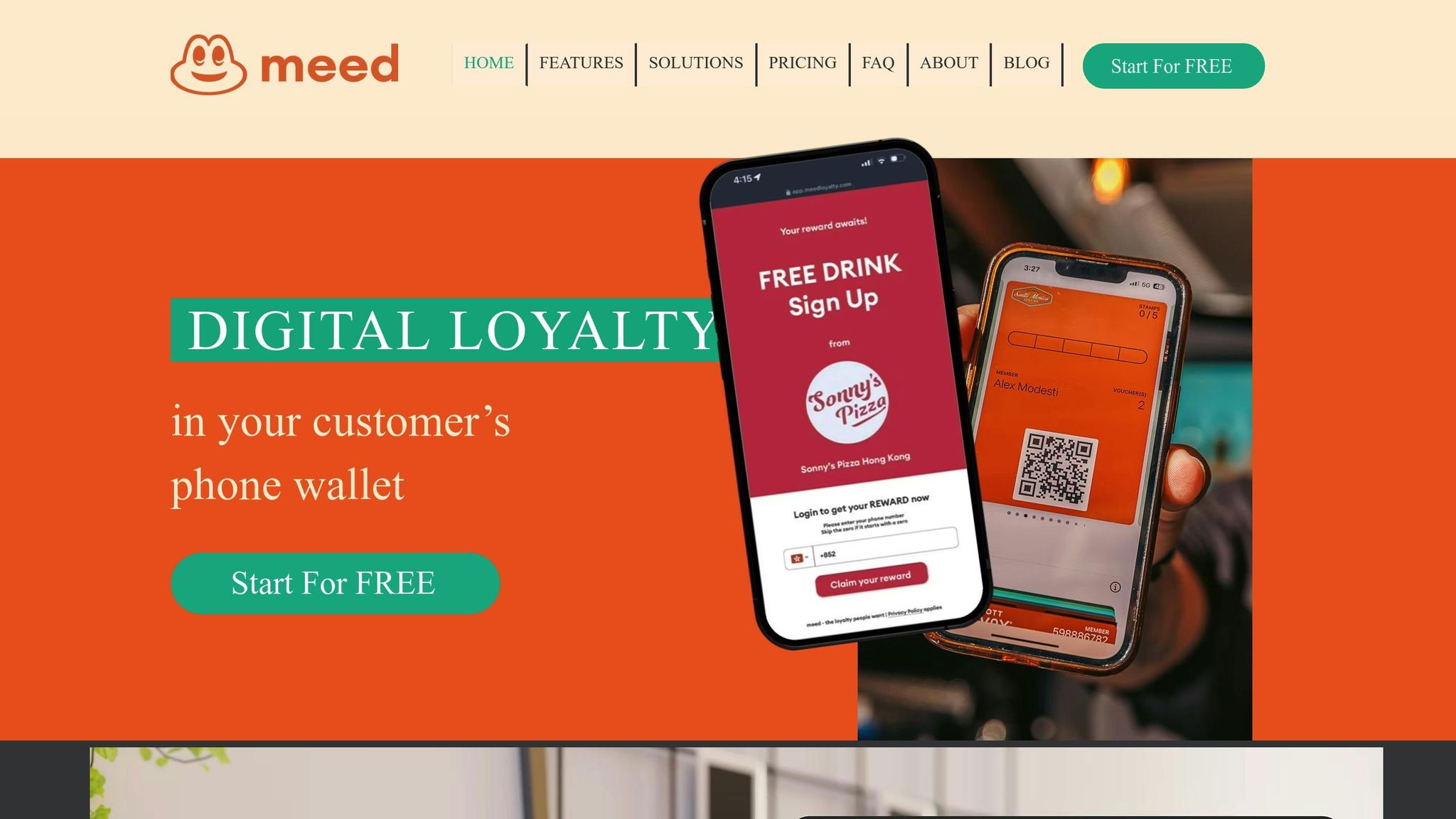
Platforms like Meed take these technologies a step further by merging strong security with user-friendly features. For instance, Meed employs QR code rewards and AI-powered scanning to prevent credential theft and automate rewards updates, reducing both manual errors and fraud. Its unified membership management system centralizes loyalty data, minimizing the risks associated with fragmented access. Additionally, Meed integrates with digital wallets like Apple Wallet and Google Wallet, taking advantage of their advanced security features. The platform also supports NFC technology (meedNFC), enabling secure, tap-based interactions at physical locations. Together, these features create a multi-layered security system that protects customer data while enhancing trust and convenience.
Conclusion: Building Trust Through Cybersecurity
In today’s digital world, cybersecurity isn’t just a technical safeguard – it’s the bedrock of customer trust, especially in omnichannel loyalty programs. When data breaches occur, the damage to trust is profound. In fact, 19% of consumers completely stop shopping with affected retailers, and 33% avoid them for at least three months. Once customer confidence is broken, rebuilding it becomes an uphill battle.
The stakes are incredibly high. With 90% of financial professionals identifying cyberattacks as a major threat and the average cost of a breach in the U.S. reaching $5.9 million, investing in cybersecurity upfront is not only smarter but also far more cost-effective than dealing with the aftermath of an attack.
Earning and maintaining trust means showing a clear, measurable commitment to protecting customer data. After a breach, the biggest barrier to retaining customers is the lack of a transparent strategy to prevent future incidents. This is why businesses must communicate openly about their security measures and provide tangible proof of their efforts to safeguard data.
For companies running omnichannel loyalty programs, success starts with embedding security into the very design of these platforms. Security can’t be an afterthought – it has to be a core principle. To strengthen these efforts, businesses are turning to advanced technologies that offer cutting-edge protection.
Technologies like AI-driven threat detection and secure wallet systems are redefining what’s possible in cybersecurity. Platforms such as meed integrate these solutions with user-friendly features, striking a balance between robust protection and seamless convenience.
In an era where consumers are more aware of data privacy than ever before, strong cybersecurity isn’t just about protection – it’s a competitive edge. Companies that prioritize security will set themselves apart, building deeper customer loyalty and driving sustainable success. By taking a comprehensive approach to cybersecurity, businesses protect not only their data but also the trust and loyalty that fuel their growth.
FAQs
What makes omnichannel loyalty programs vulnerable to cyberattacks, and how can businesses protect themselves?
Omnichannel loyalty programs face greater risks of cyberattacks because they rely on multiple access points, share data across various platforms, and integrate with different systems. These complexities can lead to vulnerabilities such as insecure data transmission, weak authentication protocols, and insufficient encryption. As a result, sensitive customer information could be at risk of data breaches, identity theft, or fraud.
To mitigate these risks, businesses should adopt robust cybersecurity practices, including:
- End-to-end encryption to protect data throughout its journey.
- Multi-factor authentication (MFA) to ensure only authorized individuals can access systems.
- Regular security audits to uncover and resolve potential vulnerabilities.
- Secure API integrations to prevent exploitation through system connections.
By focusing on these measures, businesses can protect their loyalty programs while reinforcing customer confidence.
What are the best ways to secure loyalty programs and build customer trust?
To keep your loyalty program secure and maintain the trust of your customers, it’s crucial to prioritize a few key cybersecurity practices. Start with data encryption, which ensures sensitive information stays protected. Adding multi-factor authentication (MFA) provides an extra barrier against unauthorized access. And don’t overlook the importance of regular security audits – these help uncover and fix potential vulnerabilities before they become major issues.
It’s also essential to use secure API integrations to block unauthorized access points. Pair this with ongoing staff training to keep your team updated on the latest data privacy and security protocols. Together, these steps not only help you avoid breaches but also reinforce your dedication to safeguarding customer data – building trust and encouraging loyalty.
How can businesses reassure customers and maintain trust after a data breach?
To ease customer concerns following a data breach, businesses need to prioritize open and honest communication. Quickly let customers know what occurred, outline the actions being taken to address the situation, and explain the measures in place to protect their data moving forward.
Regular updates can go a long way in restoring trust. Offering practical resources, such as advice on protecting personal information, shows genuine care for their well-being. By showing dedication to strengthening cybersecurity practices, companies can reassure customers that their safety remains a top priority.