
GDPR compliance is essential for loyalty programs handling customer data in the EU or UK. Non-compliance can lead to fines up to €20 million or 4% of global revenue, along with loss of customer trust. Here’s what you need to know:
- Key GDPR principles: Only collect necessary data, ensure transparency, and limit data use to disclosed purposes.
- Privacy policies: Must include clear details on what data is collected, why, how it’s used, retention periods, and user rights.
- Consent: Requires clear, affirmative actions – no pre-ticked boxes or bundled agreements.
- Data security: Use encryption, access controls, and have a breach response plan.
- User rights: Allow users to access, correct, delete, or transfer their data, and respond promptly to requests.
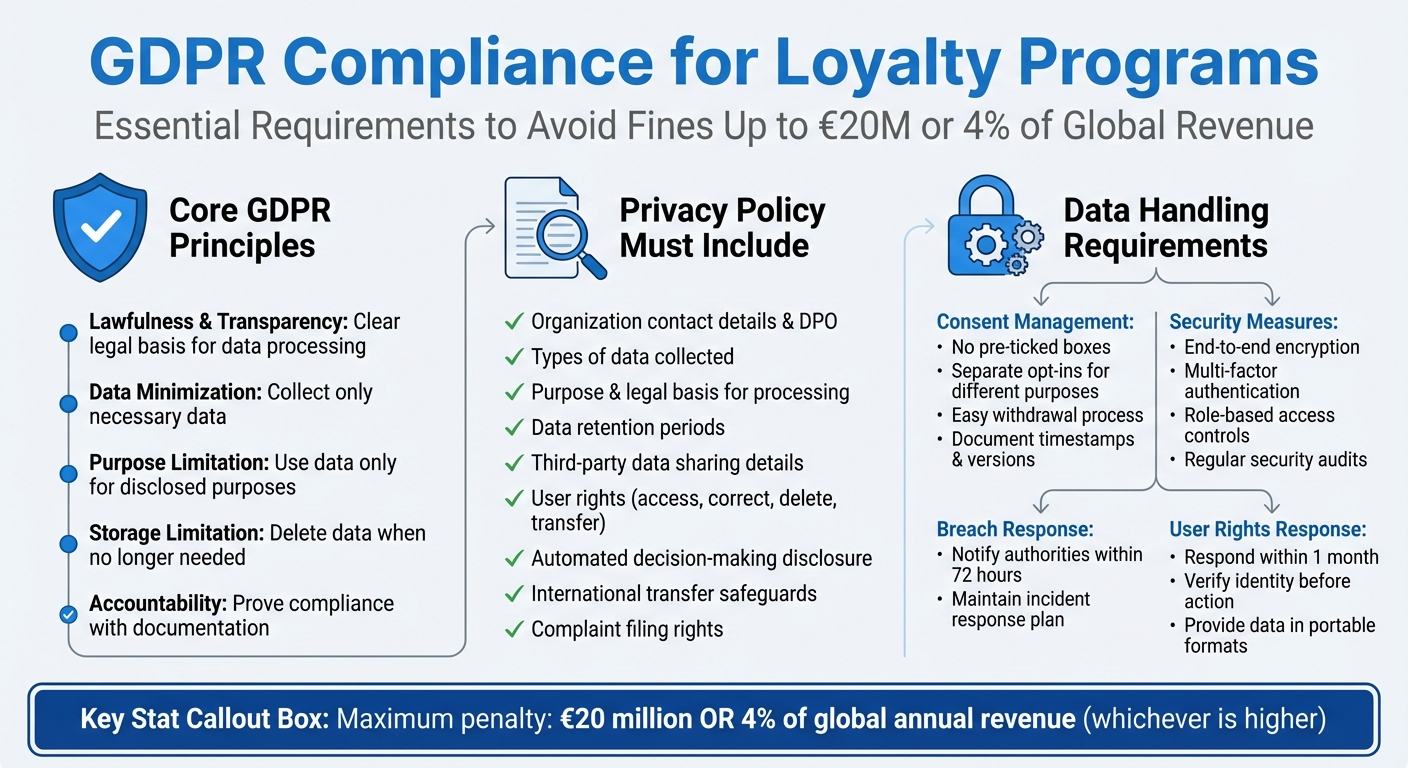
GDPR Compliance Checklist for Loyalty Programs
GDPR Explained: What Every UK & EU Business Must Understand
Core GDPR Principles for Loyalty Program Privacy
Under GDPR, loyalty programs must collect only the data they truly need, ensure transparency in how it’s used, and limit how long they keep it. By following these principles, you can create a program that respects privacy while still offering meaningful benefits. Let’s break down the key aspects of GDPR compliance for loyalty programs.
Lawfulness, Fairness, and Transparency
For every data processing activity in a loyalty program, there must be a lawful basis – such as explicit consent or a contractual need. It’s crucial to identify and document the legal reasoning behind each use of customer data.
Transparency means being upfront with members about what data is collected, why it’s needed, and how it will be used. Privacy notices should be written in plain, easy-to-understand language, ensuring members know exactly how their information is handled.
"Transparency is an overarching principle that is fundamentally linked to fairness. Transparent processing is about being clear, open and honest with people from the start about who you are, how and why you use their personal information, and their rights." – Information Commissioner’s Office (ICO)
A great example of this is Coop Denmark’s 2020 initiative. They introduced a carbon footprint tracking feature for loyalty members and clearly explained why purchase data was being collected. Importantly, they also provided an opt-out option for members who didn’t want to participate.
Data Minimization and Purpose Limitation
Only collect data that is absolutely necessary – like an email address for account verification – and use it strictly for the stated purpose. Gathering extra, unnecessary data not only violates GDPR but also risks losing customer trust.
Purpose limitation means using data solely for the reasons disclosed when it was collected. For instance, if you collect email addresses to send reward updates, you can’t later use them for unrelated marketing campaigns unless you get separate consent.
It’s equally important to think about how long you’ll keep this data and how you’ll ensure compliance with these rules.
Storage Limitation and Accountability
Data should only be kept for as long as it’s needed. Storage limitation requires setting clear policies for deleting or anonymizing data once it’s no longer relevant. Many loyalty programs, for example, delete data from inactive accounts after a set period, such as 24 months.
Accountability means you, as the data controller, are responsible for proving compliance with GDPR. This includes keeping records of consent and putting strong security measures in place to protect customer information.
Building GDPR-Compliant Privacy Policies for Loyalty Programs
A well-written privacy policy is essential for both meeting legal requirements and earning customer trust. Think of it as a contract that explains how you handle member data, protecting your business while reassuring your customers. For loyalty programs, this document connects legal obligations with practical actions.
Required Elements of a Privacy Policy
To align with GDPR principles, your privacy policy needs to include several critical components. Start by identifying your organization and providing contact details, including those of a representative and, if applicable, a designated Data Protection Officer.
Explain the purpose and legal basis for each type of data processing. For instance, if you collect email addresses to send reward notifications or analyze purchase history to customize offers, specify whether this is based on consent, legitimate interests, or contractual necessity.
List the types of personal data you collect, such as contact information, purchase history, behavioral patterns, or geolocation data. Be transparent about who has access to this information, including any third parties, like marketing agencies or analytics platforms. Also, define how long you retain the data or the criteria you use to determine retention periods.
Outline user rights clearly. These include the rights to access, correct, delete their data (the "right to be forgotten"), transfer their data elsewhere, and object to processing or profiling. Provide easy-to-follow instructions for withdrawing consent at any time. If you use automated decision-making or profiling, such as for personalized rewards, disclose this along with the logic behind it and any potential effects. Additionally, address international data transfers, detailing safeguards in place, and inform users of their right to file complaints with a supervisory authority.
Keep in mind, GDPR violations can lead to fines of up to €20 million or 4% of global annual revenue, whichever is higher. Including all these elements not only ensures compliance but also builds transparency and trust with your members.
Writing Clear and Accessible Policies
Simplicity is key. Your privacy policy should be written in plain, straightforward language that anyone can understand. Avoid vague terms like "may", "might", or "often", which can confuse readers. Clarity in your policy fosters the kind of transparency that strengthens customer confidence.
"A good Privacy Policy doesn’t hide behind legal jargon. It tells people, in plain terms, what you collect, why you need it, and what you’re doing with it." – CookieScript
Take a layered approach to presenting your policy. Start with a summary of the most important points – what data you collect, why you collect it, and how users can exercise their rights. Then, provide a link to the full policy for those who want more details.
Display your privacy notice where it’s most relevant, such as directly on the sign-up page, rather than burying it in a footer link. Ensure that consent is separate and specific; for example, joining your loyalty program should not automatically mean agreeing to unrelated marketing emails.
Use clear headings, concise paragraphs, and bullet points to make the policy easy to read. Active, direct language ensures all members understand how their data is used and what control they have over it.
sbb-itb-94e1183
GDPR-Compliant Data Handling Practices
Once your privacy policy is in place, the next step is to ensure you’re handling customer data in a way that respects their rights and complies with GDPR regulations. This involves clear processes for obtaining consent, safeguarding data, and addressing member requests. Let’s break down how to meet these standards effectively.
Obtaining Explicit Customer Consent
Under GDPR, valid consent requires clear, affirmative actions from your members. Pre-ticked boxes, silence, or combining consent with general terms and conditions won’t cut it. Instead, ask members to actively check an empty box or click a specific button to provide consent. Keep consent requests separate and easy to spot. If your loyalty program collects data for different purposes – like tracking rewards points and sending marketing emails – offer separate opt-in options. This way, members stay in full control of their personal information.
The Information Commissioner’s Office emphasizes:
"Consent requests need to be prominent, concise, easy to understand and separate from any other information such as general terms and conditions."
Make the process of withdrawing consent just as straightforward. Options like a one-click unsubscribe link or a user-friendly privacy dashboard allow members to adjust their preferences effortlessly. Always document consent details, including timestamps and what information was provided, to ensure compliance and make audits easier.
Data Security and Breach Management
Securing consent is just one part of the equation – protecting the data itself is equally critical. Use strong technical measures like end-to-end encryption (both for data at rest and in transit), multi-factor authentication, and properly configured firewalls. Role-based access controls should also be in place to limit sensitive data access to authorized personnel only.
Regularly conduct security audits and penetration tests to identify and fix vulnerabilities before they become issues. If a breach occurs, GDPR requires you to notify the relevant supervisory authority within 72 hours of discovery. To stay prepared, establish an incident response plan that outlines steps for identifying, containing, and reporting breaches. This not only helps protect your reputation but also minimizes legal risks.
Fulfilling User Rights
Meeting GDPR standards also means being responsive to user rights. Members have the right to access their data, request corrections, demand deletion, or transfer their information to another service. Typically, you’ll need to respond to these requests within one month. To prevent unauthorized access, always verify the member’s identity before acting on their request.
Your system should allow for quick retrieval, modification, or deletion of member records. Provide a clear channel – like a dedicated portal or contact method – for submitting requests and train your team to handle these inquiries efficiently.
For data portability, export information in widely used formats, such as spreadsheets, to make transfers smooth. If a member objects to direct marketing, stop processing their data for that purpose immediately. Document every request, including verification steps and outcomes, to demonstrate accountability. Additionally, ensure contracts with third-party loyalty platform providers include clauses requiring their cooperation in fulfilling member rights requests.
Using meed for GDPR-Compliant Loyalty Programs
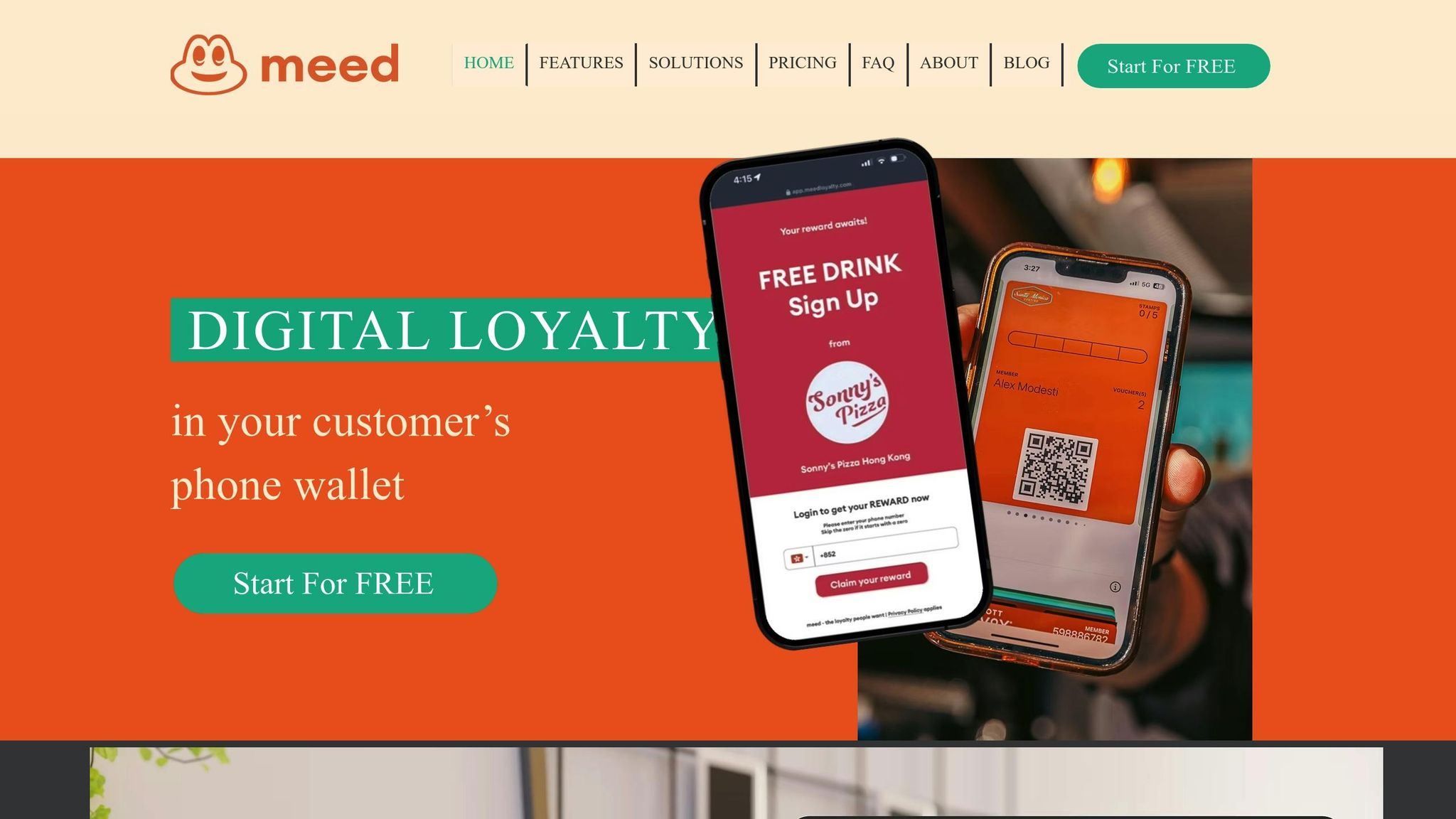
meed takes the complexity out of GDPR compliance by embedding it directly into every stage of your loyalty program management. By aligning with the core principles of GDPR, meed ensures your operations remain compliant while staying efficient and user-friendly. These built-in features not only simplify compliance but also create a better experience for your customers.
Built-in Tools for Consent Management
To meet GDPR requirements, meed includes tools that handle consent with precision. Opt-ins are designed to be clear and unambiguous, ensuring members can join your loyalty program without automatically agreeing to marketing communications. This avoids the "bundling" issues that often lead to GDPR violations.
Every consent action is meticulously recorded, providing a full audit trail. This includes details such as who gave consent, when they did so (with timestamps), the version of your privacy policy they reviewed, and the method of consent. Members also have the flexibility to withdraw their consent easily, whether through a user-friendly privacy dashboard or a simple one-click unsubscribe option. By streamlining consent management, meed ensures compliance while honoring user preferences.
This focus on consent ties directly to how data is collected and minimized throughout the loyalty program’s lifecycle.
Data Minimization and Secure Integrations
meed’s features – such as digital stamp cards, QR code rewards, and Apple and Google wallet integrations – are designed with GDPR’s data minimization principle in mind. They collect only the essential information needed to operate your loyalty program. For example, tracking stamps or issuing rewards might require just an email address or session ID, reducing the amount of data you need to handle while maintaining a seamless experience for members.
Additionally, the platform’s wallet integrations support data portability, allowing members to transfer their loyalty information to other services upon request. Combined with secure encryption and access controls, these features protect customer data at every stage of its lifecycle.
Advanced Compliance Features in Pro and Enterprise Plans
For businesses with more complex requirements, meed’s Pro and Enterprise plans provide advanced compliance tools. If you’re using analytics to profile customer behavior, these plans ensure transparency by letting members see how their data is used and offering opt-out options.
Enterprise users gain access to customizable features tailored to their specific needs, such as advanced reporting and tools for managing data across multiple locations. These features help larger organizations maintain accountability and demonstrate GDPR compliance through thorough documentation and logging systems.
Conclusion
Being GDPR compliant not only helps you steer clear of hefty fines – up to €20 million or 4% of global revenue – but also fosters trust with your customers. When people see that you’re upfront about how you collect and use their data, and that you give them real control, they’re more likely to feel connected to your brand.
Achieving compliance means having clear, easy-to-understand privacy policies, handling data responsibly, and setting defined retention periods. By following GDPR principles – like transparent policies and secure data practices – you’re not just meeting legal requirements; you’re also strengthening customer relationships.
Using specialized platforms can make managing these requirements much easier. For example, meed offers tools like automated consent management, digital stamp cards, and QR code rewards to minimize data collection. Their Pro and Enterprise plans include advanced compliance features, so you can focus on creating great customer experiences while the platform handles the technicalities. As privacy laws continue to change, tools like these become even more essential.
Treating data protection as an opportunity rather than a burden can give your business a real edge. When you show a commitment to ethical data practices and build transparency into every interaction, you’re not just following the rules – you’re creating the kind of trust that leads to long-term loyalty.
Take this as a moment to review your current practices, update your privacy policies with straightforward language, and implement the consent and security measures outlined in this guide.
FAQs
What GDPR principles should loyalty programs follow?
Loyalty programs must respect critical GDPR principles to prioritize user privacy and data protection. Here’s what that entails:
- Lawfulness, fairness, and transparency: Clearly explain to users how their personal data will be used and ensure they understand it.
- Purpose limitation: Only collect data for clearly defined, legitimate purposes relevant to the program.
- Data minimization: Limit data collection to what’s absolutely necessary for the program to function effectively.
- Accuracy: Regularly update user data and fix any inaccuracies without delay.
- Storage limitation: Retain personal data only for as long as it serves its intended purpose.
- Integrity and confidentiality: Protect user data from breaches or unauthorized access with robust security measures.
- Accountability: Maintain thorough documentation and practices to prove compliance with GDPR requirements.
Adhering to these principles not only ensures legal compliance but also helps businesses earn and maintain customer trust.
How can I make sure my loyalty program’s privacy policy complies with GDPR?
To ensure your loyalty program’s privacy policy aligns with GDPR requirements, focus on being clear, limiting data collection to what’s necessary, and minimizing the information you handle. Be upfront about what data you collect, why you need it, and how it will be used. Stick to gathering only what’s essential for running your program – like tracking rewards or managing communication preferences. Include a straightforward privacy notice that explains data categories, legal bases for processing, any third-party sharing, and how long the data will be kept.
Give your members control by explaining their rights, such as accessing, correcting, or deleting their data, and withdrawing consent whenever they choose. Make the process simple by providing a dedicated portal or email for handling these requests. If your program involves higher-risk data, such as location tracking, consider conducting a Data Protection Impact Assessment. You may also need to appoint a Data Protection Officer to oversee compliance efforts.
Platforms like meed can make GDPR compliance easier with tools for managing consent, securely handling data, and automating rights requests. Regularly update your privacy policy to reflect changes in regulations or your data practices, and ensure your team is well-versed in GDPR rules to maintain both trust and compliance.
What are the best tools for ensuring GDPR compliance in loyalty programs?
Ensuring your loyalty programs comply with GDPR doesn’t have to be overwhelming – especially if you have the right tools in place. Privacy-focused solutions, such as consent management systems (CMPs), can streamline essential tasks like collecting cookie consents, generating privacy policies, and keeping detailed records of user opt-ins. These platforms not only help you meet GDPR requirements but also cut down on time-consuming manual processes.
Some loyalty platforms, like meed, take it a step further by embedding compliance features directly into their systems. These include tools for capturing user consent, managing data-subject requests, and implementing data-minimization practices. On top of that, they offer engaging features like digital stamp cards and QR code-based rewards, making it easier to balance compliance with customer engagement. Pairing these tools with regular compliance audits ensures your loyalty program stays on track while building trust with your audience.