
Customers want rewards now, not later. Loyalty programs that deliver instant perks – like discounts or digital rewards – outperform traditional point systems. Why? Because 78% of consumers prefer rewards they can use immediately, and instant rewards increase spending by 18% to 35%.
Here’s why instant gratification matters and how you can use it to improve your loyalty program:
- Attention spans are shrinking: The average attention span is now just 5 seconds. Long waits for rewards lead to disengagement.
- Delayed rewards frustrate customers: 45% of loyalty members think rewards take too long to deliver value, and 23% leave rewards unclaimed annually.
- Psychology drives loyalty: Instant rewards trigger dopamine, creating positive emotional connections and repeat behavior.
- Small businesses benefit: Tools like digital stamp cards, QR codes, and mobile wallet integration make offering instant perks simple and effective.
The solution? Combine quick rewards (like discounts or free items) with tiered benefits for long-term engagement. By doing this, you can increase customer retention by 5%, which can boost profits by over 25%.
Want to make your loyalty program work better? Start by giving customers what they want – rewards they can enjoy right away.
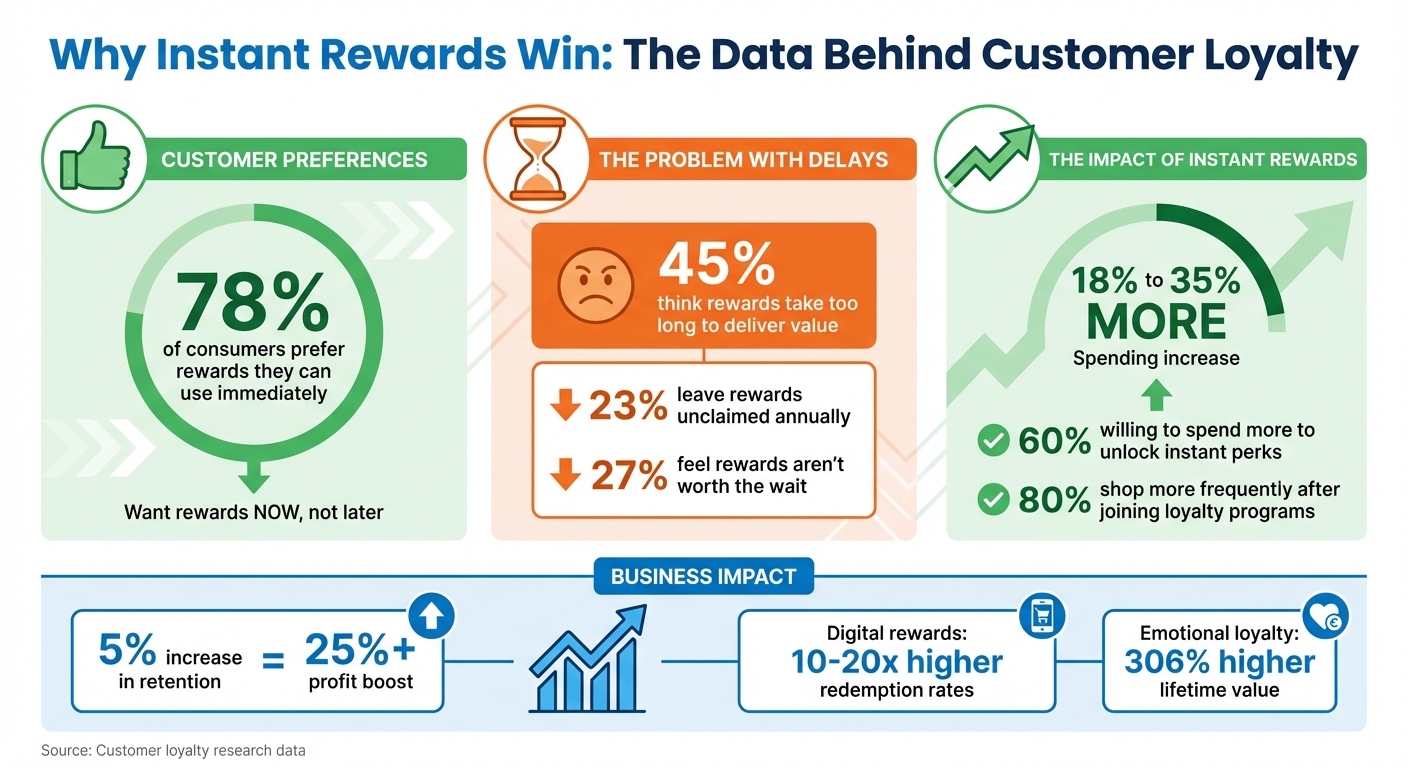
Instant Rewards vs Delayed Rewards: Customer Behavior Statistics
The Problem: Delayed Rewards Cause Customer Drop-Off
Why Customers Lose Interest
Today’s consumers expect quick gratification. Traditional loyalty programs, which often require weeks or months of point accumulation before offering a reward, feel outdated in a world of instant services. Waiting too long for rewards simply doesn’t align with modern expectations.
The statistics back this up: over half of reward program members say slow or overly complicated redemption processes are their biggest frustration. On top of that, 27% of participants feel the rewards aren’t worth the wait. The connection between their purchase and the eventual reward fades over time, making it harder to stay engaged.
Things like blackout dates and convoluted rules only make matters worse. These restrictions don’t just irritate customers – they actively discourage loyalty. Unsurprisingly, 23% of cardholders leave rewards unclaimed every year. When earning a reward feels more like a chore than a perk, customers are quick to lose interest and disengage.
For small businesses, this lack of engagement can have serious consequences.
How This Affects Small Businesses
Customer impatience doesn’t just harm loyalty programs – it directly impacts small businesses. When rewards take too long to earn, customers often drift to competitors. For instance, a coffee shop that requires 10 visits to earn a free drink might lose regulars to a rival offering an instant discount on their first visit. And those old-school punch cards? They’re easily lost or forgotten, leading to missed chances to build lasting relationships.
The financial toll is clear. Businesses that fail to deliver timely and relevant rewards risk losing nearly half of their customer base. On the other hand, the potential upside is striking: boosting customer retention by just 5% can increase profits by over 25%. For small businesses already operating on slim margins, losing customers due to slow or irrelevant rewards isn’t just a setback – it’s a major missed opportunity. Every delayed reward is a chance squandered to keep customers coming back and choosing your business over others.
The Psychology Behind Instant Gratification
Dopamine and Positive Reinforcement
When customers get an instant reward, their brains release dopamine – a chemical that drives cravings and links actions to pleasure. This dopamine rush not only makes shopping feel good but also encourages repeat behavior, creating a cycle of wanting more. This is why instant rewards are such a powerful tool for building customer loyalty.
Interestingly, customers who form an emotional connection with a brand are worth 306% more over their lifetime. Surprise rewards are especially impactful. When the brain receives an unexpected benefit, it releases even more dopamine, creating a stronger emotional memory than a predictable discount or sale.
Take this example: a Columbia University study showed that coffee shop customers given a 12-stamp loyalty card with two stamps already filled bought coffee more often than those with a standard 10-stamp card, even though both required the same number of purchases for a free coffee. The illusion of progress triggered their reward-seeking behavior, showing how instant gratification can drive habits.
This immediate sense of pleasure doesn’t just lead to more spending – it sets the stage for long-term loyalty through habit-forming behaviors.
Creating Habit Loops
Dopamine plays a key role in forming habits by reinforcing behaviors through instant rewards. This process, known as operant conditioning, teaches the brain to repeat actions automatically for the same satisfying outcome.
For instance, Starbucks Rewards uses its app to show customers their earned "stars" in real time, giving them an immediate sense of progress toward rewards. Similarly, Nectar in the UK introduced a "scratch and win" feature, where users receive push notifications to digitally scratch for bonus points after making a purchase. This mimics the thrill of an instant win and keeps users engaged.
Timing is everything. Seventy-eight percent of consumers prefer rewards they can access immediately instead of waiting to accumulate points over time. In fact, 60% are willing to spend more to unlock instant perks. When rewards are delivered right away – like appearing in an app instead of being delayed until the next billing cycle – customers stay more engaged and motivated. No wonder 80% of U.S. consumers reported shopping more frequently after joining a loyalty program.
The pattern is simple: shop, get rewarded instantly, feel good, and repeat. These habit loops demonstrate how immediate rewards can turn one-time shoppers into loyal customers, making them a cornerstone of effective loyalty programs.
How to Add Instant Gratification to Your Loyalty Program
Using meed‘s Digital Stamp Cards and QR Code Rewards
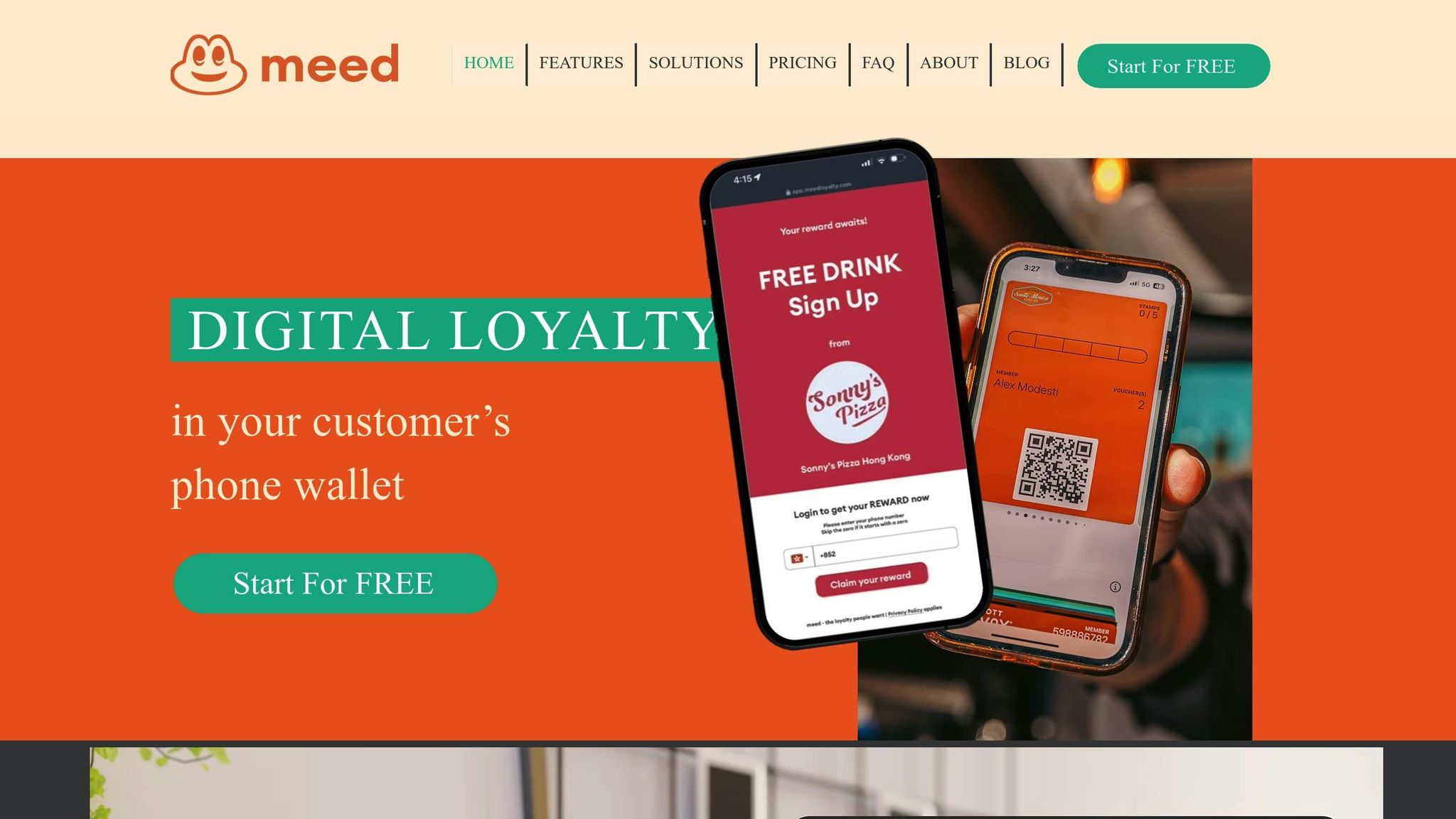
Digital stamp cards and QR codes make loyalty programs more engaging by removing the hassle of physical cards or complicated processes. With a quick scan at checkout, customers see their progress update instantly on their phones. This immediate feedback feels rewarding, making each purchase a small victory.
Digital rewards outperform physical ones, with redemption rates 10–20 times higher. Plus, 76% of consumers are more likely to participate when brands offer quick, easy-to-access perks. meed’s digital stamp cards deliver these instant rewards seamlessly. Customers can unlock small wins, like a free item after just a few stamps, while still working toward bigger milestones.
"In the battle for customer loyalty, timing isn’t everything – it’s the only thing." – Trisha Asgeirsson, President, SKUx
Simplicity is crucial. Over half of users abandon rewards programs when the process feels too complicated. QR codes simplify everything – no apps to download, no forms to fill out. Customers just scan, earn, and track their progress. Offering a sign-up perk, like 10% off or a free sample, adds an extra incentive right from the start, creating a positive first impression.
To take this instant gratification even further, integrating rewards with mobile wallets offers unmatched convenience.
Connecting with Apple and Google Wallets
Mobile wallets make loyalty programs even easier to access. When customers add your program to their Apple or Google Wallet, their rewards are stored alongside their credit cards, ready to use at any time. meed simplifies this with a one-click setup, eliminating the need to dig through emails or remember login details.
Push notifications enhance the experience by reminding customers of their rewards when they’re near your store. This kind of instant access is why 65% of younger consumers actively seek loyalty programs with rewards they can use right away. At checkout, NFC technology allows customers to tap their phone to apply discounts or earn points automatically.
This streamlined approach doesn’t just make life easier – it changes spending habits. Customers using mobile wallets for instant rewards spend 18% to 35% more than those who don’t. By removing barriers, you ensure rewards are actually redeemed instead of forgotten.
Mixing Instant and Tiered Rewards
While instant rewards create excitement, adding tiered rewards keeps customers engaged over the long haul. Combining these two strategies is the key to building loyalty. For example, offer small, quick wins like a free drink after a few purchases, while also including tiered benefits like VIP perks, early access to products, or exclusive experiences.
This approach balances short-term satisfaction with long-term goals. Breaking larger rewards into smaller milestones – like bonuses at 10, 25, and 50 purchases – keeps customers motivated and engaged throughout their journey. Each milestone triggers a sense of accomplishment, encouraging them to continue.
meed’s analytics dashboard helps you fine-tune your program by tracking which rewards resonate most with your audience. Keep in mind that 66% of consumers will adjust their spending to maximize benefits when rewards feel easy to achieve. The key is to offer enough instant perks to keep customers coming back while building toward bigger rewards that deepen their loyalty over time.
sbb-itb-94e1183
Measuring the Impact of Instant Rewards
Key Metrics: Redemption Rates and Customer Retention
Tracking the right metrics is essential to understanding how well your instant rewards program is working. Digital vouchers and instant discounts tend to be redeemed faster than traditional points-based systems. Even a modest improvement in customer retention – around 5% – can lead to a profit increase of up to 95%. Keep an eye on how many customers return after receiving an instant reward. This can help you determine if your program is creating lasting habits or simply offering one-time incentives.
Another important metric is average transaction value (ATV), which shows whether rewards are encouraging customers to spend more. On average, members who receive instant benefits spend 18% to 35% more than those who don’t. Comparing spending habits before and after customers join your program can provide valuable insights into whether your rewards are truly making an impact. These numbers can then be seamlessly integrated into real-time analysis using meed’s analytics dashboard.
Tracking Performance with meed’s Analytics Dashboard
meed’s analytics dashboard offers real-time insights into customer behavior, including purchase timing, interactions with rewards, and the performance of instant versus tiered reward structures.
One key feature is the ability to track redemption velocity – how quickly customers use rewards after earning them. Fast redemption signals strong engagement and the creation of habit loops. On the other hand, slow redemption could mean customers either forgot about the reward or didn’t find it appealing. These insights help you fine-tune your offerings. For example, if a particular reward isn’t being used, it might be time to replace it with something more enticing.
The dashboard also enables segmentation, helping you differentiate between customers who shop only during promotions and those who have a deeper, emotional connection to your brand. This distinction matters because customers with emotional loyalty have a 306% higher lifetime value. With these segmented insights, you can refine your rewards strategy to encourage both habitual behavior and emotional attachment to your brand.
The Latest Trends in Customer Loyalty Programs
Conclusion
Keeping customers engaged often hinges on offering instant rewards. Studies reveal that 78% of consumers prefer receiving immediate rewards rather than accumulating points over time, and 45% feel traditional reward systems are too slow. Clearly, customers value programs that deliver instant gratification.
The science backs this up: instant rewards activate dopamine, creating positive associations that can turn casual shoppers into loyal customers. By using tools like digital stamp cards, QR code rewards, and mobile wallet integration, businesses can eliminate the barriers that often deter customers from traditional loyalty programs. In fact, loyalty program members who receive instant benefits tend to spend 18% to 35% more than those who don’t.
For small businesses, adopting these strategies doesn’t require a massive budget. Platforms like Meed make it easy to set up digital loyalty programs with features such as QR code scanning, Apple and Google Wallet integration, and real-time performance tracking through an analytics dashboard.
To maximize engagement, consider blending immediate rewards with long-term incentives. This hybrid approach offers small, instant wins to keep customers motivated while they work toward bigger rewards. Not only does this strategy sustain short-term interest, but it also helps build emotional connections that foster long-term loyalty. Brands that establish emotional ties with their customers enjoy a 306% higher lifetime value.
FAQs
How do instant rewards impact customer spending habits?
Instant rewards play on the brain’s natural craving for instant gratification, sparking a feel-good reaction that customers quickly associate with your brand. This emotional connection can encourage them to shop more often, seeking to relive that rewarding experience.
Offering perks like discounts, points, or completing a digital stamp right away can significantly increase customer engagement and drive repeat purchases. These immediate benefits add excitement to loyalty programs, keeping customers involved and strengthening their long-term connection to your brand.
What are the advantages of adding mobile wallet integration to loyalty programs?
Integrating mobile wallets like Apple Pay and Google Wallet into loyalty programs makes it incredibly easy for customers to earn and redeem rewards on the spot. Since most people already have these wallets on their smartphones, adding rewards like points, discounts, or digital stamps is as simple as a quick tap. This eliminates the hassle of carrying physical cards or downloading extra apps. The instant nature of this process creates a feel-good moment for customers, encouraging them to return and shop more often.
This integration also ramps up participation by making loyalty programs faster and more convenient. When rewards are delivered instantly through a familiar payment method, customers are naturally more inclined to engage. This leads to better retention and increased spending. For businesses using the meed platform, this functionality comes built-in, allowing merchants to seamlessly connect loyalty features – like digital stamp cards and QR code rewards – with Apple Pay and Google Wallet. This streamlined setup not only simplifies program management but also enhances the overall customer experience, strengthening loyalty and driving sales.
How can small businesses use instant gratification to improve their loyalty programs?
Small businesses can make their loyalty programs more engaging by introducing instant rewards, which play on the human desire for immediate gratification and encourage customers to come back.
Start by offering rewards that customers can enjoy right away. Think of perks like a $5 discount at checkout, cashback offers, or digital coupons. To keep things smooth and hassle-free, use mobile-friendly tools that automate these rewards in real time – digital stamp cards or QR codes are great options. Tailoring rewards to individual purchase habits can make a big difference too. For example, if someone regularly buys coffee, surprise them with a free cup after a few visits. This approach not only feels personal but also builds a stronger bond with your customers.
You might also want to explore a tiered system that mixes small, instant rewards with bigger milestones. For instance, offer a $2 discount on a first purchase and a $20 voucher after their tenth visit. Make sure customers are notified the moment they earn a reward – push notifications or SMS work well – and keep redemption easy with one-tap options. By blending immediacy, personalization, and simplicity, small businesses can create loyalty programs that truly connect with U.S. customers and encourage long-term relationships.