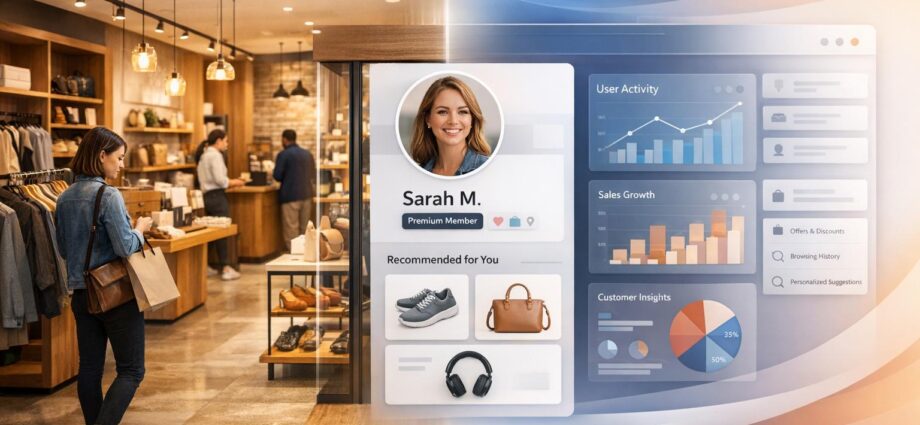
In today’s retail landscape, customers expect a unified shopping experience across all channels – whether online, in-store, or on mobile. However, many businesses struggle to connect these touchpoints effectively. Here’s the bottom line:
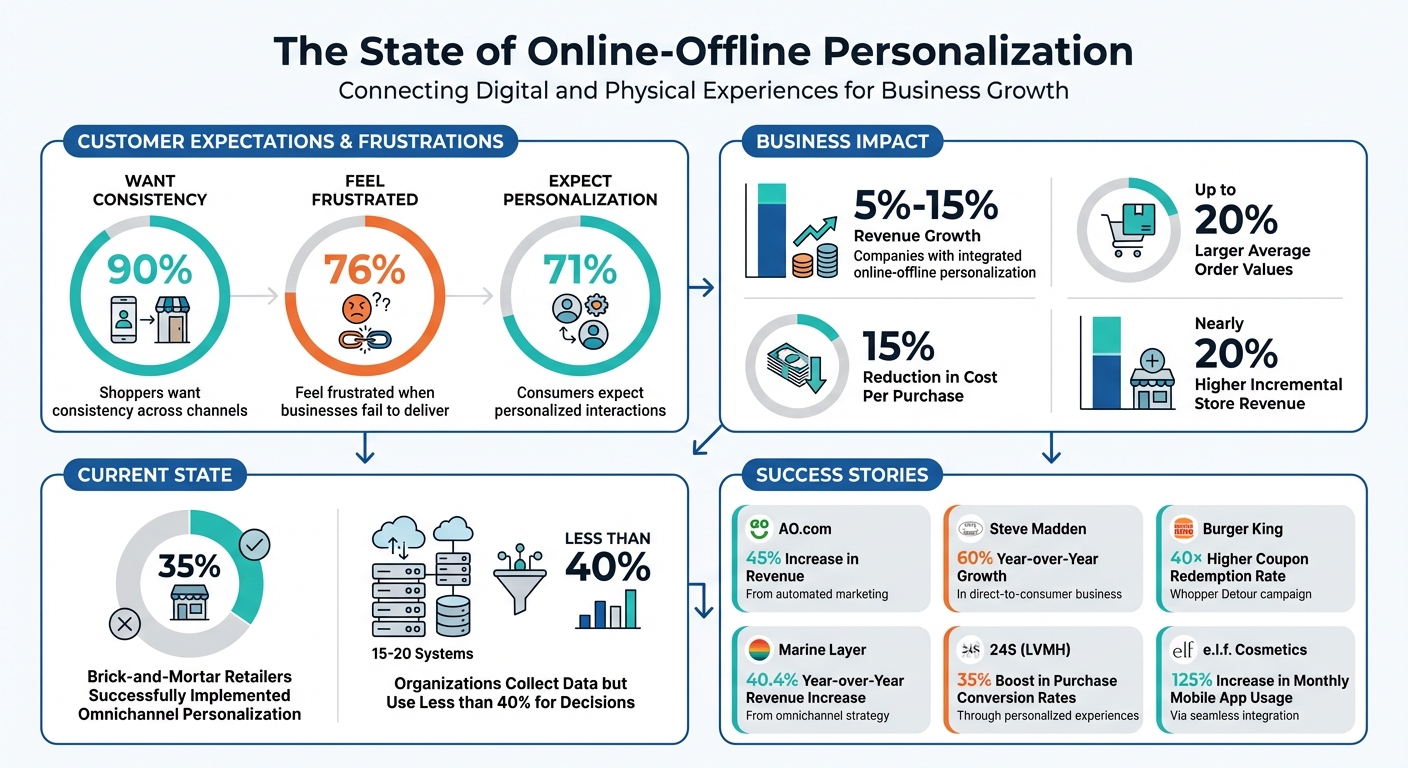
- 90% of shoppers want consistency across channels, but 76% feel frustrated when businesses fail to deliver.
- Companies that integrate their online and offline personalization strategies see 5%-15% revenue growth and up to 20% larger orders.
- Tools like Customer Data Platforms (CDPs), connected POS systems, and loyalty programs are key to bridging this gap.
To succeed, businesses must unify customer data, leverage the right technology, and ensure privacy compliance. This guide explores how to connect online and offline experiences, improve personalization, and measure results effectively.
Online and Offline Personalization Statistics and Impact
7 Tips for Effective Omnichannel Retail Strategies
Building the Foundation for Connected Personalization
Creating a seamless experience across multiple channels hinges on three key elements: unified customer data, robust technology, and strict privacy measures. Just like constructing a sturdy building, these components form the backbone of effective personalization. Without them, your efforts will likely fall flat.
Creating Unified Customer Profiles
A unified customer profile serves as your ultimate reference point for understanding each individual. It consolidates data from various sources – online browsing, email interactions, in-store purchases, and loyalty programs – into one comprehensive view. Despite collecting data from 15 to 20 systems, most organizations use less than 40% of it to make decisions. That’s a huge missed opportunity.
The main building blocks of a unified customer profile include:
- Identity identifiers: Email addresses, phone numbers, loyalty IDs, and credit card tokens.
- Cross-channel behavioral data: Website visits, app usage, and POS transactions.
- Purchase history: Past orders, average order value, and preferred payment methods.
- Loyalty status: Reward points, tier levels, and lifetime value metrics.
When these elements come together, your team gains a clearer picture. For example, store associates can see what a customer browsed online before visiting a store, and marketers can avoid promoting items someone already purchased. This approach can boost average order value by up to 20%.
Take AO.com, a UK-based appliance retailer, as an example. In April 2025, they used SAP Emarsys to merge browsing behavior, purchase history, and engagement signals into unified profiles. This shift allowed them to abandon generic, mass-email strategies in favor of smarter, automated campaigns, ultimately driving a 45% increase in revenue from automated marketing.
To achieve this, effective identity resolution is essential. Deterministic matching (using exact identifiers like emails or loyalty IDs) provides accuracy, while probabilistic methods (AI-driven pattern recognition) help fill in the gaps. Start with deterministic techniques for precision, then layer on probabilistic tools for a more complete picture.
Once unified profiles are in place, the right technology ensures data flows smoothly and stays consistent.
Technology Requirements
At the heart of any connected personalization strategy is a Customer Data Platform (CDP). A CDP gathers, unifies, and resolves identities across all touchpoints – your website, mobile app, POS system, and CRM. It ensures that "Sarah who bought jeans in-store" is recognized as the same "Sarah who abandoned her cart online."
Beyond a CDP, other technologies play critical roles:
- Connected POS systems: These capture in-store transactions in real time and link them to digital profiles. Many legacy systems trap data in silos, but modern systems integrate seamlessly, enabling a continuous flow of information.
- Data warehouses: Platforms like Snowflake or BigQuery store data for long-term analysis.
- Integration platforms: Tools like Airbyte or Talend automate the movement of data between systems.
| Technology Component | Primary Function | Key Data Handled |
|---|---|---|
| Customer Data Platform (CDP) | Centralizes data and builds unified profiles | Identity, behavior, and attributes |
| Identity Resolution Tools | Connects offline and online identities | Emails, phone numbers, credit card tokens |
| POS System (Connected) | Captures real-time in-store transactions | Offline purchases, returns, loyalty usage |
| Data Warehouse | Long-term data storage for analysis | Historical transaction and interaction logs |
| Integration Platform (ETL/ELT) | Moves data across systems | API calls, database logs, SaaS data |
A great example is Steve Madden, which revamped its loyalty program in 2024 by switching to Yotpo. This move unified customer data and replicated their VIP in-store experiences online. The result? A 60% year-over-year growth in their direct-to-consumer business.
"To establish a true direct-to-consumer relationship, it is imperative to get eCommerce and omnichannel right. It was a no-brainer to switch to an innovative provider like Yotpo, whose agile, single-platform approach improves our ability to provide a unified customer experience."
- Jeff Silverman, President of Retail & eCommerce, Steve Madden
Start by auditing your current data silos. Identify where customer data resides – whether in your POS, CRM, or email marketing tools – and map out gaps between online and offline operations. Prioritize impactful use cases like cart recovery or in-store pickup notifications before scaling to more complex initiatives.
Data Privacy and Compliance
As you build a unified data and technology stack to power personalization, maintaining customer trust through strict privacy measures is non-negotiable. In the U.S., laws like the CCPA (California Consumer Privacy Act) and CPRA (California Privacy Rights Act) dictate how businesses can collect, use, and share personal data. Transparency is key – you need to clearly explain how offline data (like in-store purchases) is combined with digital profiles.
Consent management should be an integral part of the customer journey. Provide clear opt-in options for loyalty programs and data-sharing initiatives, and make opting out just as simple. A centralized CDP helps manage consent and preferences in real time, ensuring compliance and building trust.
Ethical data usage goes beyond meeting legal requirements. Use your insights to genuinely enhance the customer experience. For instance, if your POS data shows a customer is vegan, avoid promoting leather products to them. These thoughtful, personalized touches show customers you’re paying attention and respecting their preferences.
It’s a delicate balance – 71% of consumers expect personalized interactions, yet 76% feel frustrated when their expectations aren’t met. To bridge this gap, conduct regular data audits, implement automated data classification, and train your team on privacy-first practices. When customers trust you with their data, they’re more likely to reward you with their loyalty.
Strategies for Connecting Online and Offline Personalization
With the groundwork in place, it’s time to implement strategies that seamlessly link digital and physical experiences. The goal? Create a two-way connection where both channels inform and complement each other. Here’s how to make that happen.
Online-to-Offline Personalization
Digital platforms are fantastic at picking up on customer intent – what they browse, add to their carts, or search for. The challenge lies in translating this data into meaningful, in-store experiences. One standout method is geofencing. Take Burger King’s "Whopper Detour" campaign, for example. Using Radar’s geofencing technology and mParticle’s customer data platform, they identified app users within 600 feet of a McDonald’s and sent push notifications offering a 1-cent Whopper. The result? A staggering 6 million app downloads and a 40× higher coupon redemption rate compared to traditional mobile offers.
Another effective tactic involves using emails and SMS to drive foot traffic. For instance, if a customer browses winter coats online, sending them an email about an exclusive in-store discount on outerwear at their nearest location creates a natural connection. Equipping store staff with tablets that display a customer’s online browsing history takes this a step further, enabling personalized recommendations when the customer visits the store.
Offline-to-Online Personalization
Physical store interactions generate valuable data that can be leveraged to enhance digital experiences. For example, in-store purchases can trigger follow-up emails with tailored recommendations, reminders to restock items, or suggestions for complementary products.
QR codes are another simple yet effective tool. By printing QR codes on receipts or displaying them at checkout, businesses can encourage customers to engage digitally. Marine Layer, an apparel brand, used Klaviyo to unify its in-store and e-commerce efforts, resulting in a 40.4% year-over-year increase in revenue attributed to Klaviyo.
In-store events also provide opportunities to collect offline data. When integrated into unified customer profiles, this data allows for advanced segmentation and personalized digital campaigns. These efforts often tie into loyalty programs, which act as a bridge between online and offline customer behaviors.
How Loyalty Programs Connect Both Channels
Loyalty programs are the ultimate tool for linking online and offline experiences. By giving customers a single identity across all touchpoints, these programs allow them to earn and redeem rewards seamlessly, whether they shop online, use a mobile app, or visit a physical store.
Platforms like meed make this process easy. Using QR codes, customers can earn rewards or redeem offers in-store while businesses gain a unified view of their behavior. Integration with Apple Wallet and Google Wallet ensures loyalty cards are always accessible, right on customers’ phones. This streamlined approach boosts engagement and encourages repeat purchases.
| Strategy Type | Tactic Example | Data Sources |
|---|---|---|
| Online-to-Offline | Geofenced push notifications for discounts | Mobile App Location + CRM |
| Online-to-Offline | Emails promoting local store events | Online Browsing History + Geo-IP |
| Offline-to-Online | Post-purchase emails for replenishment | POS Transaction Data |
| Offline-to-Online | QR codes on receipts for loyalty signups | Physical Print + Mobile Web |
| Hybrid/Loyalty | Real-time point redemption at checkout | Unified Customer Profile (CDP) |
sbb-itb-94e1183
Personalization Tactics for Small Businesses
Small businesses can tap into personalization by leveraging data from their POS systems, email campaigns, and customer interactions. These strategies help blend online and offline personalization, building on the unified approach discussed earlier.
Using Combined Data for Customer Segmentation
Start by merging data from POS transactions, loyalty programs, and digital interactions to create a comprehensive customer profile. This approach helps identify distinct customer groups, such as high-value shoppers, customers with declining purchase frequency, or those showing interest in a variety of products. For example, integrating your POS system with your email platform allows you to segment customers based on factors like purchase frequency, average order value, or product preferences.
Once these customer groups are defined, you can craft digital campaigns that complement their in-store experiences, creating a more cohesive connection between your physical and digital touchpoints.
Digital Tactics Based on Offline Context
Understanding what customers buy in-store allows you to tailor your digital outreach. For instance, after a purchase, send follow-up emails suggesting complementary products. For consumable goods like coffee beans or skincare items, SMS reminders for replenishment at the right time can keep your brand top of mind.
Geofencing is another effective tool for businesses with physical locations. If a customer who has browsed your website comes within 600 feet of your store, a push notification with a time-sensitive offer can encourage immediate action. Additionally, digital suppression lists can help refine your messaging. For example, if your POS data shows a customer prefers plant-based products, you can avoid promoting items that don’t align with their preferences. Another seamless way to bridge online and offline interactions is by including QR codes on receipts, leading to exclusive online discounts or loyalty program sign-ups.
Offline Tactics Based on Digital Insights
Digital insights can also inform in-store personalization. For instance, equipping your staff with tablets that display a customer’s browsing history or wish list can help them make tailored recommendations. If a customer viewed an item online but didn’t purchase it, your team can suggest it during their visit. Similarly, if someone abandons their online cart, you can send them an SMS with a discount code redeemable in-store to encourage them to stop by.
"We’re continuing to move away from the batch-and-blast methodology towards more personalized tactics to be able to serve the right message, at the right time."
Loyalty programs can further enhance personalization across channels. For example, when a customer scans their loyalty card in-store, their points should update instantly and reflect on their mobile device via platforms like Apple Wallet or Google Wallet. Tools like meed provide real-time syncing through QR code integration, ensuring a seamless experience. This continuous feedback loop between digital and physical interactions strengthens the overall customer experience.
Measuring and Improving Personalization Results
To truly understand the impact of personalization efforts, it’s essential to track the right metrics. Pay attention to engagement metrics like email open rates, click-through rates (CTR), and time spent on site. Evaluate commercial outcomes such as conversion rates, average order value (AOV), and incremental revenue. Finally, assess long-term loyalty through retention rates and customer lifetime value (CLV). Comparing personalized experiences to a control group provides a clear picture of their effectiveness. For instance, retailers using omnichannel personalization report up to a 15% reduction in cost per purchase and nearly 20% higher incremental store revenue compared to single-channel strategies. These insights help refine and improve personalization strategies over time.
Metrics to Track
It’s crucial to monitor metrics across both online and offline channels. For example, track how many customers research products online but complete their purchases in-store, and measure the store foot traffic driven by digital campaigns. AOV can indicate the success of personalized recommendations, while loyalty program engagement – measured through redemption rates and active member counts – highlights how well experiences are integrated across touchpoints.
| Metric Category | Key KPIs | What It Measures |
|---|---|---|
| Engagement | CTR, Open Rate, Time on Page | How effectively content grabs attention |
| Commercial | AOV, ROAS, Incremental Sales | Revenue impact of personalization efforts |
| Retention | CLV, Churn Rate, Repurchase Rate | Long-term customer loyalty and brand health |
| Omnichannel | ROPO, Store Foot Traffic, CPA | Connection between online and offline interactions |
Also, don’t overlook offline conversions. These can reveal which channels are driving actual sales.
Testing and Refining Your Approach
A/B testing is a powerful tool for improving personalization. Experiment with variables like reward types, email subject lines, messaging, and website layouts to see what resonates most. Focus on testing one variable at a time to clearly identify what drives results. Let each test run for at least a week to account for variations in shopping behavior and ensure statistically reliable outcomes.
For example, LVMH’s luxury retailer 24S used eight personalized triggered campaigns with Braze to tackle friction points, achieving a 35% boost in purchase conversion rates and a 7% increase in add-to-cart rates over six months. Similarly, e.l.f. Cosmetics streamlined its post-purchase emails, reducing nearly 100 templates to just six dynamic versions. The result? A 125% increase in monthly mobile app usage and a 58% rise in loyalty offer redemptions year-over-year.
Once you identify a winning variation, make it your default experience and retire the underperforming options. To avoid overwhelming customers, set frequency caps and use holdout groups – small segments of users who don’t receive personalized content – to measure the incremental lift of your campaigns. This iterative approach ensures continuous improvement.
Using meed for Analytics and Insights
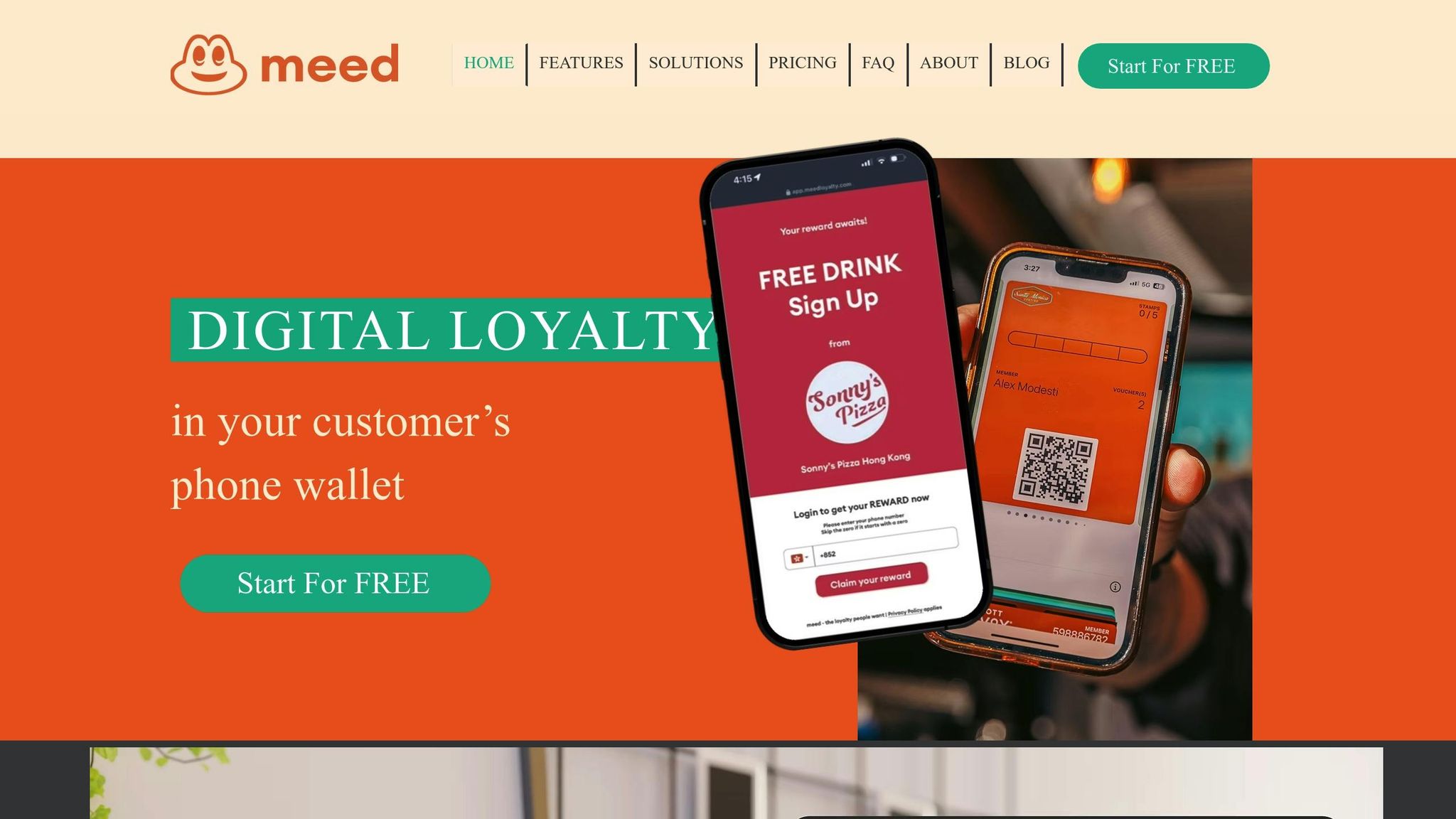
Advanced analytics tools like meed provide a unified view of customer behavior across online and offline channels. With meed’s dashboard, you can track loyalty program engagement through QR code scans, redemption patterns, and reward preferences. Real-time data sync allows you to see how in-store points influence digital interactions right away.
The platform also highlights top-performing campaigns and identifies points where customers drop off. By segmenting users based on their combined online and offline activity, you can fine-tune your personalization strategies. This closed-loop system connects marketing efforts directly to sales data, making it easier to see what’s working and what needs adjustment.
"When personalization is measured like any other revenue investment – against baselines, segments, and lifecycle stages – it becomes easier to justify, easier to optimize, and easier to scale." – The Pedowitz Group
Getting Started with Connected Personalization
Bridging the gap between online and offline experiences is crucial for businesses, yet many still struggle. Research shows that just 35% of brick-and-mortar retailers have successfully implemented omnichannel personalization. At the same time, 71% of consumers expect brands to deliver personalized interactions, and 76% feel frustrated when those expectations aren’t met. The good news? You don’t have to tackle everything at once – you can start small and build from there.
Begin by auditing your current customer touchpoints. Look at where and how you collect customer data – your website, POS systems, mobile app, or social media channels – and identify any gaps. For example, some businesses discover that their in-store purchase data doesn’t sync with their email marketing platform, or that loyalty points earned online can’t be redeemed in physical stores. Once you’ve pinpointed these disconnects, focus on fixing the ones that matter most to your highest-value customers. After narrowing down these gaps, test your solutions to ensure they deliver meaningful results.
Next, consider launching a pilot program before rolling out changes on a larger scale. Pilot programs are a great way to test ideas without overwhelming your resources. For instance, integrating loyalty programs across channels has been shown to increase conversion rates by more than 10%. Instead of trying to personalize every customer interaction at once, prioritize one high-impact journey to see how it performs.
Once you’ve validated your pilot, technology can help you streamline and expand. Tools like meed make this process easier by centralizing data from multiple channels into unified customer profiles. This platform offers features like QR code rewards and Apple and Google wallet integration, seamlessly connecting physical and digital experiences. Its real-time analytics dashboard provides insights into loyalty program engagement, showing how in-store actions influence online behaviors and vice versa. By simplifying the technical side, tools like this enable you to focus on delivering personalized experiences that drive results.
The formula for success is straightforward: start small, measure what works, and scale up accordingly. Whether you’re a local retailer or managing multiple locations, unifying your data, aligning your teams, and using the right tools can create a seamless experience for your customers. When customers feel recognized and valued at every touchpoint, it not only strengthens their loyalty but also boosts your revenue.
FAQs
How can businesses seamlessly connect online and offline customer data?
To bring together online and offline customer data, businesses need to create a unified view of each customer by combining digital interactions – like website visits, app usage, or email engagement – with physical activities, such as in-store purchases or loyalty program scans. The first step is to connect all relevant data sources, including e-commerce platforms, point-of-sale systems, CRM tools, mobile apps, and loyalty programs, into a centralized system. This can be done using APIs or batch feeds to ensure seamless data integration.
The next critical step is identity resolution, which matches customer data across channels. This can involve deterministic methods, such as linking email addresses or loyalty program IDs, as well as probabilistic techniques for anonymous users. A powerful Customer Data Platform (CDP) can process this data in real time, ensuring customer profiles remain accurate, privacy-compliant, and ready for use in marketing and engagement efforts.
A universal loyalty platform like meed makes this process even smoother by automatically syncing both online and offline actions – like digital stamp cards or QR code-based rewards – directly into the CDP. With this enriched data, businesses can craft personalized experiences across all channels, whether it’s through customized emails, exclusive in-store offers, or precisely targeted ads. This approach ensures customers enjoy a seamless and engaging journey at every touchpoint.
What key technologies help connect online and in-store personalization?
To bridge the gap between online and in-store personalization, businesses depend on a mix of critical technologies. A customer data platform (CDP) or similar system collects data from various sources like e-commerce websites, point-of-sale systems, mobile apps, and CRM tools, creating a single, unified view of each customer. Identity-resolution tools play a key role by linking online identifiers, such as cookies or device IDs, with offline ones like loyalty cards or phone numbers, ensuring a cohesive customer profile. On top of that, real-time data pipelines keep everything updated instantly, allowing for seamless and timely personalized offers across channels.
To take personalization further, technologies such as geofencing, AI-powered recommendations, and analytics tools provide deeper insights and help predict customer behavior. Platforms like meed make this process even easier by offering features like QR-code-based rewards, digital stamp cards, and integration with Apple Wallet and Google Wallet. These tools ensure that customers enjoy consistent and tailored experiences, whether they’re shopping online or visiting a physical store, making personalization both smooth and impactful.
How can small businesses start using connected personalization effectively?
Small businesses can kick off their journey into connected personalization by bringing all customer data together in one place. This means merging transaction data from your point-of-sale system, e-commerce platform, email service, and mobile app into a single platform – think of something like a loyalty system such as meed. Tools that link in-store purchases to online profiles can make this process easier – often, just an email address or phone number is enough to build a unified view of your customer. With this complete picture, you can create tailored segments based on shopping habits, preferences, or even location.
Once your data is centralized, it’s time to offer personalized experiences across multiple channels. For instance, you could introduce digital stamp cards with QR codes that customers scan during in-store visits, automatically syncing with their online loyalty balance. Afterward, send a personalized email or SMS offering a discount on a related product. You might also explore geofencing, which allows you to send special offers when customers are near your store. Start small – connect one offline action, like a purchase, to one online channel, such as email. From there, you can gradually expand your efforts.
Lastly, don’t forget to monitor and tweak your strategy. Keep an eye on metrics like repeat visits, average order value, and loyalty reward redemptions to figure out what’s working. Use these insights to fine-tune your approach, improve how you segment your audience, and scale your efforts over time. By starting with a unified data system and simple tools, you can deliver smooth, personalized experiences that align with the expectations of today’s U.S. shoppers.