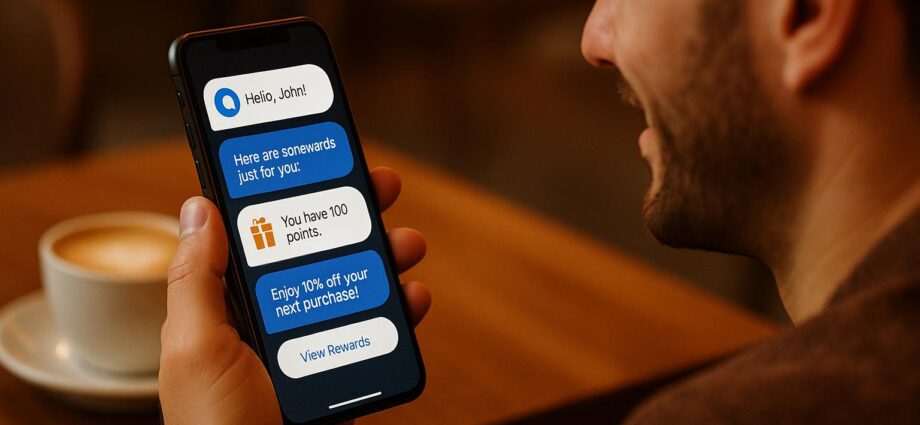
Personalized chat interfaces are transforming loyalty programs by making them interactive, easy to use, and more engaging. Businesses are using these AI-driven tools to provide real-time updates, tailored reward suggestions, and automated redemption processes – all through simple, conversational interactions. The result? Higher redemption rates, better customer satisfaction, and reduced operational costs.
Here’s a quick summary of the 10 ways these chat interfaces improve loyalty programs:
- Real-Time Reward Updates: Members can instantly check points and tier progress.
- Guided Onboarding: Simplifies enrollment with conversational sign-ups.
- Personalized Reward Suggestions: Offers rewards based on member preferences.
- Automated Redemption: Simplifies checkout by enabling point usage in chat.
- Proactive Notifications: Sends reminders for expiring points or special offers.
- Post-Purchase Feedback: Collects input and builds engagement after purchases.
- Omnichannel Consistency: Provides a unified experience across all platforms.
- Multilingual & Accessibility Features: Makes loyalty programs easy for everyone to use.
- Human Handoff Support: Ensures complex issues are resolved by live agents.
- Analytics for Optimization: Uses data to continuously improve program performance.
Platforms like meed make it easier for businesses to adopt these tools by offering features like QR code rewards, digital stamp cards, and wallet integrations. Whether it’s a grocery chain using WhatsApp chatbots or an airline improving tier updates via mobile, these strategies are driving measurable results, including increased engagement and fewer expired points.
Want to boost your loyalty program? Start by implementing one of these use cases and watch your customer relationships grow stronger.
Building an Agentic Loyalty Program Featuring Slack, Heroku, and Agentforce
1. Real-Time Reward Balance and Tier Status Updates
Today’s loyalty program members expect instant updates on their status without navigating clunky portals or waiting for weekly emails. With personalized chat interfaces, they can immediately access their points, rewards, and tier progress. When someone asks, "What’s my balance?" or "How close am I to my next tier?" they get accurate, real-time answers.
This kind of instant access changes the game. Members no longer forget about their points or miss opportunities to level up. Instead, they stay engaged and motivated, knowing their progress is always within reach. It’s a simple way to build trust and keep participation steady.
Boosts Engagement and Retention
Real-time updates have a psychological edge – they make rewards feel immediate and within reach. Seeing progress right after a purchase reinforces the value of participation and provides instant gratification. This creates a positive feedback loop, encouraging members to return and stay involved.
Take airlines, for example. Many now use mobile chatbots to provide instant updates on tier progress, upgrade options, and partner earning opportunities. Similarly, fashion retailers integrate web chatbots that display personalized reward suggestions alongside live points balances, prompting customers to redeem rewards while shopping. These seamless interactions make the experience smooth and engaging.
Simplifies the User Experience
By using chat interfaces, members can skip the hassle of logging in and instead get answers through simple, conversational exchanges. Whether typing or speaking, the process is fast and intuitive.
This convenience is especially appealing in the U.S., where consumers expect quick, on-demand digital experiences. Research shows that members engaging with loyalty programs via mobile apps are 2–3 times less likely to churn compared to those who don’t.
To make this work, real-time updates need a few key features: secure authentication, near-instant data syncing, and clear displays of points, tiers, and benefits. Rich messaging options like carousels and quick replies enhance the experience, and the interface should work seamlessly across mobile, web, and messaging platforms.
Delivers Personalization and Relevance
Real-time data doesn’t just inform – it personalizes. Chat interfaces can tailor messages based on a member’s current status or recent activity. For example, if someone is close to a tier upgrade, they might get a reminder showing how many points they need and quick ways to earn them. These targeted nudges make each interaction feel valuable and relevant.
Platforms like meed take this further by consolidating multiple loyalty programs into one interface. Members can check balances and tier statuses across brands without switching between apps, creating a smooth, unified experience that keeps them coming back.
Enhances Operational Efficiency
Automating routine inquiries, like balance checks or tier updates, takes a load off customer service teams. With these tasks handled by chatbots, staff can focus on more complex issues, improving both efficiency and customer satisfaction.
Automation also ensures accuracy and eliminates delays. Members get up-to-date information directly from the loyalty program database. Plus, analytics from chat interactions provide insights into member behavior, helping teams refine programs and marketing strategies for even better results.
2. Guided Member Onboarding and Enrollment
The way new members sign up can make or break their long-term engagement. Traditional enrollment forms often feel like a chore – tedious, confusing, and prone to abandonment. But with personalized chat interfaces, the process transforms into a conversational experience that’s natural and inviting.
Instead of being overwhelmed by static forms, new members interact with a chatbot that asks one question at a time, clarifies benefits on the spot, and makes the process easier to follow. This approach not only reduces friction but also helps people clearly understand what they’re signing up for. The result? Higher completion rates and more engaged members. Let’s dive into how chat interfaces simplify enrollment, tailor the onboarding journey, and improve efficiency.
Streamlines User Experience
Chat-based onboarding tackles the frustrations that often plague traditional sign-up processes. By guiding users through enrollment step by step, chat interfaces collect essential information – like email addresses, preferences, and consent – without overwhelming them.
These systems also ensure secure authentication using methods such as one-time passwords (OTP) or OAuth integration, balancing security with simplicity. Users can access the chat through multiple entry points, whether it’s scanning a QR code, tapping an NFC tag, or clicking a link on social media. No matter how they start, the experience remains seamless and consistent.
Take WhatsApp chatbots, for example. A major brand used them to improve signup rates by creating a user-friendly, conversational flow.
What makes chat onboarding stand out is its real-time responsiveness. If someone gets stuck or has a question about program benefits, they can ask immediately and receive instant answers. This immediate support prevents the frustration that often leads to people abandoning the process altogether.
Supports Personalization and Relevance
One of the standout features of chat interfaces is their ability to tailor the onboarding experience to each individual. As users answer questions, the chatbot adjusts its prompts and recommendations based on their preferences and interests.
For instance, if a new member expresses interest in dining rewards, the chatbot might highlight restaurant partnerships and dining bonuses instead of generic program details. This personalized approach makes the program feel more relevant and valuable from the start.
A fashion retailer used web chat onboarding to suggest rewards based on browsing and purchase history, leading to increased add-to-basket redemptions and higher engagement with limited-time bonus offers.
Beyond the enrollment process, chat interfaces can segment users based on their responses. This segmentation lays the groundwork for targeted communications and offers, ensuring that members receive updates and benefits aligned with their preferences. By collecting this data early, businesses can create a more engaging and personalized membership experience from day one.
Improves Operational Efficiency
Automation is another game-changer. Chat interfaces streamline tasks like data capture, identity verification, and consent management, reducing manual workloads while ensuring compliance with data regulations.
Industry analysis shows that businesses using AI chatbots for onboarding see up to a 30% increase in loyalty program sign-ups and a 25% reduction in onboarding time compared to traditional methods.
This efficiency means companies can handle a high volume of new members without needing to scale up staff, saving time and resources.
Improves Engagement and Retention
The conversational style of chat onboarding creates a positive first impression. New members feel supported and guided, which sets the stage for a stronger relationship with the program. Unlike static forms, chat interfaces make the experience feel personal and interactive.
To keep the momentum going, chatbots can deliver welcome offers immediately after enrollment, giving members a reason to engage right away. They can also help users add loyalty passes to their Apple or Google Wallets, ensuring the program remains accessible and top of mind.
Automated onboarding paired with personalized welcome journeys has been shown to boost member retention by 20-25% in the first 90 days after sign-up.
This increase stems from better education about program benefits and tailored offers that quickly demonstrate value. Platforms like meed enhance this process by offering features like digital stamp cards and QR code rewards, which can be introduced during the chat onboarding. For U.S. consumers managing multiple memberships, this unified approach simplifies everything, making loyalty programs easier to navigate and use.
3. Personalized Reward Recommendations
Today’s members expect rewards that align with their unique preferences, and personalized chat interfaces make this a reality. By analyzing data like purchase history, browsing habits, and stated interests, these systems suggest rewards that feel custom-made. Instead of wading through irrelevant options, members are presented with offers that match their tastes. For example, a coffee enthusiast might receive early access to seasonal blends, while someone into fitness could see deals on athletic gear. This approach simplifies reward discovery and creates a more engaging experience, seamlessly integrating with features like real-time updates and guided onboarding.
Supports Personalization and Relevance
These systems use data such as past purchases, browsing behavior, and even real-time conversational cues to offer timely and relevant rewards. For instance, if a member mentions an upcoming birthday, the system might suggest discounts on celebratory items. This level of context-aware interaction ensures members feel seen and valued.
Improves Engagement and Retention
Personalized rewards have a noticeable impact on engagement. Tailored offers can increase engagement by up to 80%, with redemption rates climbing 20–30% and retention improving by 10–15%. By delivering suggestions that are specific to a member’s interests – such as a sale in their favorite product category – chat interfaces not only encourage interaction but also prompt immediate action.
Streamlines User Experience
Beyond personalization, chat interfaces enhance the overall user experience by removing unnecessary steps. They provide real-time, relevant suggestions like "What rewards can I redeem with my points?" or "Show me nearby dining deals", factoring in both location and point balance. This conversational, intuitive approach is especially helpful for time-sensitive opportunities, ensuring members don’t miss out on limited-time offers or bonus campaigns.
Improves Operational Efficiency
Automation plays a key role in scaling these personalized recommendations. By analyzing customer profiles in real time, businesses can offer continuously refined suggestions. Integration with platforms like meed centralizes loyalty management and customer data, delivering a unified experience across multiple membership programs. For U.S. consumers managing several memberships, this approach simplifies the process by providing relevant recommendations from all their programs in one place. Not only does this streamline internal operations, but it also enhances the customer experience. Additionally, by identifying which rewards resonate with different segments, businesses can optimize their reward catalogs and promotions based on actual demand, eliminating the need for guesswork.
4. Automated Redemption and Checkout Assistance
A complicated checkout process often causes members to give up on redeeming their rewards. By using automated redemption through chat interfaces, this friction is eliminated. Members can apply points, generate discount codes, and even complete purchases – all within a single chat window. It’s a simple, conversational way to handle what used to be a cumbersome process.
Simplifies the User Experience
Chat-based redemption turns a multi-step process into an easy conversation. Gone are the days of navigating multiple screens or manually tracking points. Members can ask straightforward questions like, “Can I use my points for this?” or “What rewards can I get with 500 points?” The system immediately provides options and processes the redemption in real time.
In 2024, a quick-service coffee chain introduced voice and chat-based loyalty redemption, allowing members to reorder their favorite items and apply points during checkout. This resulted in a 20% boost in average transaction value and a 30% reduction in checkout time during peak hours.
Integrating digital wallets simplifies the process even further. Members can quickly redeem rewards using QR codes, making transactions faster and more efficient.
Boosts Operational Efficiency
Automation doesn’t just help customers – it also eases the workload for businesses. By handling routine transactions automatically, it reduces errors and frees up staff to focus on more complex customer needs. Plus, it allows businesses to manage high volumes of redemptions without adding extra resources.
"One minute to set up, One tap to reward".
Take meed’s AI-powered receipt scanning, for example. After scanning a QR code, the system automatically updates rewards, ensuring a smooth, hands-free experience. What’s more, businesses can integrate QR code–based systems in under five minutes without needing extra hardware or software.
Drives Engagement and Retention
By making rewards easier to claim, automated redemption encourages members to use their points before they expire. This accessibility leads to higher engagement and fewer unused rewards.
In 2023, a global grocery chain launched a WhatsApp-based loyalty chatbot. Members could check balances, upload receipts, and receive reminders about expiring points. Over six months, this initiative increased redemption activity by 15% and significantly reduced points lost to expiration.
Chat interfaces also create more opportunities for interaction. Each redemption moment can double as a chance to promote new rewards, share special offers, or gather feedback. These conversations transform simple transactions into meaningful customer connections.
Personalizes the Experience
Automated systems use real-time data to tailor redemption options to individual preferences. Instead of offering the same rewards to everyone, these systems analyze purchase history, browsing habits, and conversational cues to suggest the most relevant options.
For instance, if a member mentions shopping for a birthday gift, the system might recommend gift card redemptions or discounts for special occasions. This personalized approach makes rewards feel more thoughtful and valuable, elevating the overall loyalty experience.
5. Proactive Notifications and Reminders
Smart loyalty programs take the initiative to notify members about expiring points, tier upgrades, bonus opportunities, and personalized challenges. By combining real-time updates with proactive messaging, these programs keep members informed and engaged. This approach shifts members from passive participation to active involvement by delivering timely, relevant information – ultimately driving program success.
Boosts Engagement and Retention
One of the biggest hurdles loyalty programs face is members forgetting about rewards or letting points expire. Proactive notifications tackle this problem head-on by sending timely reminders that prompt members to act before losing valuable benefits.
Take this example: A global grocery chain implemented WhatsApp chatbots to provide real-time balance updates and expiry reminders. This initiative significantly reduced the number of lost points and increased redemptions before expiration. Similarly, a pharmacy chain used SMS and RCS messaging to send post-purchase reminders, pairing them with small bonuses for survey completion. The result? Higher survey response rates and better customer retention.
Research shows that personalized notifications can increase customer engagement by up to 80% compared to generic messages.
These regular, tailored touchpoints keep the loyalty program fresh in members’ minds, encouraging consistent interaction.
Simplifies the User Experience
Chat-based notifications eliminate the hassle of manually checking account balances or searching for updates. Members receive critical information through their preferred communication channels, such as WhatsApp, SMS, or in-app messages. Features like NFC or QR code-based instant welcome offers add immediate value, cutting down on effort.
Digital wallet integration takes convenience a step further. Apple Wallet and Google Wallet passes can push updates about rewards, offers, and account status directly to customers’ phones. Automated updates for reward balances and stamp cards – triggered by actions like receipt scans – make tracking progress seamless. Members see their rewards updated in real-time, with no extra steps required.
Enhances Personalization and Relevance
Proactive notifications are designed to align with each member’s preferences and behavior. Using rich customer data, chat interfaces enable highly personalized communications. For example, frequent coffee buyers might get alerts about double-point promotions, while occasional shoppers might receive bonus challenges to encourage more visits.
Fashion retailers are also leveraging this approach. During peak times, chatbots send bonus notifications to drive timely engagement. By targeting specific segments with personalized challenges and campaigns, businesses ensure their messages stay relevant and engaging. This level of customization not only resonates with members but also makes program operations more efficient.
Increases Operational Efficiency
Automating notification workflows saves time and reduces the manual workload for marketing teams. Triggered messages can respond to specific actions or account changes automatically, ensuring consistent communication across a large member base. Many loyalty platforms allow small businesses to automate rewards and deliver targeted offers based on customer data, boosting engagement and retention for SMBs.
Real-time analytics further improve efficiency by tracking metrics like open rates, click-through rates, and redemptions. These insights help businesses fine-tune their campaigns for better results. Platforms like meed make this process even easier by automating notifications through features like digital stamp cards and QR code-based rewards. For example, when a customer scans a receipt or taps an NFC device, the system can instantly notify them about their updated progress or newly unlocked rewards.
This kind of automation ensures every member receives timely, relevant communication, regardless of program size.
6. Post-Purchase Feedback and Engagement
The moments after a purchase are a golden opportunity to strengthen customer relationships. Personalized chat interfaces make these interactions more engaging by creating conversational experiences that encourage feedback and provide immediate value. Instead of relying on traditional email surveys – which are often ignored – chat-based engagement connects with customers on platforms they already use and prefer. This timely approach not only enhances retention but also simplifies operations.
Boosting Engagement and Retention
Post-purchase chats help keep customers engaged by reinforcing the brand right after a transaction. Studies show that customers are more likely to provide feedback through chat interfaces than through email surveys. This real-time interaction leaves a positive impression and builds loyalty.
Timing plays a huge role in this process. Reaching out to customers within two weeks of their purchase has been shown to reduce churn by two to three times. Chat interfaces make this easy by automating personalized thank-you messages and feedback requests immediately after a sale.
One example comes from a pharmacy chain that uses SMS chatbots to follow up with customers after purchases. They encourage survey participation by offering bonus points, which has resulted in higher survey response rates and improved customer retention. The conversational tone of chat interactions makes customers feel appreciated rather than interrogated, fostering a stronger connection to the brand.
Adding gamification elements to the process can further enhance participation. Programs that reward customers with points, badges, or exclusive perks for completing surveys turn feedback collection into a fun, rewarding experience that customers are eager to engage with.
Simplifying the User Experience
Chat interfaces remove the usual hurdles of traditional feedback collection by connecting with customers on their preferred communication platforms, such as SMS, WhatsApp, or in-app messaging. These interactions feel natural and require minimal effort.
Streamlined processes are key. Keeping feedback within a single chat flow with quick-reply options makes it easy for customers to share their thoughts, receive instant acknowledgment, and even see loyalty rewards updated in real-time – all without needing to leave their messaging app.
Automated follow-ups ensure no feedback opportunity is missed. If a customer doesn’t respond right away, the system can send polite reminders at optimal times without being intrusive. This combination of persistence and ease significantly boosts completion rates compared to traditional methods.
For added convenience, chat systems can integrate with digital wallets. Feedback submitted through chat can instantly update loyalty rewards in platforms like Apple Wallet or Google Wallet, providing immediate gratification and reinforcing the value of the loyalty program.
Delivering Personalization and Relevance
Chat interfaces excel at tailoring post-purchase interactions by using customer data and purchase history. Feedback questions can be customized based on the product purchased, the customer’s membership tier, or their preferences.
For instance, a fashion retailer’s chatbot might ask about the fit or style of a recent purchase and then suggest complementary items or exclusive offers tailored to the customer’s profile. This level of personalization makes the interaction feel meaningful and shows the customer that their preferences are understood.
The dynamic nature of chat also allows for adaptive questioning. If a customer expresses satisfaction, the chat can shift to recommending related products or asking about future needs. If concerns are raised, the system can escalate the issue to a human support agent or offer immediate solutions.
Timing and purchase frequency also play a role in creating personalized experiences. First-time buyers might receive welcome messages and program details, while loyal customers could be offered exclusive previews or VIP perks. This thoughtful approach ensures every interaction feels relevant and valuable.
Enhancing Operational Efficiency
Automating post-purchase feedback not only saves time but also improves the quality and speed of data collection. Chatbots can gather responses, flag urgent issues, and generate detailed reports for program improvement. This enables teams to address problems quickly and fine-tune their strategies.
Beyond data collection, chat systems can categorize feedback, route complaints to the right departments, and trigger follow-up actions based on sentiment analysis. For example, positive feedback might lead to thank-you messages and loyalty bonuses, while negative feedback could prompt immediate outreach from customer service.
Real-time analytics offer valuable insights into customer satisfaction, product performance, and program efficiency. Marketing teams can monitor response rates, satisfaction scores, and redemption patterns to refine their approach. This data-driven strategy ensures resources are allocated where they’ll have the greatest impact.
Platforms like meed take this a step further by integrating post-purchase engagement with loyalty management. Businesses can automate feedback collection using digital stamp cards or QR code rewards, then use the insights to deliver personalized offers and follow-ups. By unifying these processes, companies can eliminate data silos, streamline operations, and create seamless customer experiences.
The scalability of chat-based systems ensures that businesses can maintain consistent, high-quality engagement, no matter how many transactions they handle.
sbb-itb-94e1183
7. Omnichannel Experience Alignment
Today’s customers want loyalty programs that work effortlessly across every platform they use – whether they’re shopping in-store, browsing online, using a mobile app, or contacting customer service. Personalized chat interfaces tie all these channels together, ensuring that preferences, reward balances, and benefits remain consistent. By building on earlier automation strategies, this alignment bridges the gap between digital and physical interactions.
Boosts Engagement and Retention
When loyalty programs are accessible across all channels, customers face fewer hurdles and are more likely to stay engaged. Unified chat access simplifies the process, allowing users to check balances, redeem rewards, or receive personalized offers without jumping between platforms. This seamless experience encourages frequent participation.
Atlassian‘s Community Rewards program is a great example of how consistent engagement across channels can drive success. In 2021, the program saw 17.6 million visits and an average of 22,000 monthly posts, with 80% of forum questions answered by community members. Most notably, users who engaged with the community within their first two weeks were two to three times less likely to churn.
Chat interfaces play a key role in maintaining this continuity. Imagine a customer checking their reward balance through a website chat, receiving a tailored offer via SMS, and redeeming it in-store – all while the system remembers their preferences and history. This level of personalization fosters loyalty by making customers feel recognized and valued.
Simplifies User Experience
Managing multiple loyalty programs can be overwhelming, often leading to frustration and abandonment. Chat interfaces simplify this by acting as a single point of access, eliminating the need for multiple logins, apps, or confusing program rules.
With a chat interface, customers can access all their loyalty information using simple commands. Instead of juggling apps or websites, they can just ask, “What’s my balance?” or “What rewards are available?” and get instant answers. This ease of use keeps customers engaged and reduces friction.
The North Face’s XPLR Pass program showcases this approach by seamlessly connecting online and offline experiences. Members earn points for purchases, enjoy exclusive event access, and even participate in field testing – all through a unified system that recognizes them whether they’re online or in-store.
Digital wallets further enhance this convenience by integrating loyalty cards, coupons, and rewards into one place. Customers no longer need to carry physical cards or remember to open specific apps when making purchases.
Drives Personalization and Relevance
Omnichannel alignment allows chat interfaces to use data from every customer interaction to create highly tailored experiences. By combining insights from online browsing, in-store purchases, and chat history, businesses can deliver communications that feel truly relevant.
For example, a customer who frequently shops online might receive notifications about exclusive digital sales, while someone who prefers in-store shopping could get updates about local events or personalized styling sessions. This kind of targeted messaging strengthens the relationship between the customer and the brand.
Predictive personalization takes it a step further. If a customer usually researches products online before buying in-store, the chat interface can proactively provide product details, reviews, and special pricing during their research phase. This not only simplifies the decision-making process but also makes the experience more rewarding.
Enhances Operational Efficiency
Integrating all channels doesn’t just benefit customers – it also streamlines operations for businesses. By centralizing customer data and automating routine tasks, companies can manage online, in-store, and mobile interactions through a single platform that updates in real time.
Customer service teams, for instance, can access a complete history of interactions, whether a customer reached out via website chat, mobile app, or phone. This reduces the need for customers to repeat themselves and speeds up resolution times.
Automation further improves efficiency by handling routine inquiries, freeing up agents to focus on more complex issues. Real-time analytics from integrated systems help businesses identify trends, optimize program performance, and allocate resources more effectively.
A great example of this is meed’s integrated tools, which unify digital and in-store channels. Features like digital stamp cards, QR code rewards, and wallet integrations work together seamlessly, allowing businesses to manage loyalty programs without juggling disconnected systems. For customers, it means consolidating all memberships in one place, making the experience both convenient and engaging.
As businesses grow, scalable chat systems ensure that service quality remains consistent. Even with increasing transaction volumes and expanding customer bases, these systems maintain the personalized experiences that customers expect across all channels.
8. Multilingual and Accessibility Features
Loyalty programs that break down language barriers and prioritize accessibility create a more inclusive experience for everyone. By integrating multilingual support and accessibility features into personalized chat interfaces, businesses can connect with a broader audience while making their current customers feel genuinely appreciated. With 67% of U.S. consumers preferring loyalty programs in their native language, these features are not just a nice-to-have – they’re essential for fostering growth. Let’s dive into how these elements elevate engagement, simplify user experiences, tailor communications, and improve efficiency.
Improves Engagement and Retention
Language and accessibility options play a direct role in how customers interact with loyalty programs. When users can communicate in their preferred language or when their specific needs are accommodated, participation rates soar.
Take H&M, for example. In January 2025, they upgraded their mobile loyalty app to include Spanish and Mandarin language options. This simple addition led to a 15% increase in engagement among Hispanic and Chinese-American customers. On top of that, they enhanced screen reader compatibility and voice navigation, which cut down support requests related to app usability by 9%.
Accessibility features are just as impactful. With 26% of U.S. adults living with some form of disability, these tools cater to a significant portion of the population. Features like screen reader support, keyboard navigation, high-contrast displays, and voice commands empower users with visual, auditory, or motor impairments to navigate loyalty programs independently.
The North Face saw similar results when they revamped their XPLR Pass loyalty app in March 2024. By adding high-contrast display options and multilingual chat support in English, Spanish, and French, they achieved a 12% increase in app usage among visually impaired users and a 7% boost in overall retention rates.
Streamlines User Experience
A confusing interface or inaccessible design can quickly turn customers away. Multilingual and accessible chat interfaces remove these pain points by presenting information in a way that’s easy for every user to understand.
For instance, personalized chat interfaces can detect a user’s preferred language and accessibility needs automatically. A Spanish-speaking customer receives instant responses in Spanish, while someone using assistive technology interacts with content formatted specifically for their device.
This effortless interaction makes tasks like checking reward balances or redeeming offers hassle-free. When customers can navigate loyalty programs without language or accessibility barriers, they’re more likely to stay engaged over time.
Supports Personalization and Relevance
Personalization isn’t just about suggesting the right products – it’s about delivering content in a way that resonates with each individual. Chat interfaces that adapt to user profiles by adjusting language and accessibility settings help foster deeper connections.
Imagine a loyalty program that recognizes a customer prefers Spanish and relies on voice commands due to visual challenges. The chat interface would automatically provide all communications in Spanish and in a voice-friendly format, ensuring the user feels understood and supported.
This kind of tailored interaction makes communications more impactful. When customers receive offers and updates in their preferred language and format, they’re more likely to engage because the content feels relevant and easy to act on.
Improves Operational Efficiency
While supporting multiple languages and accessibility features might seem complex, automation makes it manageable. AI-powered translation tools, centralized content systems, and automated accessibility formatting streamline the process, ensuring consistent, high-quality interactions.
Customer service teams also benefit. With chat interfaces handling routine inquiries in various languages and formats, agents can focus on resolving more complex issues. This approach scales easily as businesses grow and their customer bases diversify.
Platforms like meed simplify this process by incorporating multilingual and accessibility support directly into loyalty management systems. Businesses can create seamless programs for diverse audiences without juggling separate systems or complicated integrations. For customers, this means accessing all their loyalty memberships through user-friendly interfaces that work with their language and assistive technology.
Regular audits and user feedback ensure these features remain effective. A 2025 study revealed that retail loyalty apps with multilingual and accessibility options saw a 22% increase in active user retention compared to those without these features. It’s clear that inclusive design benefits everyone – customers and businesses alike.
9. Human Handoff and Advanced Support
Even the most advanced chatbots have their limits. That’s where human handoff steps in, bridging the gap between automation and live support for complex issues or emotional needs. Research shows that users who engage with community support within their first two weeks are two to three times less likely to churn, emphasizing the role of human connection in building loyalty. Let’s explore how these smooth transitions elevate the user experience.
Streamlines User Experience
When automated systems hit a wall, connecting users to a real person can make all the difference. Smooth handoffs ensure context is preserved, so users don’t have to repeat themselves, while reducing wait times. With CRM integration, agents can instantly access relevant customer information, speeding up resolutions.
Take airlines, for example. Many alliance mobile chat systems provide instant updates on status and benefits, with an easy escalation to human support when needed. This approach not only speeds up problem-solving but also boosts customer satisfaction. Similarly, a global grocery chain’s WhatsApp integration allows members to check balances and upload receipts via chat. For more complex issues, human agents step in, reducing lost points and encouraging timely redemptions.
Improves Engagement and Retention
When loyalty program members face challenges that automation can’t resolve, human handoff ensures a seamless transition to live agents. This personalized support reassures members that their concerns are taken seriously, making them feel valued.
Atlassian’s Community Leaders program is a prime example of how human engagement can drive results. In 2021, community member Nic Brough answered 10,000 questions – accounting for one-sixth of all community queries and surpassing the entire Atlassian support team’s solutions by 30%.
Atlassian’s community strategy led to 17.6 million visits in 2021 and an average of 22,000 monthly posts, with 80% of questions answered by community members.
This level of interaction fosters a sense of belonging that automation alone can’t replicate.
Supports Personalization and Relevance
Human agents bring a personal touch to the table, using detailed member profiles to tailor their solutions. When chatbots hand off to live agents, the agents can access rich customer data, enabling highly personalized interactions.
Fashion retailers illustrate this well. Their web chats analyze browsing and purchase data to suggest rewards, and during handoffs, human agents refine these recommendations. This turns routine support into meaningful relationship-building moments.
Atlassian also takes personalization a step further by offering exclusive perks and direct access to company teams for its top contributors. This strategy strengthens loyalty and transforms engaged users into advocates.
Improves Operational Efficiency
Smart human handoff strategies strike a balance between automation and live support, boosting efficiency. Chatbots handle routine inquiries, freeing human agents to focus on complex or high-value interactions.
For instance, a quick-service coffee chain uses a chat interface that lets members reorder and apply points automatically. Human agents only step in for order issues, improving throughput and increasing average check sizes. Analytics tools further refine handoff triggers and workflows for continuous improvement.
Platforms like meed enhance this efficiency by offering unified loyalty management tools such as digital stamp cards and QR code rewards. These features integrate seamlessly with chat systems, ensuring agents have access to complete membership data and transaction history. This enables faster resolutions and more impactful support.
The hybrid model of automation and human interaction is shaping the future of customer service in loyalty programs. By blending the efficiency of chatbots with the empathy and problem-solving skills of human agents, businesses can create support experiences that not only satisfy users but also drive operational success.
10. Analytics and Continuous Personalization Optimization
After refining personalization, aligning channels, and enhancing human support, analytics take loyalty programs to the next level. The secret sauce? Data-driven optimization. By analyzing member behavior and chat performance, loyalty programs transform from static setups into dynamic systems that evolve with every interaction.
Boosts Engagement and Retention
Analytics track user behavior to uncover which rewards and messages resonate most. Many top platforms rely on data dashboards to monitor activity, segment users, and deliver targeted offers. The result? Higher retention and more frequent participation. Take Zoom’s "Happy Rewards" program, for instance. It uses predictive analytics and chat-based gamification to validate user contributions and tailor rewards, turning casual users into loyal champions. By identifying which chat prompts or rewards encourage repeat visits, businesses can fine-tune their strategies to keep members coming back. This constant refinement ensures smooth, tailored experiences that keep users engaged.
Simplifies User Experience
Analytics help identify and eliminate pain points like unclear prompts or sluggish responses. Platforms often adjust chat flows and automate replies in real time, ensuring users get what they need quickly and efficiently. Techniques like A/B testing and journey analytics link specific interactions to engagement and conversions, enabling businesses to implement winning communication strategies. With real-time personalization powered by customer data platforms, every chat feels timely and relevant, creating a seamless experience.
Enhances Personalization and Relevance
Dynamic content delivery ensures chat messages and offers are tailored using up-to-date user data. For example, a leading retail loyalty app leverages analytics to send personalized recommendations and exclusive deals through its chat interface, keeping communication relevant and timely. Generative AI and context-aware technologies take this a step further by analyzing unique shopping habits and preferences, enabling even deeper personalization. Granular data allows businesses to refine offers and better meet their members’ needs.
Increases Operational Efficiency
Analytics automate tasks like user segmentation, offer distribution, and performance reporting, lightening the load for program managers. For instance, meed’s unified dashboards combine data from multiple loyalty programs, giving managers a complete view of member activity and enabling faster, data-driven decisions. This centralization not only streamlines management but also allows for quicker campaign tweaks. Omnichannel analytics further align chat-based experiences with other digital or in-store interactions, offering a holistic view of the customer journey. Metrics like higher redemption rates, increased average spending, reduced churn, and improved satisfaction scores provide clear evidence of the return on investment for analytics-driven strategies. By integrating these insights, businesses ensure every channel delivers a personalized and efficient experience.
Comparison Table
The table below highlights the benefits of various loyalty program use cases, focusing on their impact on redemption rates, customer retention, and satisfaction.
| Use Case | Primary Advantage | Redemption Rate Impact | Retention Impact | Customer Satisfaction Impact | Real-World Results |
|---|---|---|---|---|---|
| Real-Time Reward Balance Updates | Builds transparency and trust | Increases redemption before expiry | Reduces lost points due to expiration | Boosts engagement | Higher redemption rates and fewer lost points through WhatsApp chat |
| Guided Member Onboarding | Simplifies the sign-up process | Improves initial participation rates | Encourages early engagement | Reduces confusion | Streamlined enrollment reduced abandonment rates |
| Personalized Reward Recommendations | Offers tailored promotions | Drives targeted redemptions | Keeps members engaged with relevant offers | Enhances satisfaction through relevance | A fashion retailer saw increased add-to-basket redemptions via web chat |
| Automated Redemption Assistance | Simplifies the checkout process | Reduces redemption drop-offs | Improves conversion rates | Creates a smoother transaction flow | Automated flows reduced friction and boosted completion rates |
| Proactive Notifications | Prevents reward expiration | Encourages timely redemption | Sustains long-term engagement | Reduces frustration | Reminder systems increased point utilization |
| Post-Purchase Feedback | Encourages ongoing communication | Drives repeat engagement | Increases survey participation | Shows customers their input matters | An SMS feedback system improved retention in a pharmacy chain |
| Omnichannel Alignment | Creates a consistent experience | Boosts overall program usage | Promotes seamless cross-channel engagement | Delivers a unified brand experience | Achieved consistent engagement across multiple touchpoints |
| Multilingual & Accessibility | Broadens audience reach | Increases participation | Inclusive design strengthens loyalty | Improves satisfaction for diverse users | Accessibility features boosted participation rates |
| Human Handoff Support | Resolves complex issues quickly | Reduces redemption failures | Builds trust through effective solutions | Enhances satisfaction | Quick issue resolution increased loyalty |
| Analytics Optimization | Enables data-driven adjustments | Continuously improves redemption rates | Generates long-term retention gains | Delivers more tailored experiences | Ongoing optimization improved performance metrics over time |
These insights showcase how conversational tools can reshape loyalty engagement. The following examples provide further evidence of this shift.
Atlassian’s Community Rewards program is a prime example. In 2021, it attracted 17.6 million visits, with an average of 22,000 posts per month. Their chat-based recognition system ensured that 80% of forum questions were answered by community members, while early engagement reduced churn rates by 2–3 times.
Similarly, Zoom’s Happy Rewards program demonstrates the power of gamification. By combining predictive analytics with chat-based recognition, they transformed casual users into loyal advocates through features like badges, leaderboards, and interactive engagement.
Other brands, like H&M and The North Face, have also leveraged rewards to drive engagement. For instance, H&M offers $5 bonus vouchers for every 200 points, while The North Face provides $10 rewards for every 100 points earned. These straightforward incentives encourage both immediate and repeat participation.
With tools like proactive notifications, streamlined onboarding, and personalized chat solutions, businesses can take their loyalty programs to the next level. Platforms like meed offer features such as digital stamp cards, QR code rewards, and mobile wallet integration, making it easier than ever to manage and enhance loyalty initiatives effectively.
Conclusion
Personalized chat interfaces are changing how loyalty programs work, turning them into more dynamic and engaging experiences. As shown in the ten use cases earlier, these tools enhance every step of the customer journey – from welcoming new members to fostering long-term loyalty and advocacy.
The data speaks volumes: better engagement and lower churn rates are clear indicators of success. By removing common barriers, these interfaces ensure rewards don’t expire with timely reminders, simplify redemption processes, and provide instant balance updates. This not only boosts redemption rates but also improves customer satisfaction and strengthens the bond between brands and their members.
For businesses looking to adopt these strategies, platforms like meed offer an accessible starting point. With a free tier for up to 50 members, small businesses can experiment with personalized engagement without risk. For growing companies, the Pro plan at $59 per month provides scalable options to expand their loyalty efforts.
The impact is already evident. Bella Lai from Fable Gourmet shared, > "It’s amazing! It boosts the sales a lot", while Alan Ho from Fred & Chloe commented, > "The app is really great. It’s really helped bring a lot of sales. It’s easy to set up and use". These testimonials highlight how businesses are successfully integrating these tools to drive results.
The future of loyalty programs lies in real-time, personalized communication that makes customers feel truly valued. By applying these strategies, businesses can spark immediate engagement and nurture long-lasting customer relationships.
FAQs
How can personalized chat interfaces boost engagement in loyalty programs?
Personalized chat interfaces bring a new dimension to customer engagement by tailoring interactions to individual preferences. These tools allow businesses to connect with their audience in a more meaningful way, offering things like customized rewards, timely reminders, and exclusive incentives that keep customers coming back.
Features such as digital stamp cards and QR code rewards simplify loyalty programs, making them more accessible and enjoyable. By removing barriers and enhancing convenience, these interfaces transform occasional shoppers into devoted customers.
How can businesses use personalized chat interfaces to enhance their loyalty programs?
Personalized chat interfaces are changing the way businesses connect with customers through loyalty programs. With these tools, businesses can offer tailored rewards, deliver real-time assistance, and suggest products that align with a customer’s preferences or past purchases. This kind of customized approach makes the experience more engaging and effortless for users.
Adding features like digital stamp cards or QR code rewards takes loyalty programs to the next level. These interactive tools make redeeming rewards easier and encourage customers to return, boosting both satisfaction and long-term loyalty.
How can personalized chat interfaces improve the efficiency of loyalty programs?
Personalized chat interfaces take loyalty programs to the next level by automating everyday tasks and delivering instant support. They speed up responses to customer questions, make redeeming rewards a breeze, and simplify managing loyalty programs overall.
For businesses, these tools help smooth out operations, while for customers, they provide a hassle-free and interactive experience. When paired with features like digital stamp cards or QR code rewards, businesses can make their programs even more efficient and keep customers happy.