
The redemption rate in loyalty programs measures how often customers claim the rewards they’ve earned. It’s calculated using a simple formula:
Redemption Rate = (Rewards Redeemed ÷ Rewards Earned) × 100
This metric is essential because it reflects how engaged customers are with your program. A high redemption rate typically means customers find value in your rewards, while a low rate might indicate issues like unappealing rewards or a confusing redemption process.
For context, global data from 2023 showed an average redemption rate of 49.8% across loyalty programs. Industry benchmarks vary:
- Retail: 40%-60%
- E-commerce: 20%-30%
- Travel and Hospitality: 50%-70%
Tracking and improving this rate involves simplifying the redemption process, offering rewards that align with customer preferences, and maintaining consistent communication through reminders and updates.
Redemption Rate Calculator | Reward Points Explained | upGrowth’s Free Calculator
What Is Redemption Rate?
Redemption rate refers to the percentage of rewards earned by customers that they actually redeem through your loyalty program. It’s a key metric that sheds light on how engaged customers are with your program.
Let’s break it down with an example: If customers earn 1,000 rewards but only redeem 300 of them, your redemption rate would be 30%. Typically, redemption rates for loyalty programs fall between 20% and 50%, though this can vary widely by industry. For instance, retail loyalty programs often see rates from 40% to 60%, while e-commerce programs usually range between 20% and 30%.
Now, let’s explore how to calculate this metric.
How to Calculate Redemption Rate
Calculating redemption rate is simple. Use this formula:
Redemption Rate = (Number of rewards redeemed ÷ Total earned rewards) × 100.
For example, imagine a beauty brand’s loyalty program offers a free product after every tenth purchase. Over a year, if customers earn 500 free products but redeem only 250, the redemption rate would be 50% (250 ÷ 500 × 100). Depending on your program’s structure, you can track this metric monthly, quarterly, or annually.
How Redemption Rate Measures Program Success
Redemption rate acts as a direct measure of how effective and engaging your loyalty program is. A high redemption rate typically means your rewards appeal to customers and encourage repeat participation. It shows that your offerings align well with what your audience values.
On the flip side, a low redemption rate might point to problems like rewards that don’t excite customers, a redemption process that’s too complicated, or customers simply not knowing about their rewards. Tracking this metric regularly also helps with financial planning. Knowing how many rewards are redeemed allows you to budget accurately and avoid surprises from sudden spikes in redemption activity. By analyzing these trends, you can pinpoint areas for improvement and make your program more effective.
| Industry | Redemption Rate Range |
|---|---|
| Retail | 40% – 60% |
| E-commerce | 20% – 30% |
| Travel and Hospitality | 50% – 70% |
| Food and Beverage | 30% – 50% |
| Healthcare | 25% – 45% |
Why Redemption Rate Matters for Businesses
The redemption rate is more than just a number – it’s a window into customer engagement and a factor that can directly influence your revenue and relationships. It helps gauge the success of your loyalty program and guides better decision-making.
Effects on Customer Engagement and Retention
A high redemption rate often signals that customers are satisfied with your loyalty program. When people redeem their rewards, it shows they see real value in what you’re offering. This satisfaction can deepen relationships and increase their lifetime value to your business. In fact, returning customers tend to spend up to 67% more than first-time buyers.
Different industries tackle this in unique ways. Take Starbucks Rewards, for example. They use customer data to create personalized offers like “Double Stars on Your Favorite Drink” promotions, along with birthday rewards and tailored challenges based on order history. These strategies not only boost redemption rates but also keep customers engaged and coming back.
This level of engagement doesn’t just build loyalty – it also lays the groundwork for substantial financial benefits.
Financial Impact of Redemption Rate
Redemption rates don’t just reflect customer behavior; they also play a critical role in your program’s financial performance. Each redeemed reward comes with a cost, but it can also generate additional sales.
Keeping track of expected redemption rates is key to managing your rewards budget. If more customers redeem rewards than anticipated, it could lead to unexpected costs. On the flip side, if redemption rates are too low, your program might fail to deliver the engagement or repeat business you’re aiming for.
It’s worth noting that high redemption rates can be a double-edged sword. While they indicate strong customer participation, they might also suggest that your rewards are too generous, potentially eating into profits. Regularly reviewing and adjusting your reward structures can help strike the right balance between keeping customers engaged and maintaining financial stability.
Factors That Affect Redemption Rate
Understanding what influences customers to redeem their rewards – or why they might hold back – is essential for creating a loyalty program that keeps them engaged. Several elements can impact redemption rates, and fine-tuning these can turn a lackluster program into one that customers actively participate in.
Program Design and Ease of Use
How your loyalty program is designed can make or break its success. If redeeming rewards feels complicated or confusing, customers are more likely to give up on the process altogether. In fact, the simplicity of redemption is a key driver of customer satisfaction.
A good program should make the process feel seamless. For instance, customers should be notified when they’ve earned enough points and be able to redeem them in just a few clicks. Clear instructions, minimal steps, and technology that works across devices are essential. Mobile apps and online dashboards can further enhance the experience by offering helpful features like FAQs, live chat, or video tutorials. First-time users, in particular, should find it easy to check their points, understand the rewards, and redeem them without needing additional support. These small but impactful details can significantly boost redemption rates.
Reward Value and Customer Appeal
Even the most user-friendly program will fall short if the rewards themselves don’t resonate with customers. Research shows that 66% of loyalty program members are dissatisfied with their redemption options. This dissatisfaction often comes down to rewards that don’t align with customer preferences or fail to offer enough value. Interestingly, customers are sometimes willing to accept slightly less monetary value if the rewards feel more personalized.
For example, around 30% of customers prefer rewards tied to their past purchases, highlighting how generic rewards often miss the mark. Additionally, there’s a growing demand for variety and flexibility. A staggering 90% of loyalty members want the ability to redeem points across multiple brands, and nearly half are interested in experiential rewards – yet only 25% currently have access to such options.
"According to our research, forward-thinking brands must obsess over ensuring their loyalty program members derive equal, if not more, value than they invest."
– James Berry, Managing Director, Valuedynamx
Communication and Customer Reminders
Even with an intuitive program and appealing rewards, customers might forget about their points or fail to realize when they’ve earned enough for a reward. This is where effective communication becomes critical. Personalized, timely reminders – such as emails, SMS, or app notifications – can keep rewards top of mind and encourage redemptions. A simple message like “You have points waiting! Redeem before they expire!” can go a long way in driving action.
SpiceJet offers a great example of how reminders can boost engagement. By using CleverTap’s tools to send personalized campaigns, they achieved impressive results: a ~11% peak click-through rate, ~55% email open rates, and a 10% increase in conversions.
"CleverTap’s Reminders gave us the ability to craft timely, personalized campaigns that felt intuitive to our customers and aligned with their travel timelines. It’s no longer just about promoting features. It’s about enhancing the journey before it even begins. With Reminders, we achieved a ~11% peak CTR across campaigns, ~55% email open rates, and a 10% uplift in conversions, significantly outperforming standard promotional campaigns."
– Kunal Gupta, Senior Marketing Manager, SpiceJet
Amazon also excels in this area, frequently reminding customers of their available cashback or reward points during checkout. These timely nudges make redemption feel effortless and immediate. Automated workflows can further enhance this process by notifying members as soon as they unlock a new reward, helping capitalize on their excitement and encouraging quick action.
sbb-itb-94e1183
How to Track and Improve Redemption Rate
Boosting and tracking redemption rates involves leveraging data analysis, understanding customer behavior, and making strategic adjustments. As the saying goes, "What gets measured, gets managed". These steps build on earlier strategies like designing appealing rewards and sending timely reminders to customers.
Using Data to Monitor Performance
Tracking redemption rates effectively starts with using robust analytics tools. These tools and dashboards allow you to monitor trends over time and spot patterns that might otherwise go unnoticed. Automating data collection ensures you get continuous and accurate insights without the risk of manual errors.
A great example of this is Schiff Vitamins and their Schiff Rewards program. By using customer loyalty analytics, they deliver personalized offers and promotions based on real-time data. This approach shows how data can drive better engagement.
To stay on top of performance, calculate redemption rates regularly and keep an eye on trends. The global average redemption rate for loyalty programs hit 49.8% in 2023, which can serve as a benchmark. However, keep in mind that what’s considered a strong rate can vary depending on your industry and the structure of your program.
Updating Rewards Based on Customer Data
Customer data is a goldmine for understanding what drives members to redeem rewards. By analyzing redemption patterns, you can identify which rewards resonate most with different customer segments and fine-tune your offerings. Adopting this data-driven approach can have a big impact – personalized segment strategies have been shown to increase program ROI by 20%.
For instance, Starbucks Rewards uses customer data to send personalized promotions, boosting engagement by up to 40%. Timing also plays a crucial role. Uber Rewards strategically offers ride discounts or free delivery through Uber Eats during peak times, such as weekends, holidays, or bad weather, when customers are more likely to take advantage of these perks. Aligning rewards with customer behavior like this can significantly improve redemption rates.
Surveys are another way to gather direct feedback on member satisfaction with rewards. Ask for suggestions to ensure your program offers something for everyone. Research shows that focusing on key customer preferences can lead to 50% higher member engagement rates. A customer-centric approach is essential for keeping your program relevant and effective.
Making Redemption Easier for Customers
The easier it is for customers to redeem rewards, the more likely they are to participate. In fact, enhanced digital experiences can boost redemption rates by up to 30%. This makes technology a critical element in the success of your loyalty program.
Offer multiple redemption options – mobile wallets, in-store scanning, and online codes – to make the process as convenient as possible. For example, Square Loyalty found that customers enrolled in their programs spent 52% more and visited 39% more often than non-members in 2022.
You can also use location-based messaging to remind customers about rewards when they’re near your store. Automated notifications about earned points and available rewards keep your program top of mind and encourage action. Together, these tactics create a seamless experience that drives participation and increases redemption rates.
How Meed Helps Improve Redemption Rates
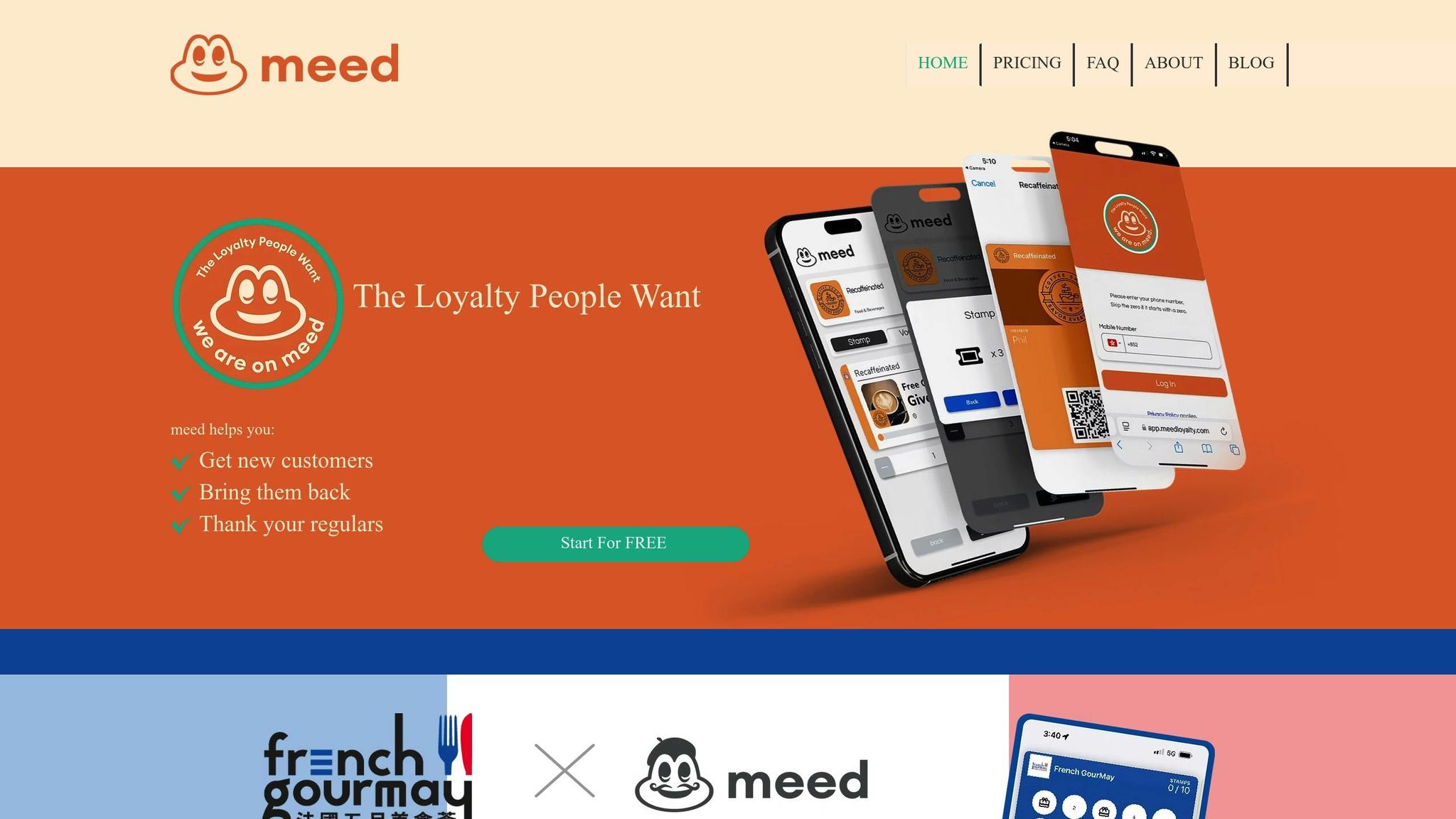
Meed’s platform tackles common hurdles in reward redemption, helping businesses boost engagement and keep customers coming back. By simplifying loyalty program management and making redemption effortless, Meed empowers businesses to strengthen customer relationships.
Centralized Program Management
Managing loyalty programs across multiple locations can get messy, but Meed simplifies it by centralizing everything. This ensures customers enjoy a consistent experience no matter where they interact with your business. Plus, the platform collects and organizes interaction data, making it easier to spot trends – like which locations or rewards aren’t performing as expected.
For small businesses, Meed offers a free tier that supports one location and one active voucher campaign. It’s a great way to get started. And for those using advanced tools, Meed integrates seamlessly with marketing platforms and CRM systems, allowing real-time updates without the hassle of manual data transfers.
Features That Make Redemption Easier
Meed takes the pain out of customer interactions with features designed for simplicity. For instance, its QR code system allows customers to join loyalty programs in seconds – no complicated sign-ups or physical cards required. Digital stamp cards replace the old punch cards, tracking customer progress digitally and securely.
Even better, Meed integrates with Apple and Google Wallet, so loyalty cards live right on customers’ smartphones, ready whenever they need them. Push notifications keep customers engaged by reminding them about unused rewards or special deals. Starting in July 2025, Meed’s free full-platform tier lets businesses with up to 50 members create loyalty programs, enable QR code enrollments, and set up automated voucher systems – all at zero cost. It’s a risk-free way to see how Meed can elevate customer engagement.
Analytics Tools for Better Results
Meed doesn’t just simplify loyalty programs – it helps businesses make smarter decisions. The platform’s analytics dashboard highlights which rewards and strategies are working best while uncovering customer behavior trends. For example, you can see which rewards are most popular or how customers respond to specific promotions.
Why does this matter? A high redemption rate shows customers value your program, while a low rate might mean it’s time to rethink your rewards or communication approach. With 73% of shoppers actively seeking to redeem rewards and 66% saying rewards influence their spending, having the right data is crucial. Meed’s analytics give businesses the insights they need to meet customer expectations and drive better results.
Conclusion
The redemption rate is a critical metric for gauging the success of any loyalty program. While benchmarking against global rates provides context, numbers alone don’t tell the whole story. A high redemption rate typically reflects strong customer engagement and satisfaction. On the other hand, a low rate can highlight issues like unappealing rewards or a complicated redemption process. This metric serves as a dual-purpose tool, offering insights into customer satisfaction while also informing financial and operational strategies.
When customers actively redeem rewards, it’s a clear sign that your program is encouraging repeat purchases and driving increased sales or activity . For this reason, tracking redemption rates is vital – not just for understanding program performance but also for optimizing financial planning.
To improve redemption rates, focus on simplifying the process, offering a variety of appealing rewards, and maintaining consistent communication with your customers. Personalization is also key. By understanding your customer segments, you can design rewards that resonate with their specific needs and preferences.
Addressing these challenges requires the right tools. Platforms like Meed offer centralized management, seamless wallet integration, and robust analytics to help enhance program performance. With these features, Meed bridges the gap between what customers expect and how your program delivers, ensuring you remain competitive in today’s market.
Ultimately, redemption rates provide a window into customer engagement. By refining your strategies and leveraging the steps outlined earlier, you can strengthen loyalty, drive sustainable growth, and build lasting relationships through a well-managed and effective loyalty program.
FAQs
What are the best ways to improve the redemption rate in a loyalty program?
To improve the redemption rate of your loyalty program, focus on making rewards more enticing and easy to access. Start by offering a variety of rewards that genuinely appeal to your customers. Think about what would excite them and align with their preferences. At the same time, ensure the redemption process is as smooth as possible – nobody wants to jump through hoops to claim their rewards.
Communication plays a big role here too. Be clear about what rewards are available and provide straightforward instructions on how to redeem them. Adding an expiration date for points can also motivate customers to act sooner rather than later. You can amplify this effect by introducing limited-time offers or exclusive rewards, creating a sense of urgency.
Lastly, make sure customers can track and redeem their rewards easily. A digital platform or mobile wallet integration can streamline this process and enhance the overall experience. By focusing on convenience and keeping customers engaged, you can boost redemption rates and build stronger loyalty.
What financial impact can a high or low redemption rate have on a business?
A high redemption rate in a loyalty program often means customers are actively claiming rewards, which can drive up costs for the business. If the rewards offered are expensive, this could eat into profit margins. On the flip side, a high redemption rate can also signal strong customer satisfaction and engagement – both of which are key for fostering long-term loyalty and encouraging repeat purchases.
In contrast, a low redemption rate might point to rewards that fail to resonate with customers or a lack of interest in the program altogether. This not only wastes resources invested in the program but also represents missed chances to deepen customer relationships. Striking the right balance is crucial to maintaining financial health while keeping customers engaged and motivated to stick around.
How does the design and user experience of a loyalty program affect customer engagement and redemption rates?
The design and user experience (UX) of a loyalty program are critical to keeping customers engaged and encouraging them to redeem rewards. When a program is easy to navigate, with clear instructions and straightforward processes, customers are more likely to participate and redeem rewards regularly. This kind of simplicity makes the entire experience more enjoyable and hassle-free.
On the flip side, if the program feels clunky, with confusing menus or overly complicated steps, it can leave users frustrated. This frustration often translates to less engagement and fewer redemptions. By focusing on creating a smooth and intuitive experience, businesses can not only keep their customers happy but also improve the overall effectiveness of their loyalty program.